Vegetable Roasting Time Calculator
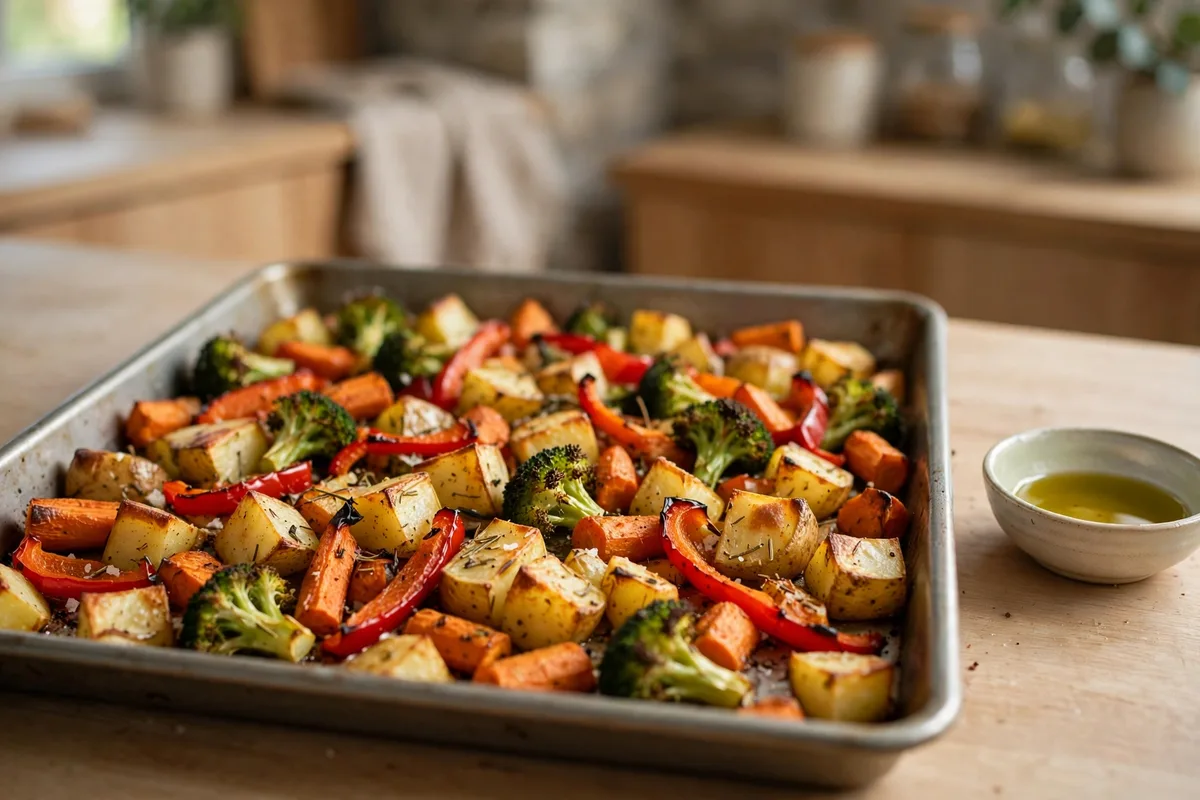
At 425°F, potatoes need 30–40 minutes and asparagus needs 10–15, so add the asparagus about 23 minutes in and everything finishes together. This Vegetable Roasting Time Calculator gives roast times at 400, 425 or 450°F and works out when to add a second vegetable.
Free calculator
Use the calculator
Enter your values below, then press Calculate. Your inputs stay in your browser — nothing is sent anywhere.
Result appears in the highlighted box above. The formula used is shown in “How the math works” below, so you can check every answer.
How to use it
- Choose the First vegetable — the one that takes longest.
- Choose the Second vegetable — the one you want to finish at the same time.
- Choose the Oven temperature — 400°F, 425°F, or 450°F.
- Press Calculate.
- Read the total roast time and the minute to add the second vegetable, so both finish together.
Worked example
With the values already filled in on the page — potatoes first, asparagus second, 425°F — press Calculate and the calculator returns a total time of 30–40 minutes, with the asparagus added after about 23 minutes.
To check it by hand: at 425°F, potatoes need 30–40 minutes (midpoint 35) and asparagus needs 10–15 minutes (midpoint 12.5). The asparagus goes in 35 − 12.5 = 22.5 minutes after the potatoes, which rounds to 23 minutes. A second check at 400°F: the times are ×1.175, so potatoes need about 35–47 minutes and asparagus about 12–18 minutes, and the asparagus goes in after about 26 minutes. If your result differs, re-check which vegetable is first — the longest one always goes in first.
How the vegetable roasting time calculator works
Roast time depends on the vegetable, the oven temperature, and the size of the pieces — this page assumes pieces of about 1 inch. The table below gives times at 425°F; at 400°F the times are ×1.175, and at 450°F they are ×0.825, each rounded to the nearest minute. When two vegetables share a pan, the add time is the difference between their midpoints: the longer vegetable goes in first, and the shorter one joins it part-way through, so both finish together. Kale is the exception — it crisps best at about 350°F, not at roasting temperatures.
| Vegetable | Time at 425°F (about 1-inch pieces) |
|---|---|
| Beets | 35–45 min |
| Potatoes | 30–40 min |
| Sweet potatoes | 25–35 min |
| Carrots | 22–30 min |
| Parsnips | 22–30 min |
| Butternut squash | 28–38 min |
| Brussels sprouts | 22–30 min |
| Cauliflower | 20–28 min |
| Broccoli | 18–24 min |
| Cabbage wedges | 15–20 min |
| Eggplant | 20–30 min |
| Zucchini | 12–18 min |
| Bell peppers | 15–20 min |
| Mushrooms | 20–25 min |
| Onion wedges | 25–30 min |
| Cherry tomatoes | 10–15 min |
| Green beans | 12–17 min |
| Asparagus | 10–15 min |
| Kale | 8–12 min (better at about 350°F) |
Common mistakes
- Crowding the pan. Vegetables packed tight steam instead of roasting. Spread them in a single layer with space between the pieces, and use a second pan if you have to.
- Cutting pieces different sizes. A small piece burns while a large one stays raw. Cut each vegetable to roughly the same size — about 1 inch — so they cook evenly.
- Adding everything at once. Asparagus and potatoes do not need the same time. Start the longest vegetable first and add the rest on the schedule the calculator gives you.
- Not flipping halfway. Turn the vegetables once, about halfway through, so both sides brown instead of one side steaming.
- Roasting kale at high heat. Kale burns before it crisps at 425°F or above. Roast it at about 350°F, or add it for the last few minutes only.
A note before you start
Cut size matters as much as time: pieces much smaller than 1 inch will cook faster than the table says, and much larger pieces slower. To change an oven recipe between Fahrenheit, Celsius and gas mark, use the Oven Temperature Converter, and to move an oven recipe to the air fryer, use the Oven to Air Fryer Converter.
Frequently asked questions
What is the best temperature for roasting vegetables?
425°F is the best all-round temperature: hot enough to brown and crisp, without burning most vegetables. Use 400°F for delicate vegetables and 450°F when you want deep browning on roots.
How do I roast two vegetables that need different times?
Start the longer one first, then add the shorter one part-way through. The calculator works out the exact minute: for example, potatoes (30–40 minutes) with asparagus (10–15 minutes) means adding the asparagus about 23 minutes in.
Do I need to thaw frozen vegetables before roasting?
No — roast them straight from frozen, but add about 10 minutes to the time and spread them out so the extra moisture can escape instead of steaming them.
Why do roast times vary so much between recipes?
Different ovens, temperatures, and cut sizes all change the time. This page states the temperature and the cut size it assumes (about 1-inch pieces), so you can compare fairly.
Should I flip vegetables halfway through?
Yes, once, about halfway. It evens out browning and stops the underside from steaming. For small pieces like green beans, a shake of the pan does the same job.
Related: Bakeware · Oven Temperature Converter · Oven to Air Fryer Converter · All calculators
Results are estimates for home cooking. Always check food with a thermometer and follow the manufacturer's instructions for your equipment.