Yeast Conversion Calculator
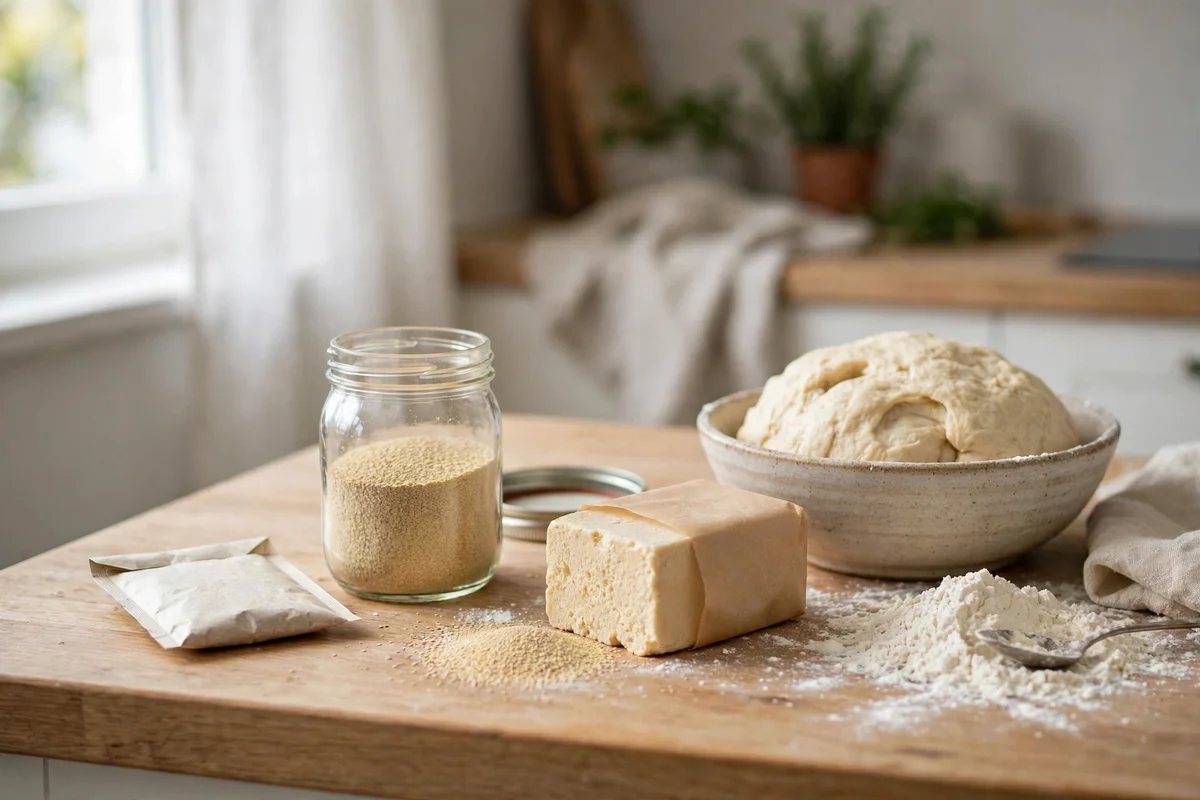
Your recipe calls for one type of yeast, but you only have another type, and you do not know how much to use. This Yeast Conversion Calculator converts the amount between active dry, instant, and fresh yeast by weight.
Free calculator
Use the calculator
Enter your values below, then press Calculate. Your inputs stay in your browser — nothing is sent anywhere.
Result appears in the highlighted box above. The formula used is shown in “How the math works” below, so you can check every answer.
How to use it
- Choose the yeast type you have — active dry yeast is already selected as the starting example.
- Enter the amount — 7 grams, one packet, is already filled in — and choose the Amount unit (grams, teaspoons, or packets).
- Press Calculate.
- Read the equivalent amounts for all three yeast types in the result box.
- Use the amount for the type you have — the result shows the equivalent amount for all three types, in grams, teaspoons, and packets — and proof active dry yeast before adding it if the note in Common mistakes applies.
Worked example
With the values already filled in on the page — active dry yeast, 7 grams — press Calculate and the calculator returns active dry yeast: 7 g, instant yeast: 5.25 g, and fresh yeast: 16.8 g. That is the exact result the page produces for the default inputs.
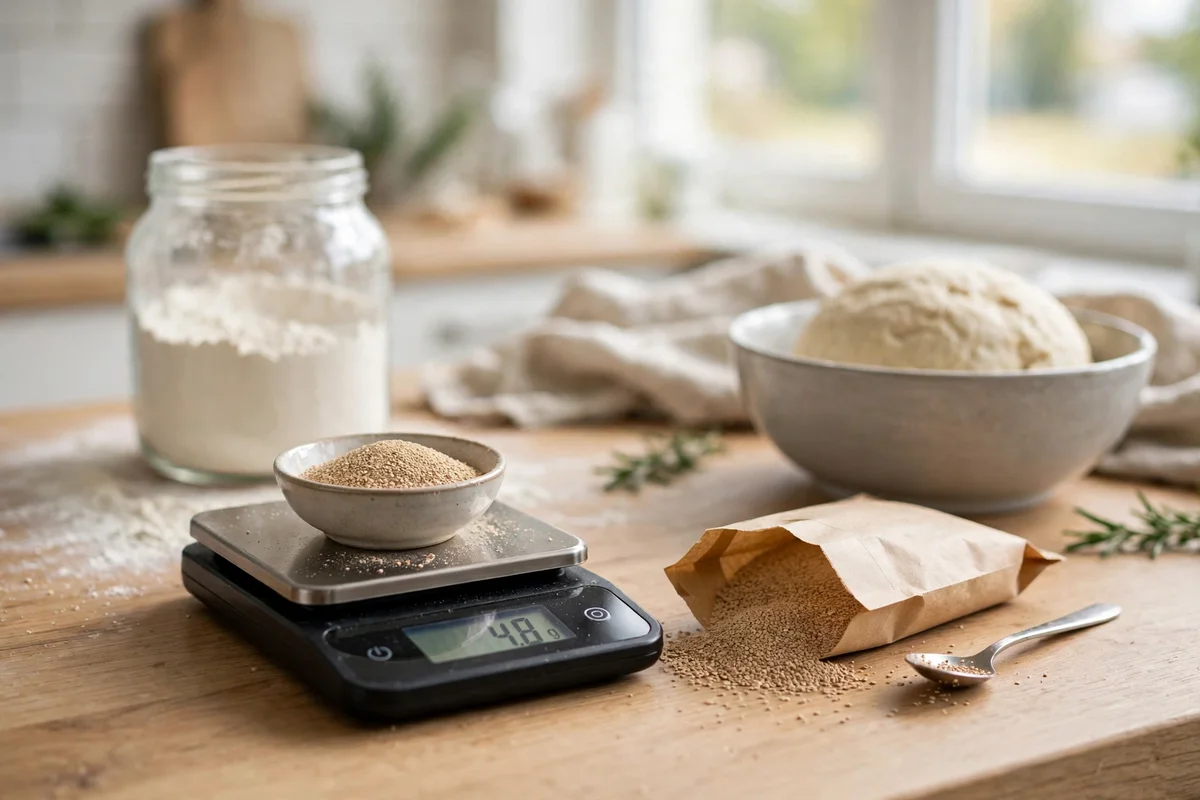
To check it by hand: instant = 7 × 0.75 = 5.25 g, and fresh = 7 × 2.4 = 16.8 g. If your result differs, re-check that active dry yeast and 7 are entered. In teaspoons, 7 g is about 7 ÷ 3.1 = 2.26 tsp (about 2¼ tsp), and 5.25 g of instant yeast is about 1.69 tsp.
How the yeast conversion calculator works
By weight, the standard approximate equivalents are: active dry 1 = instant 0.75 = fresh 2.4. So instant = active dry × 0.75, fresh = active dry × 2.4, and active dry = instant ÷ 0.75 or fresh ÷ 2.4. All conversions here are by weight in grams, not by spoon, because spoon measures vary with how the yeast is packed. You can enter the amount in teaspoons (1 tsp ≈ 3.1 g) or packets (1 packet = 7 g) and the result is shown in grams, teaspoons, and packets for all three types. Converting between types keeps the rising time about the same, because the yeast activity is matched by weight — fresh yeast may rise slightly faster.
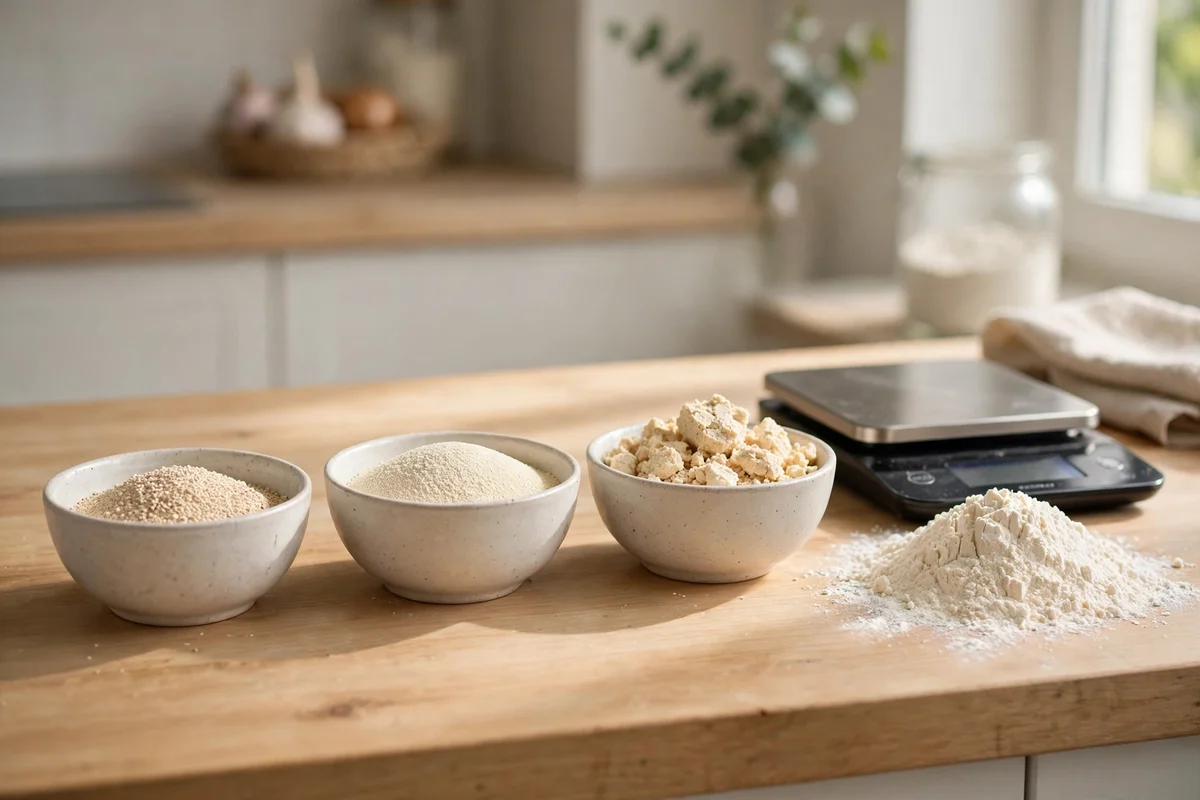
| Active dry yeast | Instant yeast | Fresh yeast |
|---|---|---|
| 7 g (one packet) | 5.25 g | 16.8 g |
| 10 g | 7.5 g | 24 g |
| 5 g | 3.75 g | 12 g |
Common mistakes
- Swapping types gram for gram. Fresh yeast is much heavier for the same lifting power, and instant is lighter than active dry. A 1-to-1 swap under- or over-proofs the dough.
- Converting by spoon instead of weight. Spoon measures depend on packing and granule size. Weighing in grams keeps the ratio in the table true.
- Skipping proofing for active dry yeast. Active dry yeast should be proofed in warm water first, unless the recipe says otherwise. Adding it dry can leave it unevenly mixed and slow to start.
- Using water that is too hot to proof. Very hot water can kill yeast. Use warm water, not hot, and check the recipe for its temperature if it gives one.
- Using old or dead yeast without checking. Yeast loses strength over time, especially once opened. If proofed yeast does not foam, it may be inactive, and no conversion will fix the rise.
A note before you start
Weigh yeast on a small kitchen scale where you can, because 5 grams and 7 grams look almost identical in a spoon but behave differently in a dough. Store opened yeast sealed in the fridge or freezer, and bring fresh yeast to room temperature before crumbling it into the dough.
Frequently asked questions
Can I use instant yeast instead of active dry yeast without proofing?
Yes, in most recipes instant yeast can be mixed straight into the flour. Convert the weight first with the ratio above, then follow the recipe for mixing.
Why is fresh yeast so much heavier?
Fresh yeast contains a lot of water, so more weight is needed for the same amount of active yeast. That is why 7 grams of active dry yeast equals about 16.8 grams of fresh yeast.
Does the conversion change the rising time?
It should not, if the weight is converted correctly. If a dough rises much faster or slower than usual, the yeast amount, dough temperature, or yeast freshness is the likely cause.
What is one packet of yeast in grams?
A standard packet is usually 7 grams of active dry or instant yeast. Check your packet, because sizes vary, and enter the actual grams if yours differs.
Can I convert yeast for enriched doughs the same way?
Yes, the weight ratio stays the same. Enriched doughs with butter, eggs, or sugar may rise more slowly overall, but that is a property of the dough, not a change to the conversion.
Related: Bakeware · Cups-to-Grams Converter · Measurement Converter · All calculators
Results are estimates for home cooking. Always check food with a thermometer and follow the manufacturer's instructions for your equipment.