Air Fryer Beginner Mistakes to Avoid
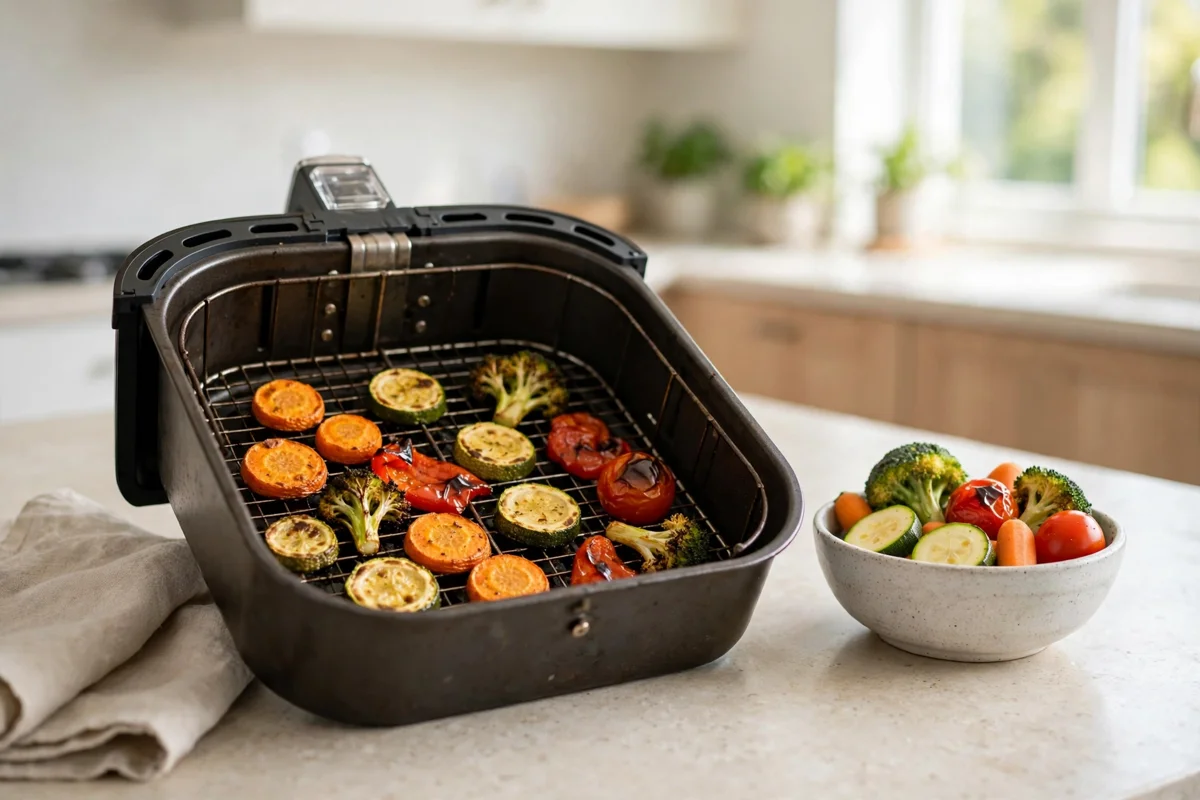
Air fryer beginner mistakes to avoid are almost all use mistakes, not cleaning mistakes: crowding the basket, skipping preheat, using oven temperatures unchanged, cooking wet batter, and never shaking or flipping the food. Fix those five, and most soggy, burnt, or uneven results improve at once.
The short answer: air fryer beginner mistakes to avoid
An air fryer cooks by moving hot air around food, so anything that blocks that air, or anything that keeps food wet, works against it. Spread food in a loose single layer, cook in batches rather than piling the basket full, and preheat for 3 to 5 minutes at the cooking temperature, especially for foods that need immediate high heat, such as fries, wings, and frozen foods. Reduce oven temperatures by about 25 degrees Fahrenheit and check food earlier than an oven recipe says, because an air fryer is smaller and hotter than an oven. Pat food dry, use only a light spray or 1 to 2 teaspoons of oil on the food itself, use dry breading instead of wet batter, and shake or flip small items every 5 to 10 minutes. Cleaning is covered only briefly here, with a link to the basket-cleaning guide, because this guide is about using the air fryer, not cleaning it.
What do you need, and what should you skip?
- Air fryer with basket and tray, plus the maker's manual, for preheat, temperature, and placement instructions for your model.
- Paper towels, for patting food dry before cooking, which is essential for crisp results.
- Tongs or a spatula, for shaking, flipping, and turning food without piercing it and losing juices.
- Light oil sprayer or brush, for applying 1 to 2 teaspoons of oil to the food itself, not pouring oil into the basket.
- Timer, for shaking intervals and for checking food earlier than an oven recipe would suggest.
- Heat-safe plate or tray, for holding finished batches while the next batch cooks.
Skip these for now:
- Crowding the basket to save time, which steams food instead of crisping it and lengthens cooking overall.
- Skipping preheat for foods that need immediate high heat, such as fries, wings, and frozen foods.
- Copying oven temperature and time unchanged, which burns food in a smaller, hotter air fryer.
- Wet, drippy batter, which never sets in hot air the way it sets in hot oil, and slides off the food.
- Pouring oil into the basket, or using large amounts of oil, which smokes and makes food greasy.
Step by step
- Give the air fryer space to vent, and preheat it. Place the air fryer with open space around it, not pushed tightly into a corner or under a low cabinet where heat cannot escape, and follow your manual for placement distances. Preheat for 3 to 5 minutes at the cooking temperature before adding food, especially for fries, wings, steaks, and frozen foods that benefit from immediate high heat. Skipping preheat is not a time saver: food placed in a cold basket heats unevenly, takes longer overall, and comes out less crisp, because the first minutes are spent warming the basket instead of cooking the food. If your model preheats automatically, let that cycle finish before you load the basket, rather than loading early to save a minute.
- Pat food dry, and oil the food lightly, not the basket. Pat vegetables, meat, and frozen items dry with paper towels before cooking, because surface moisture steams instead of crisping, and wet food stays soggy no matter how hot the air fryer runs. Spray or brush a light coat of oil onto the food itself, about 1 to 2 teaspoons in total for a batch, so seasonings stick and the surface can brown, rather than pouring oil into the basket, which pools, smokes, and makes food greasy. For foods that are already fatty, such as wings, you may need little or no added oil, so judge by the food, not by a fixed rule. Avoid aerosol cooking sprays with propellants if your manual warns against them, since they can damage nonstick coatings over time.
- Spread food in a loose single layer, and cook in batches. Arrange food in a loose single layer with space between pieces, so hot air can reach every surface, and fill the basket no more than about two-thirds full as an absolute maximum, with a single layer preferred for fries, vegetables, and nuggets. If the food does not fit in a single layer, cook it in two batches and keep the first batch warm on a plate while the second cooks, because two crisp batches beat one crowded, soggy batch every time. A crowded basket is the single most common beginner mistake, and it explains most complaints about soggy fries, pale tops, and raw centers, since blocked air cannot cook evenly no matter how long you wait.
- Set the temperature for an air fryer, not for an oven. When converting an oven recipe, reduce the temperature by about 25 degrees Fahrenheit and check the food about 20 percent earlier than the oven time says, then adjust from there for your model and batch size. Air fryers are smaller than ovens, so the heating element sits closer to the food and the air circulates faster, which is why oven settings burn food that would have been fine in a large oven. Use your manual's temperature guide for your model when it differs from this generic conversion, and write down the temperature and time that worked for each food, because air fryers vary in power and a setting that works for one model can overcook in another. If food browns too fast, lower the heat next time before adding more time, and if it stays pale, reduce crowding before raising the heat.
- Use dry breading, never wet batter, in the air fryer. Coat food with dry breading, such as flour, crumbs, or a flour, egg, and crumb sequence, pressing the coating on firmly, and let coated food rest for a few minutes before cooking so the coating sets. Wet, drippy batter does not work in an air fryer: there is no hot oil to set it on contact, so it slides off the food, pools in the basket, and makes a sticky mess instead of a crisp crust. If a recipe calls for wet batter, choose a different cooking method for that dish, or bake it briefly first to set the batter, following your manual, rather than pouring batter into the air fryer and hoping hot air will do the work of hot oil. Pat the food dry before breading, since a dry surface holds coating far better than a wet one.
- Shake or flip on a schedule, and check doneness, not just color. Shake the basket every 5 to 10 minutes for small items such as fries, nuggets, and vegetables, and flip larger items once halfway through, using tongs or a spatula rather than a fork, so you do not pierce food and lose juices. Shaking matters because the heating element sits above the food: the top browns first, while the underside stays pale and soft unless it is turned. Check doneness with a thermometer for meat and poultry, not by color alone, because golden-brown food is not necessarily fully cooked inside, and pale food is not necessarily raw. Open the basket to check, but do not open it every minute, since repeated opening releases heat and extends cooking time.
- Work in batches, and keep finished food warm without crowding it. When cooking for more than one person, cook in batches, place each finished batch on a plate in a warm oven or under a loose foil tent, and do not pile finished batches back into the basket to keep warm, where they will steam and lose crispness. Plan the batch order so foods that hold heat well, such as roasted vegetables, cook first, and foods that must be served crisp, such as fries, cook last. If a batch comes out uneven, the fix for the next batch is usually less food, a shake halfway, or a lower temperature, not a longer cook at the same crowded load. Write down the batch size that worked, because that number is the real capacity of your air fryer for that food, regardless of what the basket size suggests.
Worked example: one batch of roasted vegetables, single layer, shaken once
Cut 2 cups of vegetables, such as carrots, broccoli, and bell peppers, into even pieces, pat them dry with paper towels, and toss them with 1 to 2 teaspoons of oil and seasoning in a bowl. Preheat the air fryer for 4 minutes at 380 degrees Fahrenheit, spread the vegetables in a loose single layer in the basket, with space between pieces, and cook for 10 minutes. Shake the basket once at 5 minutes, using tongs to turn any pieces that are browning faster on top, and check at 10 minutes: the vegetables should be browned at the edges, tender inside, and crisp, not steamed and pale.

Now compare that with the crowded version: the same 2 cups plus another 2 cups piled into the basket, no preheat, no shake, at an oven temperature of 400 degrees Fahrenheit. The top pieces brown and dry out, the middle pieces steam and stay pale, and the bottom pieces sit in moisture, so the batch comes out uneven in every direction at once. Adding more time does not fix a crowded basket, because the air still cannot reach the middle pieces, and the top pieces only burn further. The single-layer batch, shaken once, takes the same total time as two crowded attempts, and tastes like the food was actually air fried, not steamed in a hot box.
If the vegetables come out soggy, check dryness and crowding first, before changing temperature: wet vegetables and a full basket explain most soggy results. If they come out burnt on top and raw underneath, check the shake schedule and the temperature conversion, since a missed flip and an oven temperature copied unchanged explain most burnt results. Change one thing next time, write it down, and repeat the batch that worked, because air frying rewards repeatable batch sizes more than any single clever trick.
Which option fits your situation?
| Mistake | What happens | Fix |
|---|---|---|
| Crowding the basket | Blocked air, soggy and uneven food | Loose single layer, cook in batches |
| Skipping preheat | Uneven cooking, less crisp results | Preheat 3 to 5 minutes at cooking temperature |
| Oven temperature unchanged | Burnt outside, or overcooked food | Reduce by about 25 degrees, check earlier |
| Wet batter | Batter slides off, sticky mess | Use dry breading, pressed on firmly |
| No shaking or flipping | Top browns, underside stays pale | Shake every 5 to 10 minutes, flip larger items once |
| Too much oil, or oil in the basket | Smoke, greasy food | 1 to 2 teaspoons on the food itself only |
Common mistakes to avoid
- Crowding the basket. Packed food blocks hot air circulation, so it steams instead of crisping and cooks unevenly. Fix: spread food in a loose single layer and cook in batches.
- Skipping preheat. Food in a cold basket heats unevenly and takes longer, with less crisp results. Fix: preheat for 3 to 5 minutes at the cooking temperature, especially for fries and frozen foods.
- Using oven temperature and time unchanged. An air fryer is smaller and hotter than an oven, so oven settings burn food. Fix: reduce temperature by about 25 degrees Fahrenheit and check about 20 percent earlier.
- Cooking wet batter. Wet batter has no hot oil to set it, so it slides off and makes a mess. Fix: use dry breading, pressed on firmly, and let it rest before cooking.
- Never shaking or flipping. The top browns while the underside stays pale and soft. Fix: shake small items every 5 to 10 minutes, and flip larger items once halfway through.
- Pouring oil into the basket. Oil in the basket pools, smokes, and makes food greasy. Fix: spray or brush 1 to 2 teaspoons of oil onto the food itself, not into the basket.
When should you stop, and what keeps this safe?
Stop using the air fryer and let it cool if you see sparking, smell wiring or burning plastic, notice melting or warping, or find smoke returning after you remove grease or residue, and do not open the housing or attempt internal electrical repairs yourself. Keep the air fryer away from water, keep the cord away from hot surfaces, and keep hands away from the heating element and hot basket surfaces, using oven mitts for the basket and tray. Check meat and poultry with a thermometer, not by color alone, because golden-brown food is not necessarily fully cooked inside, and follow your own maker's manual for preheat, placement, and liner rules, since this guide uses generic settings that cannot cover every model.

Cleaning is deliberately brief here: wash the basket and tray according to your manual after the unit has cooled, wipe the interior with a soft cloth, and dry parts fully before storage, because baked-on residue causes smoke and off flavors. For full basket-cleaning steps that protect the coating, see the companion guide on cleaning an air fryer basket without damaging its coating, linked below, rather than repeating that detail here. If a liner or accessory is not approved by your manual, do not improvise one, since loose paper or foil can blow into the heating element and become a fire risk.
Related on Kitchenlify
- How to Clean an Air Fryer Basket Without Damaging Coating
- How to Choose an Air Fryer Size for Family of 2 Beginners
- Oven to Air Fryer Converter
- Small Appliances
- All guides
Frequently asked questions
Should I preheat an air fryer?
Yes, for most foods, especially fries, wings, and frozen foods. Preheat for 3 to 5 minutes at the cooking temperature, so food meets immediate high heat and cooks evenly and crisply.
Why is my air fryer food soggy?
The usual causes are crowding the basket, wet food, or no shaking. Pat food dry, spread it in a loose single layer, cook in batches, and shake small items every 5 to 10 minutes.
Can I cook wet batter in an air fryer?
No. Wet, drippy batter does not set in hot air the way it sets in hot oil, so it slides off and makes a mess. Use dry breading, such as flour or crumbs, pressed on firmly.
What temperature should I use in an air fryer instead of an oven?
Reduce the oven temperature by about 25 degrees Fahrenheit, and check the food about 20 percent earlier than the oven time. Adjust from there for your model, and follow your manual when it differs.
How often should I shake food in an air fryer?
Shake small items such as fries, nuggets, and vegetables every 5 to 10 minutes, and flip larger items once halfway through. Use tongs or a spatula, not a fork, so you do not pierce food and lose juices.
How much oil should I use in an air fryer?
Use about 1 to 2 teaspoons of oil on the food itself, sprayed or brushed on, not poured into the basket. Fatty foods such as wings may need little or no added oil.
Can I stack food in an air fryer basket?
No, not for crisp results. Spread food in a loose single layer with space between pieces, and cook in batches if it does not fit. Stacked food steams instead of crisping.
Why does my air fryer smoke?
Smoke usually comes from excess oil, grease buildup, or food too close to the heating element. Use less oil, clean the basket and tray after cooling, and stop using the unit if smoke returns after cleaning or you smell burning plastic.
How do I clean an air fryer basket without damaging it?
Wash the basket and tray according to your manual after the unit has cooled, wipe the interior with a soft cloth, and dry parts fully. For full coating-safe steps, see the companion guide on cleaning an air fryer basket without damaging its coating.