What is the best paint for cabinets that doesn't require primer
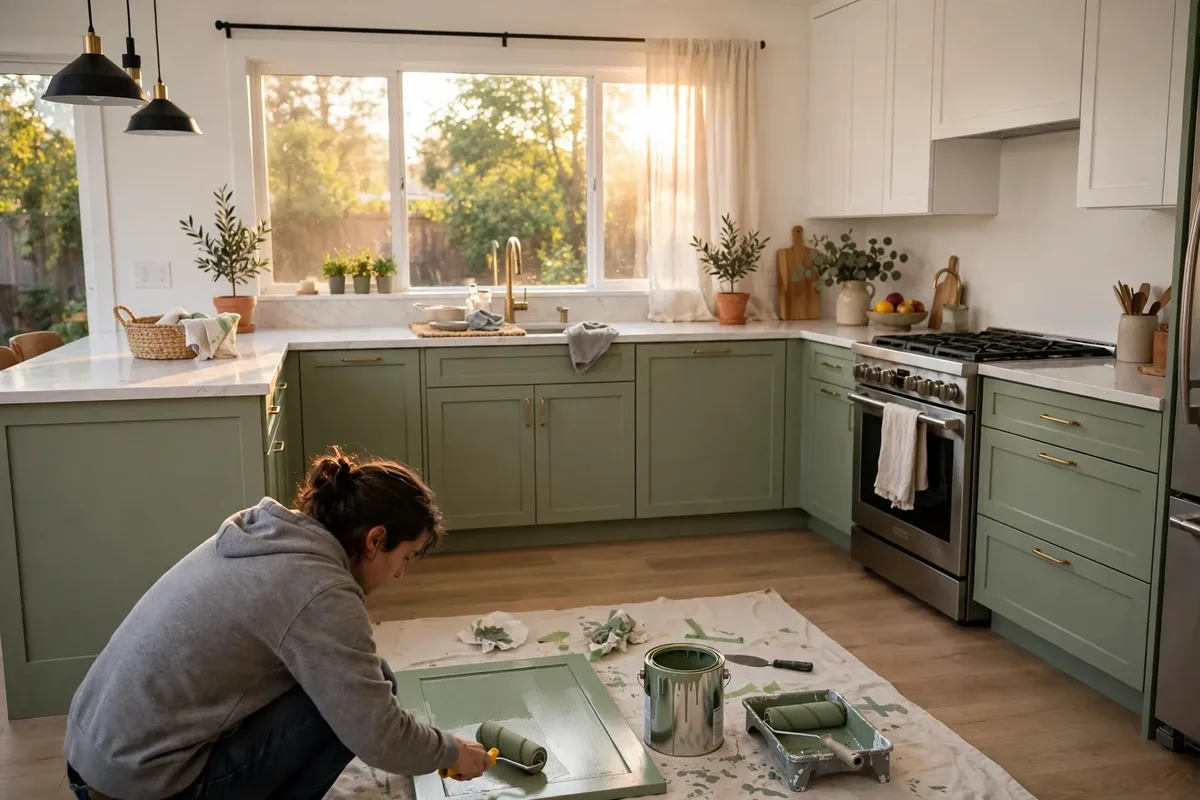
What is the best paint for cabinets that doesn't require primer? The Heirloom Traditions ALL-IN-ONE Paint leads our list: its listing states NO sanding, NO priming and NO top coat, and it holds 13,002 ratings at 4.4 stars. Four more paints make the same kind of promise in their own words, and this guide lists all five, explains what "no primer" really means on each tin, and shows you the surfaces where skipping primer still fails.
Short answer: if your cabinets are sound, clean and grease-free, you can skip primer with any of the five paints below. If they are greasy, peeling or bare wood, no paint on this list saves you — clean and repair first, or prime the bare spots.
What is the best paint for cabinets that doesn't require primer — the short list
Five paints earn a place on this list, because each one states a no-primer claim on its own listing — not in a blog roundup, but in the manufacturer's own words. We compared them on that claim, on their ratings, and on what each paint actually is, so you can match the paint to your cabinets instead of trusting the boldest label.
| Paint | No-primer claim on the listing | Rating | Best for |
|---|---|---|---|
| Heirloom Traditions ALL-IN-ONE | NO sanding, NO priming, NO top coat | 4.4 stars · 13,002 ratings | A full kitchen repaint with the shortest prep list |
| Beyond Paint All-in-One Refinishing Paint | No stripping, sanding and no priming needed | 4.3 stars · 4,464 ratings | Refinishing with the least prep |
| THE ONE All-In-One Paint & Primer | Paint and primer in one; sanding optional based on the finish | 4.3 stars · 9,789 ratings | Trying the idea on a small project first |
| Rust-Oleum Chalked | No primer required; one-coat coverage | 4.5 stars · 33,963 ratings | A fast refresh — dry to the touch in 30 minutes |
| INSL-X Cabinet Coat | Super adhesion to hard-to-coat surfaces without primer | 4.6 stars · 687 ratings | The hardest-wearing cabinet finish |
Our guide to the best paint for kitchen cabinets without sanding compares the same five paints on their no-sanding claims, with the full ratings and what each paint is — read it next if you want the buying detail behind this list.
The 5 paints that genuinely skip primer
Heirloom Traditions ALL-IN-ONE Paint
This is the strongest no-primer claim on the list: the listing states NO sanding, NO priming and NO top coat required, in those exact words. It is an all-in-one paint for hard surfaces, including cabinets, doors, furniture, counters and tile, and it comes in around 50 colours. It holds 13,002 ratings at 4.4 stars and sits at #1 Best Seller in Household Furniture Paint. If you want one tin to repaint a whole kitchen with the least prep, this is the paint to start with — and still test one hidden spot first on glossy laminate, because no listing promise replaces an adhesion test on your own cabinets.
Beyond Paint All-in-One Refinishing Paint
Beyond Paint promises the shortest prep list of the five: no stripping, sanding and no priming needed. It is an all-in-one refinishing paint, it holds 4,464 ratings at 4.3 stars, and it carries an Overall Pick badge. It comes in colours from Bright White and Buttercream to Deep Blue, Licorice, Linen and Sage, so you can match a kitchen without mixing a custom shade. Pick this one if you want the simplest job — clean the cabinets, then paint — and you want the least fuss between the two steps.
THE ONE All-In-One Paint & Primer
THE ONE takes a different route to the same result: it is a paint and primer in one, so the primer lives inside the tin instead of in a separate coat. The listing calls it a one-coat formula, water-based and low VOC, and it is a UK-made chalk paint. It holds 9,789 ratings at 4.3 stars and comes in many colours and in gloss, matte and satin finishes. Note the honest limit: the listing says sanding is optional based on the finish you want, so it promises less than the two paints above — and the smallest size on the listing is a sample tin, while the larger tin is the practical size for painting cabinets.
Rust-Oleum Chalked
Rust-Oleum Chalked states no primer required, with one-coat coverage and minimal prep, and it holds the most ratings on this list: 33,963 at 4.5 stars. It is an ultra-matte chalk paint that dries to the touch in 30 minutes, cleans up with soap and water, and sticks to wood, metal, ceramic and canvas. It comes as a spray and as a brush-on paint. Two honest limits: a single spray can will not cover a full kitchen, so buy the brush-on size for a whole kitchen; and a matte chalk finish marks more easily than a satin enamel, so roll a clear topcoat on the doors nearest the stove and sink, where you wipe daily.
INSL-X Cabinet Coat
INSL-X Cabinet Coat is the only paint on this list made specifically for cabinets: a urethane acrylic satin enamel that promises a factory-like finish. Its listing promises super adhesion to hard-to-coat surfaces without primer, and it resists chipping, scuffing, food stains, grease and water. It holds 687 ratings at 4.6 stars — the highest rating here, on the fewest ratings — and one gallon covers 350–450 sq ft. Pick this one if you want the toughest finish on the list and you are happy to wait for it: it recoats after 6 hours, so a two-coat job runs over two sessions, not one afternoon.
What "no primer" actually means on the tin
"No primer" sounds like one promise, but the tins mean three different things — and knowing which one you hold tells you what it can and cannot do.
Paint and primer in one. THE ONE carries the primer inside the tin. You paint one product instead of two, and the primer coat dries as part of the colour coat. It saves a step, not a job: you still clean and degrease first.
Self-priming paint that grips without a primer coat. The Heirloom Traditions ALL-IN-ONE and Beyond Paint skip the primer step altogether — the paint itself bonds to a cleaned surface. That is the boldest claim on the list, and it holds on sound, clean cabinets. It does not hold on bare wood, which drinks paint unevenly, or on woods that bleed tannin through the colour.
Cabinet enamel with super adhesion. The INSL-X Cabinet Coat sticks to sound paint, varnish, polyurethane and laminate without a primer, because the enamel itself grips hard surfaces. But the same guidance says to prime bare wood and MDF, bleeding woods like cedar, and bare metal — adhesion is not the same as sealing.
Primer does three jobs: it grips, it seals, and it blocks stains. No-primer paints handle the grip. They do not seal bare wood, and they do not block tannin bleed or old stains — that is still a stain-blocking primer's job. So read the claim as "no primer for grip on a sound surface", not "no primer ever, on any surface".
When primer-free works — and when it does not
Match your cabinets to this table before you buy the tin. It saves you a wasted weekend and a peeling paint job.
| Your cabinets | Primer? | What to do instead |
|---|---|---|
| Sound painted wood, cleaned | No primer | Degrease, degloss the shine, paint two thin coats |
| Varnished or polyurethane wood | No primer | Degrease well and dull the shine first |
| Laminate, melamine or thermofoil | Usually no primer — test first | Light scuff plus an adhesion test; use a bonding primer if the test fails |
| Bare wood or MDF | Prime first | Prime, or use a first coat of Cabinet Coat as its own primer |
| Cedar, redwood or knotty pine | Prime first | Use a stain-blocking primer — these woods bleed through paint |
| Greasy cabinets | Clean first — primer will not fix grease | Degrease until the rinse water runs clear, then paint |
| Peeling, flaking or damaged paint | Repair first | Scrape, smooth and spot-prime the bare patches |
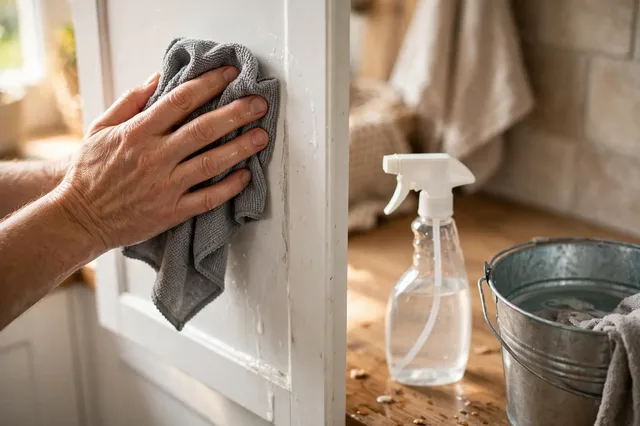
Run the adhesion test before you commit: paint one hidden spot, let it dry fully, then try to scratch it off with a fingernail. If it lifts, that surface needs a bonding primer — or sanding after all. If it holds, paint the kitchen with confidence. Grease is the test most people skip, and the one that matters most: kitchen cabinets collect cooking grease for years, and no paint — primer or no primer — grips grease. Our guide to cleaning greasy kitchen cabinets without damaging the finish walks through the degreasing step in detail, and if the rinse water still feels slippery, wash again.
UK options if you shop in the UK
If you shop in the UK, you will find different tins on the shelves — and the same no-primer promise under a different word. In the UK, primer is usually called undercoat, and a paint that needs "no undercoat" is a paint that needs no primer.
THE ONE is the bridge between the two lists: it is a UK-made paint and primer in one, sold on both sides of the Atlantic. Alongside it, UK DIY shops sell V33 Renovation Cupboard & Worktop Paint, sold with no undercoat needed in a 2-in-1 formula; Johnstone's Revive Cupboard Paint, sold as a self-priming paint — though its own guidance still says to clean and sand the cabinets first, so treat it as a primer-saver, not a prep-saver; Rust-Oleum Kitchen Cupboard Paint, sold with no primer needed on wood, laminate and melamine; and Dulux Simply Refresh Multi-Surface Eggshell, a self-undercoating paint that goes straight onto previously painted wood, metal, melamine and MDF without a primer. Frenchic Furniture Paint is another UK option, sold as self-priming and self-sealing.
One honest UK caveat: Dulux still recommends a difficult-surface primer on laminate, so even in the UK, laminate is the surface to test first. And if you live in the US, the five paints at the top of this guide are the ones listed on Amazon — the UK names above are for UK readers shopping UK stores.
How to paint cabinets without primer, step by step
This is the short version. Our full guide to how to paint kitchen cabinets without sanding walks through every step with drying times and the tools you need.
- Take the doors and hardware off, and label everything. Number each door on a hidden edge so it goes back to its own frame, and bag each door's hardware with a label.
- Degrease every surface. Wash every door, drawer front and frame with a degreaser, rinse with clean water, and let everything dry fully. Pay extra attention to the doors nearest the stove and the rails around the handles.
- Dull the shine. Wipe a liquid deglosser over glossy or varnished cabinets so the paint has something to grip. On flat matte paint you can often skip this step.
- Run the adhesion test. Paint one hidden spot, let it dry fully, then try to scratch it off with a fingernail. If it lifts, prime that surface before you go on.
- Roll two thin coats. Brush the frames in place, roll the doors flat, and keep each coat thin. Let the first coat dry fully before the second — rushing the second coat lifts the first.
- Wait for the cure, then rehang. Dry to the touch does not mean cured. Leave the doors flat until the paint is hard enough to handle, and do not rehang them until the full cure time on the tin has passed, or the doors will stick to the frames and peel at the edges.
5 mistakes that ruin a primer-free paint job
- Painting over grease, then blaming the paint when it peels. Fix: degrease every door and frame and wash again if the rinse water still feels slippery. Grease is the single most common reason a primer-free job fails.
- Trusting "no primer" on bare wood or bleeding woods. Fix: prime bare wood and MDF, and use a stain-blocking primer on cedar, redwood and knotty pine. No-primer paints grip — they do not seal or block stains.
- Skipping the adhesion test on laminate or thermofoil. Fix: paint one hidden spot, let it dry fully, then try to scratch it off. If it lifts, that surface needs a bonding primer.
- One thick coat instead of two thin ones. Fix: roll the first coat thin, let it dry fully, then roll a second thin coat. A thick coat drips, sags and takes far longer to cure.
- Putting doors back before the paint cures. Fix: wait the full cure time on the tin, not just dry to the touch. Doors you hang too early stick to frames and peel at the edges.
How this guide was made
We compared paints on their own listing claims, not on blog roundups: each paint on this list states a no-primer claim in its manufacturer's own words, and we quote those words as the listing states them. Ratings and review counts come from the listings as we checked them — Heirloom Traditions 4.4 stars from 13,002 ratings, Beyond Paint 4.3 stars from 4,464 ratings, THE ONE 4.3 stars from 9,789 ratings, Rust-Oleum Chalked 4.5 stars from 33,963 ratings, and INSL-X Cabinet Coat 4.6 stars from 687 ratings. The UK names come from UK buying guides and the manufacturers' own UK pages. We did not test these paints ourselves — this is a spec-based comparison from listing details, not a hands-on test. This guide names paints and links to our buying guide, where you can check the current listing; as an Amazon Associate we earn from qualifying purchases.
Final note
Pick the paint that matches your cabinets, not the boldest claim on the tin. Sound, clean, painted wood gives you the full list to choose from; laminate gives you a test first; bare wood and bleeding woods give you a primer whether you want one or not. If you are unsure, paint one door, live with it for a week, and let the door decide.
Related on Kitchenlify
- Best Paint for Kitchen Cabinets Without Sanding — we compare five paints on their no-sanding claims and ratings
- How to Paint Kitchen Cabinets Without Sanding — the full step-by-step guide with drying times
- How to Clean Greasy Kitchen Cabinets Without Damaging the Finish
- All guides
Frequently asked questions
What is the best paint for cabinets that doesn't require primer?
The Heirloom Traditions ALL-IN-ONE Paint leads our list: its listing states NO sanding, NO priming and NO top coat, and it holds 13,002 ratings at 4.4 stars. Beyond Paint runs close behind with no stripping, sanding or priming needed and 4,464 ratings at 4.3 stars. Pick the one that matches your surface — the full list above compares all five paints on their exact no-primer claims.
Do I still need to sand if the paint says no primer?
No — sanding and priming are two different steps, and a no-primer paint skips the primer, not the cleaning. You still need to degrease every door and frame, because no paint grips cooking grease. On glossy varnish or laminate, dull the shine with a liquid deglosser or a light scuff first, and test one hidden spot before you paint the whole kitchen.
Can I paint laminate cabinets without primer?
Yes, with the right paint — but test first. The INSL-X Cabinet Coat listing promises adhesion to hard-to-coat surfaces without primer, and the Heirloom Traditions ALL-IN-ONE states no priming on hard surfaces. Paint one hidden spot, let it dry fully, then try to scratch it off with a fingernail. If it lifts, that laminate needs a bonding primer, or a light sanding, before you go on.
What happens if I skip primer on greasy cabinets?
The paint peels — usually in sheets around the stove and the handles, where grease is thickest. Primer cannot fix grease either: it seals a surface, it does not clean it. Wash every door and frame with a degreaser, rinse, and wash again if the rinse water still feels slippery, then paint. Our guide to cleaning greasy kitchen cabinets without damaging the finish walks through the degreasing step.
Do chalk paints need primer on cabinets?
The Rust-Oleum Chalked in our list states no primer required, with one-coat coverage and minimal prep, and it holds 33,963 ratings at 4.5 stars. A matte chalk finish marks more easily than a satin enamel, so roll a clear topcoat on the doors nearest the stove and sink, where you wipe daily. Let the paint dry to the touch in 30 minutes, then give it the full cure time on the tin before you rehang the doors.
Is paint and primer in one the same as a paint that needs no primer?
Not quite. Paint and primer in one, like THE ONE, carries the primer inside the tin, so you paint one product instead of two. A no-primer paint like the Heirloom Traditions ALL-IN-ONE or Beyond Paint skips the primer step altogether — the paint itself grips the cleaned surface. Both save you a coat, but neither seals bare wood or blocks stains from bleeding woods, so those surfaces still need a real primer first.
Which primer-free paint is best for a first-timer?
Beyond Paint suits a first-timer best, because its prep list is the shortest: no stripping, sanding or priming needed, just a clean surface. The Heirloom Traditions ALL-IN-ONE is the stronger pick for a full kitchen, because it also drops the top coat and comes in around 50 colours. Either way, paint one door first and check the finish before you commit to the whole kitchen.
Can I buy a primer-free cabinet paint in the UK?
Yes. THE ONE is a UK-made paint and primer in one, and UK DIY shops sell V33 Renovation Cupboard & Worktop Paint with no undercoat needed, Johnstone's Revive Cupboard Paint as a self-priming paint, Rust-Oleum Kitchen Cupboard Paint with no primer needed, and Dulux Simply Refresh as a self-undercoating paint. In the UK, primer is usually called undercoat — the job is the same. Check the tin for your surface, because Dulux still recommends a difficult-surface primer on laminate.
How many coats do primer-free paints need?
Two thin coats, for every paint on this list — even the ones that promise one-coat coverage. The first thin coat grips and covers, the second evens out the colour and hardens the finish. Let the first coat dry fully before the second, and check for drips on edges and corners as you go. Two thin coats still beat sanding and priming the whole kitchen first.
How long do painted cabinets last without primer?
It depends on the cleaning underneath, not on the missing primer — grease under the paint is the usual weak point, not the lack of a primer coat. The INSL-X Cabinet Coat resists chipping, scuffing, food stains, grease and water, and the Heirloom Traditions ALL-IN-ONE needs no top coat to protect it. Repaint the doors nearest the stove first if any spot wears, and wipe spills quickly rather than scrubbing.