Carbon Steel vs Cast Iron Pan for Beginners
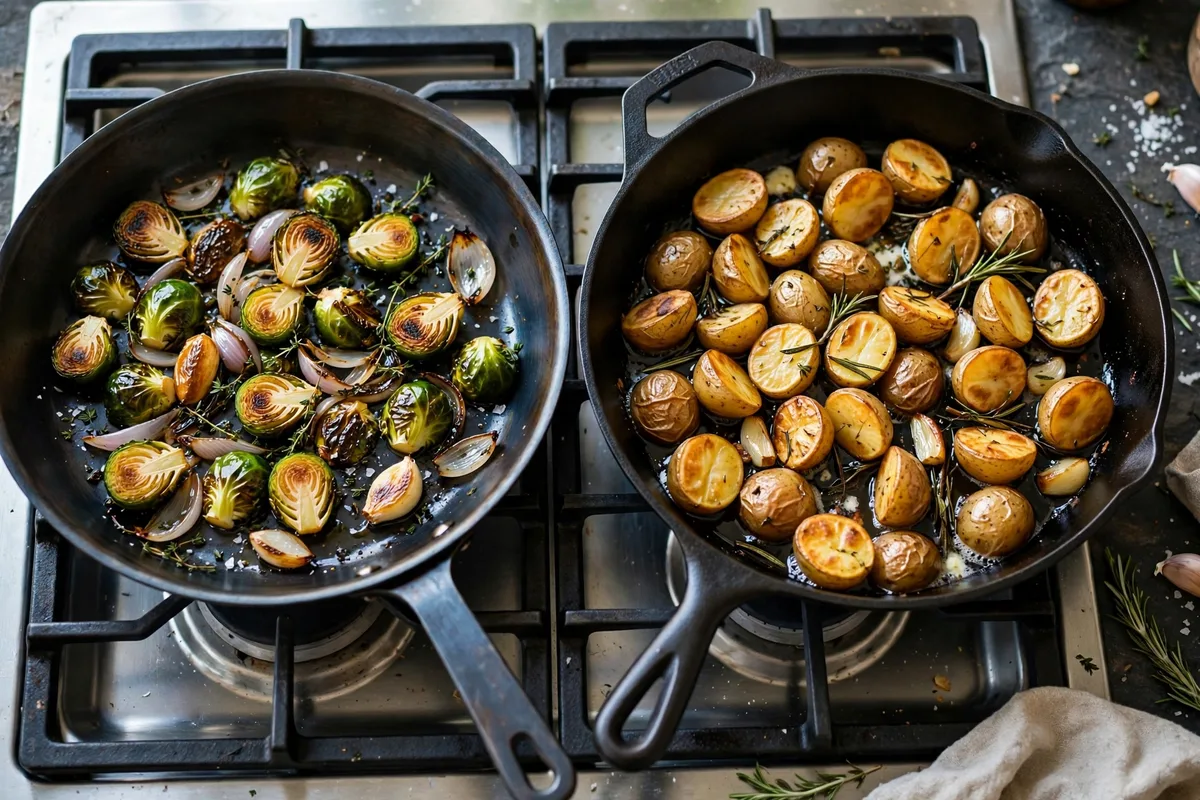
Carbon steel vs cast iron pan for beginners: both are iron pans that build a natural nonstick seasoning with use, but carbon steel is lighter and heats fast, while cast iron is heavier and holds heat longer. A 12-inch carbon steel pan weighs about 4 pounds; the same size in cast iron weighs about 8 pounds. If you are a beginner buying your first iron pan, start with cast iron: it comes pre-seasoned, forgives mistakes, and costs less. Add carbon steel later, when you want fast heat control for eggs, fish, and stir-fries.
carbon steel vs cast iron pan for beginners — what is the short answer?
Carbon steel is iron with about 1 percent carbon, rolled into a thin, light pan that heats in about 90 seconds and cools fast when you turn the heat down. Cast iron is iron with 2 to 4 percent carbon, poured into a thick, heavy pan that takes 3 to 5 minutes to heat but barely drops in temperature when cold food hits it. That is carbon steel vs cast iron in one line: carbon steel is a throttle, cast iron is a flywheel. Both need seasoning, both rust if left wet, and both last for decades with basic care.
How do I do it step by step?

- Weigh the pans in your hand. Pick up a 10-inch pan of each type. A 10-inch carbon steel pan weighs about 3 to 3 and 1/2 pounds; a 10-inch cast iron pan weighs about 4 and 1/2 to 5 and 1/2 pounds, and a 12-inch cast iron pan can reach 8 pounds. If you cannot lift it comfortably with one hand, you will not enjoy cooking with it every day.
- Match the pan to what you cook most. Carbon steel wins for eggs, fish, stir-fries, and anything you toss or flip. Cast iron wins for thick steaks, cornbread, roast chicken, and anything that needs steady, unchanging heat. List your five most-cooked meals first — the list picks the pan for you.
- Check the seasoning it ships with. Most cast iron pans come pre-seasoned and ready to cook the day you open the box. Most carbon steel pans ship bare or coated in wax, and you must scrub the wax off and season the pan yourself before the first meal. That is the biggest beginner difference in carbon steel vs cast iron pan for beginners which is better for a first pan: cast iron works at once, carbon steel asks for homework first.
- Test the heat response. Heat each pan on medium-high and watch the clock. Carbon steel reaches searing temperature in about 90 seconds; cast iron takes 3 to 5 minutes. Then turn the burner down: carbon steel cools within a minute, while cast iron coasts on stored heat for several minutes. Fast response suits delicate food; slow, steady heat suits a thick steak.
- Check the weight against your stove. A heavy cast iron pan stays planted on the burner and holds heat through a big batch; a light carbon steel pan is easier to move, pour from, and store. If your stove is glass-top, check that the pan base sits flat — a warped base spins and heats unevenly on glass.
- Ask about acidic food. Neither pan likes a long, acidic simmer: a two-hour tomato sauce strips seasoning from both, and strips it faster from thin carbon steel. Short acidic cooking is fine in a well-seasoned pan. If you cook tomato sauce often, keep a stainless steel pan for that job and use iron for searing and frying.
- Buy cast iron first, add carbon steel second. Buy a 10-inch pre-seasoned cast iron pan first, cook with it for a few months, and learn seasoning, drying, and heat control on the forgiving pan. When you want faster heat control for eggs and fish, add a 10-inch carbon steel pan. That is the carbon steel vs cast iron pan pros and cons turned into a buying order: the forgiving pan first, the fast pan second.
What mistakes should I avoid?

- Buying carbon steel as a first pan. A bare carbon steel pan needs wax removal and seasoning before it cooks well, and a beginner who skips that step gets sticking food and rust. Fix: start with pre-seasoned cast iron, and add carbon steel once you know the seasoning routine.
- Cooking a long tomato sauce in either pan. Acid strips seasoning, and a two-hour tomato sauce leaves a metallic taste and a bare patch. Fix: cook tomato sauce in stainless steel, and keep iron pans for searing, frying, and baking.
- Soaking either pan in the sink. Both pans rust when left wet, and carbon steel rusts faster because it is thinner. Fix: wash, dry at once, and wipe a thin film of oil over the surface before you put the pan away.
- Heating cast iron on high from cold. A cold cast iron pan on high heat warps and heats unevenly — the center scorches while the edges stay cool. Fix: heat cast iron on medium for 3 to 5 minutes, then raise the heat if you need it.
- Judging carbon steel by cast iron rules. Carbon steel cools fast, so food left in the pan after the burner is off stops cooking — the opposite of cast iron, which keeps cooking from stored heat. Fix: learn each pan on its own: carbon steel is a throttle, cast iron is a flywheel.
- Buying the biggest pan first. A 12-inch cast iron pan weighs about 8 pounds empty, and with food it is a two-handed lift every time. Fix: start with a 10-inch pan, which handles meals for 1 to 4 and is far easier to lift, pour, and store.
What do I need, and what should I skip?
You need a 10-inch pre-seasoned cast iron pan to start; a thin metal spatula; a neutral oil for seasoning; paper towels and a dry spot for storage; oven mitts — both pans get hot all over.
Skip buying both iron pans at once. Skip a bare carbon steel pan as your very first pan. Skip a 12-inch cast iron pan if you cook for 1 to 2. Skip cooking a long tomato sauce in either pan.
Carbon steel vs cast iron pan for beginners which is better for your cooking?
| Pan | 12-inch weight | Heats up | Best for |
|---|---|---|---|
| Carbon steel | About 4 pounds | About 90 seconds | Eggs, fish, stir-fry |
| Cast iron | About 8 pounds | 3 to 5 minutes | Steak, cornbread, roasting |
| Carbon steel | Light, one hand | Cools fast | Quick heat changes |
| Cast iron | Heavy, two hands | Holds heat | Steady heat, big batches |
| Either pan | Needs seasoning | Needs drying | Lasts for decades |
What does the worked example look like?
Worked example: 2 steaks, 90 seconds against 4 minutes. You sear 2 steaks on a weeknight. A carbon steel pan reaches searing temperature in about 90 seconds, or 1 and 1/2 minutes. A cast iron pan takes about 4 minutes to reach the same heat. That is 4 minus 1 and 1/2, which is 2 and 1/2 minutes saved on the heat-up alone. But the cast iron pan holds its heat when the cold steaks hit it, while the thin carbon steel pan drops in temperature and needs a minute to climb back. That is carbon steel vs cast iron pan pros and cons in real numbers: carbon steel saves 2 and 1/2 minutes getting hot, and cast iron pays it back by holding heat through the sear.
When should I stop?
Stop using an iron pan that has gone rusty all over — scrub the rust off, dry it, and re-season it before you cook in it again. Stop cooking acidic food in a pan whose seasoning has gone patchy: the food will taste metallic and the pan will need a fresh seasoning. And stop buying a second iron pan before you have cooked 20 meals in the first one — the first pan teaches you which second pan you actually need.
What is the quick checklist?
- Carbon steel is light and fast; cast iron is heavy and steady.
- Cast iron usually comes pre-seasoned; carbon steel usually does not.
- Carbon steel heats in about 90 seconds; cast iron takes 3 to 5 minutes.
- Both rust if left wet — dry at once.
- Keep long tomato sauces in stainless steel.
- Buy cast iron first, add carbon steel second.
What else helps on Kitchenlify?
- Choosing Guides
- How to Season Cast Iron First Time
- Stainless Steel vs Nonstick vs Cast Iron for Beginners
- How to Choose a Cookware Set for Beginner's Guide
- All guides
Frequently asked questions
Carbon steel vs cast iron pan for beginners which is better as a first pan?
Cast iron. It comes pre-seasoned and ready to cook, it forgives uneven heat, and it costs less than carbon steel at the same size. That is the short answer to carbon steel vs cast iron pan for beginners which is better first: cast iron works the day you open the box, and carbon steel asks for seasoning homework before the first meal.
Carbon steel vs cast iron — what is the real difference?
Weight and heat behavior. Carbon steel is about 1 percent carbon, rolled thin, so a 12-inch pan weighs about 4 pounds and heats in about 90 seconds. Cast iron is 2 to 4 percent carbon, poured thick, so a 12-inch pan weighs about 8 pounds and takes 3 to 5 minutes to heat — but it holds that heat far longer. That is carbon steel vs cast iron in one comparison: light and fast against heavy and steady.
Carbon steel vs cast iron pan pros and cons — which is easier to season?
Cast iron is easier to start: it ships pre-seasoned with a rough surface that grips the first layers of oil. Carbon steel ships smooth and often bare, so the first seasoning takes more care — but once seasoned, its smooth surface releases food well. Both need the same daily care: dry at once and wipe a thin film of oil on the surface.
Is carbon steel better than cast iron for eggs?
Yes, once it is seasoned. Carbon steel heats fast, responds fast when you turn the heat down, and its smooth surface releases eggs cleanly. Cast iron works for eggs too, but its stored heat can overcook them if you leave the pan on the burner. For eggs and fish, carbon steel is the better second pan.
Is cast iron better than carbon steel for steak?
Yes. A thick cast iron pan barely drops in temperature when a cold steak hits it, so the crust forms fast and deep. A thin carbon steel pan drops in temperature and needs time to climb back, which is fine for a thin cut but weaker for a thick steak. That is the carbon steel vs cast iron pan pros and cons for searing: cast iron for thick cuts, carbon steel for thin cuts.
Do carbon steel and cast iron both rust?
Yes. Both are bare iron, and both rust if left wet or left in the sink. Carbon steel rusts a little faster because it is thinner. The fix is the same for both: wash, dry at once, and wipe a thin film of oil over the surface before storage.
Can I use carbon steel and cast iron on induction?
Yes, both work on induction — iron is magnetic, so both heat well on an induction cooktop. Check that the base sits flat: a warped base spins on glass and induction alike, and heats unevenly. A flat base matters more than the material on an induction cooktop.
How long do carbon steel and cast iron pans last?
Decades, with basic care. Neither pan has a coating to wear out, so the pan itself does not expire — only the seasoning needs renewing. You can scrub a pan that rusts clean and re-season it. That is why both are lifetime pans, and why the first one you buy is rarely the last one you own.
Should a beginner own both carbon steel and cast iron?
Not at first. Start with one 10-inch pre-seasoned cast iron pan, cook 20 meals in it, and learn seasoning, drying, and heat control. Then add a 10-inch carbon steel pan if you cook eggs, fish, or stir-fries often. One iron pan teaches you what the second one should be.