Copper vs Stainless Steel Cookware for Beginners
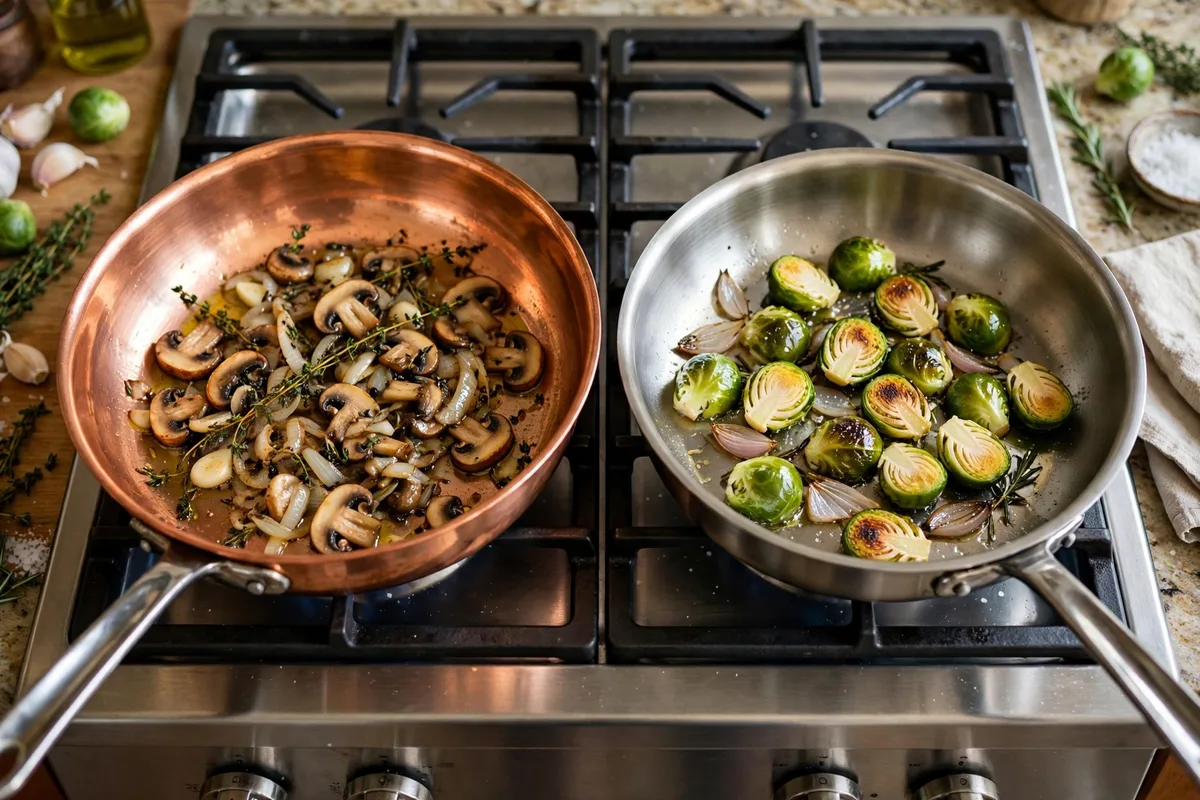
Copper vs stainless steel cookware for beginners: copper is the fastest, most precise cooking metal — it heats and cools almost instantly — while stainless steel is the toughest, most forgiving everyday metal. Copper conducts heat about 20 times faster than stainless steel, which is why sauces stay silky in copper and scorch in a thin stainless pan. But copper costs far more, needs polishing, and does not work on induction. If you are a beginner buying your first good pan, start with stainless steel: it does nearly everything, costs less, and asks for almost no care.
copper vs stainless steel cookware for beginners — what is the short answer?
Copper is pure metal with a lining — usually tin or stainless steel — because bare copper reacts with acidic food. It heats in seconds, cools in seconds, and gives you instant control over sauces, caramel, and delicate fish. Stainless steel is an alloy of iron, chromium, and nickel that never reacts with food, never rusts, and lasts for decades; on its own it conducts heat poorly, so good stainless pans have an aluminum or copper core sandwiched inside. That is copper vs stainless steel pans pros and cons in one line: copper is control, stainless steel is durability — and for a beginner, durability wins first.
How do I do it step by step?

- Learn what each pan is made of. Copper cookware is a copper shell lined with tin or stainless steel, because bare copper reacts with tomatoes, vinegar, and citrus. Stainless steel cookware is steel inside and out, with an aluminum or copper core hidden in the middle to spread heat. The lining and the core are what you are really buying — ask about both before you buy either pan.
- Test the heat response. Put each pan on medium heat and watch: copper reaches cooking temperature in seconds and cools within seconds of turning the burner down. Stainless steel takes longer to heat and holds its heat after the burner is off, so food keeps cooking from stored heat. Fast response suits sauces; stored heat suits searing and browning in batches.
- Match the pan to your cooking. Copper wins for sauces, caramel, custards, and delicate fish — jobs where a few seconds decide silky or scorched. Stainless steel wins for everyday cooking: browning meat, boiling, braising, and anything acidic that cooks for a while. List your five most-cooked meals: if none of them is a sauce, you do not need copper yet.
- Check the lining before you buy copper. Tin-lined copper is gentle and traditional, but the tin wears away over years and needs re-tinning, and it melts at about 450°F. Stainless-lined copper is tougher and handles higher heat, but it costs more. Never cook acidic food in unlined copper — it can leach copper into the food and change the taste.
- Check induction before you buy either pan. Copper is not magnetic, so a copper pan does not work on induction unless the maker adds a magnetic steel layer to the base. Stainless steel usually works on induction, especially multi-layer pans with a reinforced base. If your stove is induction, copper is usually the wrong buy — test any pan with a magnet first.
- Compare the real cost, not the sticker. A single copper pan often costs several times what a good stainless steel pan costs, and a full copper set can cost more than a whole kitchen of stainless steel. Copper also needs polishing to keep its shine and re-tinning over its life. See how to clean copper pan without damaging it for the routine. Stainless steel needs almost no care beyond washing and drying. That is the copper vs stainless steel pans pros and cons by the wallet: copper is a luxury, stainless steel is the workhorse.
- Buy stainless steel first, add one copper pan later. Buy a good stainless steel pan first — a 10-inch tri-ply pan with an aluminum core — and cook with it for a few months. If you find yourself making sauces, caramel, or delicate fish every week, add one copper saucepan later. One copper pan for precision, stainless steel for everything else, is the setup most good kitchens end up with.
What mistakes should I avoid?

- Buying a full copper set first. A copper set costs several times a stainless steel set, needs polishing and re-tinning, and does not work on induction. Fix: buy stainless steel first, and add one copper saucepan later if you cook sauces every week.
- Cooking acidic food in unlined copper. Bare copper reacts with tomatoes, vinegar, and citrus, and can leach copper into the food. Fix: use lined copper only, and cook acidic food in stainless steel, which never reacts.
- Using copper on induction. Copper is not magnetic, so it simply does not heat on an induction cooktop. Fix: test any pan with a magnet before you buy it, and buy induction-ready stainless steel for an induction stove.
- Polishing copper until it shines every week. A copper pan works just as well with a patina — the dull, aged look is normal and harmless. Fix: polish only when you want the look; the cooking does not need it.
- Expecting stainless steel to heat like copper. Stainless steel heats slowly and holds heat after the burner is off, so sauces can overcook from stored heat. Fix: turn the heat down early and move the pan off the burner when the food is nearly done.
- Buying thin copper to save money. Thin copper warps, heats unevenly, and defeats the whole point of copper — even heat and instant control. Fix: buy thick copper with a good lining, or buy stainless steel instead; thin copper is the worst of both worlds.
What do I need, and what should I skip?
You need a 10-inch tri-ply stainless steel pan to start; a magnet to test induction compatibility; wooden or silicone utensils; a soft sponge and mild dish soap.
Skip buying a full copper set as a first set. Skip unlined copper for acidic food. Skip copper on an induction stove without a magnetic base. Skip polishing copper every week — a patina is fine.
Copper vs stainless steel cookware for beginners — which one should you buy first?
| Pan | Heat response | Care | Best for |
|---|---|---|---|
| Copper | Heats and cools in seconds | Polish, re-tin over years | Sauces, caramel, delicate fish |
| Stainless steel | Heats slowly, holds heat | Wash and dry | Everyday cooking, searing, acidic food |
| Copper | About 20 times faster conduction | Tin lining wears out | Precision cooking |
| Stainless steel | Core spreads the heat | Almost no maintenance | First good pan |
| Either pan | Both last for decades | Both need drying | Buy stainless first |
What does the worked example look like?
Worked example: 1 copper pan against 3 stainless steel pans. You have the budget for one good pan. A typical copper saucepan costs about 3 times what a comparable stainless steel pan costs — say 3 units of money against 1 unit for the same size. For the price of 1 copper pan, you could buy 3 stainless steel pans: a frying pan, a saucepan, and a saute pan. That is 3 divided by 1, which is 3 pans for the price of 1. One copper pan gives you precision for sauces; 3 stainless steel pans give you a whole everyday setup. That is copper vs stainless steel cookware for beginners in real numbers: copper costs about 3 times as much per pan, so beginners get more cooking from stainless steel first. Our stainless steel vs nonstick cookware set guide compares stainless sets against the other main option for beginners.
When should I stop?
Stop using a copper pan whose tin lining has worn through to bare copper — get it re-tinned, or cook only non-acidic food in it until you do. Stop heating copper on high with nothing in it: high heat can damage the lining, and tin melts at about 450°F. And stop buying copper because it looks beautiful in the shop — buy it because you cook the food that needs it, which is sauces, caramel, and delicate fish, every single week.
What is the quick checklist?
- Copper heats and cools in seconds; stainless steel holds heat.
- Copper pans have a lining — never cook acidic food in unlined copper.
- Copper does not work on induction unless the base is magnetic.
- Copper costs about 3 times a comparable stainless steel pan.
- Stainless steel is the better first pan for most beginners.
- Add one copper saucepan later, only if you cook sauces weekly.
What else helps on Kitchenlify?
- Choosing Guides
- Stainless Steel vs Nonstick vs Cast Iron for Beginners
- How to Choose a Cookware Set for Beginner's Guide
- Hard-Anodized vs Die-Cast Aluminum Cookware
- All guides
Frequently asked questions
Copper vs stainless steel cookware for beginners — which should I buy first?
Stainless steel. It does nearly everything — browning, boiling, braising, acidic food — costs far less, needs almost no care, and works on induction. That is the short answer to copper vs stainless steel cookware for beginners: start with a good tri-ply stainless steel pan, and add one copper saucepan later only if you cook sauces, caramel, or delicate fish every week.
Copper vs stainless steel cookware — why is copper so much better for sauces?
Copper conducts heat about 20 times faster than stainless steel, so the whole pan reaches the same temperature at once and cools the moment you turn the heat down. A sauce that would scorch in a hot spot stays silky in copper. That instant response is what chefs pay for — and it is the one job where copper clearly beats stainless steel.
Copper vs stainless steel pans pros and cons — what are the downsides of copper?
Cost, care, and induction. Copper costs several times what stainless steel costs, needs polishing to keep its shine, needs re-tinning when a tin lining wears out, and does not work on induction unless the base is magnetic. Stainless steel has none of those problems, but it heats slower and responds slower to heat changes.
Is copper cookware safe to cook with?
Yes, when it is lined. Makers line copper pans with tin or stainless steel, and the lining keeps food from touching bare copper. Unlined copper is not safe for acidic food like tomatoes or vinegar, because copper can leach into the food. Buy lined copper, keep the lining in good shape, and it is safe for everyday cooking.
Does copper work on induction cooktops?
No, not on its own — copper is not magnetic. A copper pan only works on induction if the maker adds a magnetic steel layer to the base, which many copper pans do not have. Test a pan with a magnet: if the magnet does not stick firmly to the base, the pan will not heat on induction. Stainless steel usually passes the magnet test.
Is stainless steel better than copper for everyday cooking?
Yes, for most people. Stainless steel is tough, non-reactive, cheap to maintain, and works on every stove. It sears, browns, boils, and braises well. Copper beats it only for precision jobs — sauces, caramel, delicate fish — where instant heat control matters. For everyday meals, stainless steel is the better pan.
How do I clean a copper pan?
Wash the inside with warm water, mild dish soap, and a soft sponge, and dry it at once. Polish the outside only when you want the shine — a patina is normal and does not affect cooking. Never use steel wool or harsh scrubbers on the lining, and never put a hot copper pan under cold water.
How long does copper cookware last?
Decades, with care. The copper itself lasts a lifetime, but a tin lining wears away over years and needs re-tinning, which costs money and takes time. Stainless-lined copper lasts longer without re-tinning. Stainless steel also lasts for decades, with no lining to replace at all.
Should a beginner buy one copper pan or a stainless steel set?
A stainless steel set — or even one good stainless steel pan — first. One copper pan is a luxury for a cook who already owns the basics and makes sauces weekly. A beginner gets far more cooking from stainless steel: a frying pan, a saucepan, and a saute pan for the price of one copper pan.