How to Clean Cast Iron Skillet After Cooking Without Ruining Seasoning
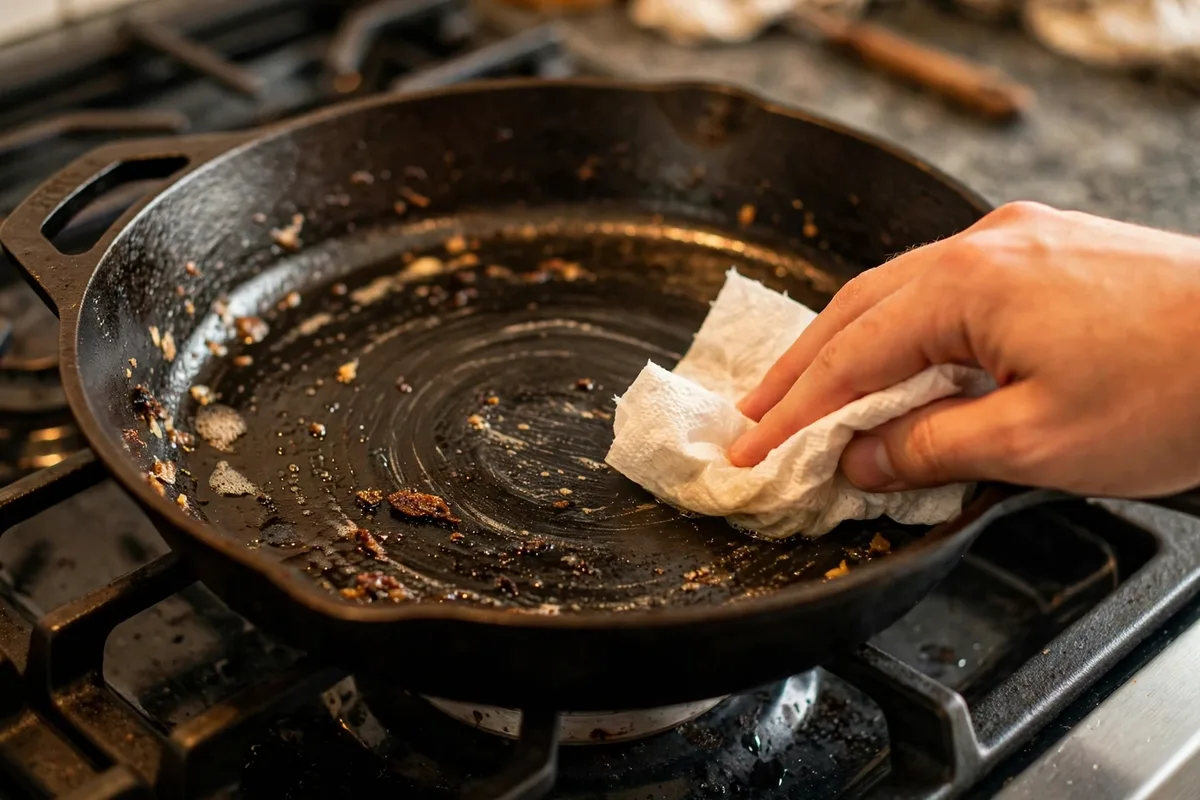
How to clean cast iron skillet after cooking without ruining seasoning: clean it while it is still warm with hot water and a soft brush, dry it fully on low heat, then wipe on a thin layer of oil. Seasoning is a thin layer of oil baked onto the iron, and it survives hot water and a brush — what ruins it is soaking, the dishwasher, and steel wool. This guide shows the everyday clean, the salt scrub for stuck food, and the drying step that stops rust.
how to clean cast iron skillet after cooking — what is the short answer?
Clean the skillet while it is still warm: wipe out loose food, rinse with hot water, and scrub gently with a stiff brush or a chainmail scrubber. Dry it at once — towel-dry, then heat it on low for 2 to 3 minutes — and wipe on a thin layer of oil while it is still warm. Never soak the pan, never put it in the dishwasher, and never use steel wool for everyday cleaning.
How do I do it step by step?

- Let the skillet cool until it is warm, not hot. Take the pan off the heat and wait a few minutes until you can hold the handle with a dry cloth. A warm pan cleans easily; a scorching pan can crack if cold water hits it, and a cold pan holds onto stuck food.
- Wipe out loose food and oil. Use a paper towel to wipe out crumbs, oil, and loose bits while the pan is still warm. For most meals this removes most of the mess before any water touches the pan.
- Rinse with hot water and scrub gently. Run hot water into the pan and scrub with a stiff brush, a non-metal scrubber, or a chainmail scrubber. Use a small amount of mild dish soap only if the pan is greasy or the food is stuck — modern soap will not strip a well-built seasoning.
- Use coarse salt for stuck-on food. Pour a handful of coarse salt into the warm pan and rub it in circles with a folded paper towel. The salt acts as a gentle scrubber that lifts stuck food without cutting into the seasoning. Throw the dirty salt away and rinse the pan.
- Rinse quickly and never soak. Rinse the pan under hot running water and get it dry right away. Do not leave cast iron sitting in water or in a sink full of soapy water — water is what causes rust, and a soaked pan can start rusting within hours.
- Dry it fully on low heat. Towel-dry the pan, then set it on the stove over low heat for 2 to 3 minutes until every trace of water has evaporated. Check the handle and the outside too — rust starts wherever water is left behind.
- Wipe on a thin layer of oil. While the pan is still warm, add a few drops of neutral oil — canola, grapeseed, or vegetable oil — and rub it over the whole cooking surface with a paper towel. Wipe until the surface looks almost dry, not greasy, then let the pan cool before you store it.
What mistakes should I avoid?

- Soaking the pan in the sink. Water sitting in cast iron starts rust within hours. Fix: rinse quickly and dry at once, every time.
- Putting it in the dishwasher. Dishwasher detergent and long hot cycles strip seasoning and invite rust. Fix: wash cast iron by hand only.
- Scrubbing with steel wool for everyday cleaning. Steel wool cuts through seasoning. Fix: use a stiff brush, a chainmail scrubber, or coarse salt — save steel wool for rust removal.
- Leaving the pan to air-dry. Air-drying leaves water in the pores of the iron, and rust follows. Fix: towel-dry, then heat on low until fully dry.
- Using too much oil after cleaning. A thick oil layer turns sticky and goes rancid. Fix: wipe the oil until the surface looks almost dry.
- Cleaning a scorching-hot pan with cold water. Cold water on a very hot pan can crack the iron or damage the seasoning. Fix: let the pan cool until it is warm first.
What do I need, and what should I skip?
You need hot water and a stiff brush or chainmail scrubber; paper towels and coarse salt for stuck food; a neutral oil with a high smoke point, such as canola or grapeseed oil; a dry towel for drying.
Skip soaking the pan in water or leaving it in the sink. Skip the dishwasher, which strips seasoning. Skip steel wool for everyday cleaning. Skip abrasive powders and harsh oven cleaners.
How to clean cast iron skillet after cooking without ruining seasoning — which method should I choose?
| Method | Best for | Time | Risk to seasoning |
|---|---|---|---|
| Hot water + brush | Everyday cleaning after most meals | About 3 minutes | None |
| Coarse salt scrub | Stuck-on food without water | About 5 minutes | None |
| A little mild soap | Greasy or smelly residue | About 5 minutes | None on well-seasoned pans |
| Boiling water in the pan | Burnt-on food that will not budge | About 10 minutes | Low — dry and oil after |
| Steel wool | Never for everyday cleaning — rust removal only | — | Strips seasoning |
What does the worked example look like?
Worked example: a skillet after frying eggs. You fried eggs in a 12-inch skillet and some egg is stuck to the center. Let the pan cool until warm, wipe out the loose crumbs, and rinse with hot water while you scrub with a stiff brush. The stuck egg lifts with a handful of coarse salt rubbed in circles — that is how to clean cast iron skillet after cooking without soap, and it takes about 5 minutes. Rinse, towel-dry, heat on low for 2 minutes, and wipe on a few drops of oil. The pan is dry, lightly oiled, and ready for the next meal.
When should I stop?
Stop and re-season the pan if food sticks all over even after a good clean, or if the surface looks dull gray instead of dark and smooth — the seasoning has worn thin. Stop using a method that leaves the pan wet or sticky, and do not keep scrubbing a pan that is already clean: over-scrubbing wears the seasoning faster than cooking does.
What is the quick checklist?
- Clean while the pan is still warm.
- Hot water and a brush — soap only if needed.
- Never soak it or put it in the dishwasher.
- Towel-dry, then heat on low until fully dry.
- Wipe on a thin layer of oil.
- Store dry, with a paper towel inside if stacking.
What else helps on Kitchenlify?
- Cleaning & Care
- How to Season Cast Iron First Time
- How to Remove Rust From Cast Iron Skillet
- Stainless Steel vs Nonstick vs Cast Iron for Beginners
- All guides
Frequently asked questions
How to clean cast iron skillet — can I use soap?
Yes, a small amount of mild dish soap is fine on a well-seasoned pan, as long as you rinse well and dry it at once. The old rule against soap comes from lye-based soaps, which modern dish soap does not contain. That is the short answer to how to clean cast iron skillet: hot water and a brush, soap only if you need it, dry fully, and oil lightly.
How to clean a cast iron skillet after use — do I clean it hot or cold?
Clean it while it is still warm, not scorching hot and not stone cold. Warm iron releases food easily, while a cold pan holds onto stuck food and a very hot pan can crack if cold water hits it. That is the whole timing rule for how to clean a cast iron skillet after use: warm, not hot, not cold.
How often should I oil my skillet?
Wipe on a thin layer of oil after every wash, while the pan is still warm from drying. That light coat is what keeps the seasoning fed and stops rust between uses. It takes seconds and it is the single best habit for a cast iron pan.
Can I put a cast iron skillet in the dishwasher?
No. The long hot cycle and harsh detergent strip seasoning, and the pan sits wet long enough to rust. Wash cast iron by hand only, dry it at once, and oil it lightly.
What if food is really stuck?
Pour a handful of coarse salt into the warm pan and rub it in circles with a folded paper towel, or simmer a little water in the pan for a few minutes and scrape gently. Both lift stuck food without cutting into the seasoning — that is how to clean cast iron skillet after cooking without soap, and it works for most stuck food. Dry and oil the pan after.
Why does my skillet feel sticky after oiling?
You used too much oil. The layer should look almost dry, not wet or greasy. Wipe the pan again with a clean paper towel until no oil comes off, and heat it on low for a few minutes to set the thin coat.
Can I cook acidic food like tomatoes in cast iron?
Yes, for a short cook — a quick tomato sauce is fine in a well-seasoned pan. Do not simmer acidic food for a long time, and do not store it in the pan, because acid wears the seasoning and can give food a metallic taste.
How do I store a cast iron skillet?
Store it dry, with the lid off or a paper towel inside to absorb moisture. If you stack pans, put a paper towel or a pan protector between them so the seasoning does not get scratched. Never store a damp pan.
My skillet has a little rust — what now?
A few orange spots are surface rust and easy to fix: scrub them with coarse salt and oil, or with fine steel wool, then wash, dry fully, and re-season the pan. If rust covers most of the pan, see the rust removal guide linked below.