How to Clean Ceramic Nonstick Pan Without Damaging Coating
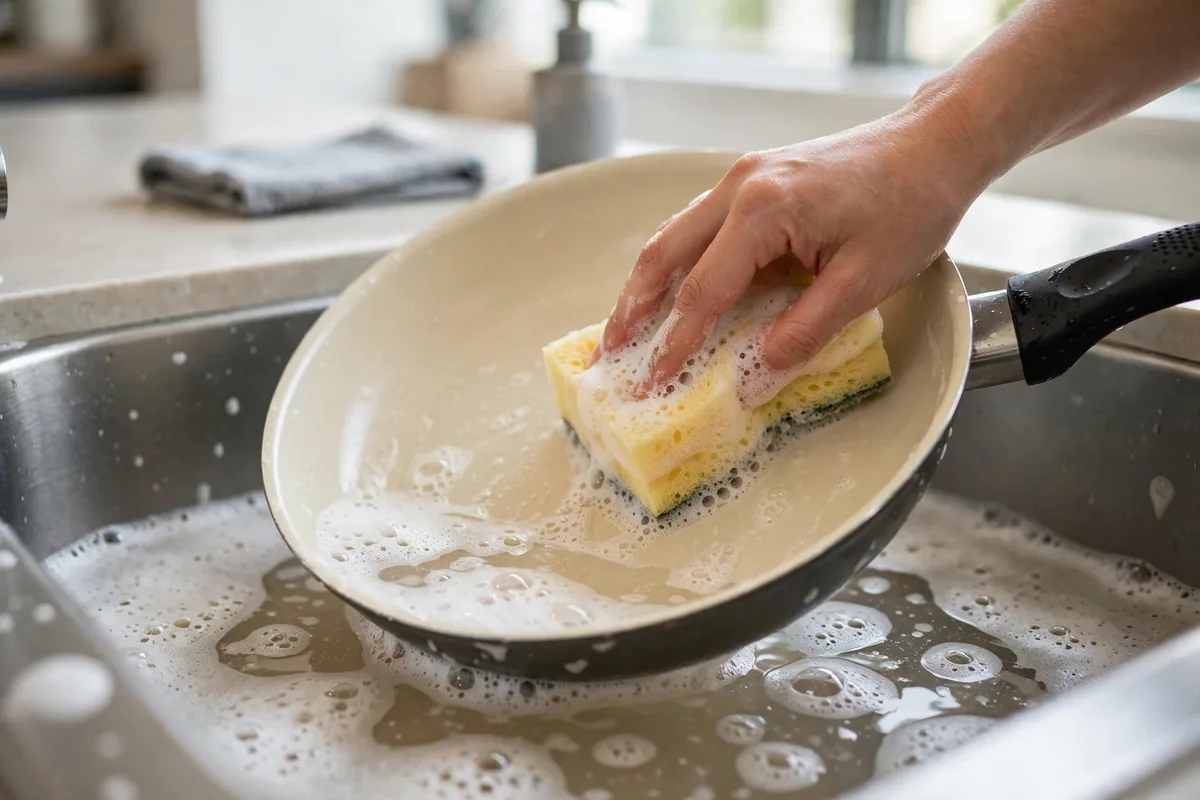
How to clean ceramic nonstick pan without damaging coating: let the pan cool first, wash it with warm water, mild dish soap, and a soft sponge, and lift stuck food with a baking-soda paste instead of scrubbing. Ceramic coating is a smooth, hard surface that chips and scratches more easily than it looks — hot water on a hot pan, steel wool, and abrasive powders are what damage it. This guide shows the everyday wash, the stuck-food rescue, and the habits that keep the coating slick.
how to clean ceramic nonstick pan without damaging coating — what is the short answer?
Let the pan cool for a few minutes, then wash it with warm water and a small amount of mild dish soap using a soft sponge or cloth. For stuck food, sprinkle baking soda over the spot, add a little warm water, wait 15 minutes, and wipe it away — that is how to clean ceramic nonstick pan without ruining coating, and it works because baking soda lifts residue without scratching. Rinse, dry fully, and store the pan with a paper towel inside if you stack it. Never use steel wool, abrasive powders, or metal scrapers, and never plunge a hot ceramic pan into cold water.
How do I do it step by step?

- Let the pan cool before you wash it. Take the pan off the heat and wait a few minutes until it is warm, not hot. Plunging a hot ceramic pan into cold water can crack the coating or warp the pan — the sudden temperature change is the single fastest way to damage it. Warm is fine to wash; scorching hot is not.
- Wipe out loose food and oil. Use a paper towel to wipe out crumbs and excess oil while the pan is still warm. Most of the mess comes off before any water touches the pan, which means less scrubbing later.
- Wash with warm water, mild soap, and a soft sponge. Run warm water into the pan, add a small amount of mild dish soap, and wash with a soft sponge or cloth. That is the whole everyday answer to how to clean ceramic nonstick pan: warm water, mild soap, soft sponge — nothing stronger is needed for a normal meal. Rinse well so no soap film is left behind.
- Soak briefly for stuck food, not overnight. If food is stuck, fill the pan with warm water and a drop of dish soap and let it sit for 15 to 30 minutes. A short soak loosens residue; an overnight soak does nothing extra and can dull the coating over time.
- Lift stubborn spots with baking soda. Sprinkle 2 tablespoons of baking soda over the stuck area, add just enough warm water to make a paste, and wait 15 minutes. Wipe the paste away with a soft sponge — the baking soda lifts the residue without scratching. That is how to clean a ceramic pan without damaging it when food will not budge: baking soda, not a scrubber.
- Rinse and dry fully. Rinse the pan under warm running water and dry it at once with a soft towel. Do not leave a ceramic pan to air-dry in a dish rack full of wet dishes — water spots and damp storage dull the coating over time.
- Store it protected. If you stack pans, put a paper towel or a pan protector between them so the pan above cannot scratch the ceramic surface below. Store the pan dry, with the lid off, so no moisture is trapped inside.
What mistakes should I avoid?

- Washing a hot pan with cold water. The sudden temperature change can crack the coating or warp the pan. Fix: let the pan cool until it is warm first.
- Scrubbing with steel wool or a scouring pad. Ceramic coating scratches easily, and every scratch is a place food will stick next time. Fix: use a soft sponge and baking soda only.
- Using abrasive powders or oven cleaner. Abrasive cleaners wear the coating down and oven cleaner attacks it. Fix: mild dish soap and baking soda are all a ceramic pan needs.
- Putting the pan in the dishwasher. Dishwasher detergent is harsh and the pan bangs against other dishes, which chips the coating. Fix: wash ceramic pans by hand.
- Soaking the pan overnight. A long soak does not clean better than a 15-minute soak — it just leaves the coating sitting in dirty water. Fix: soak 15 to 30 minutes, then wash.
- Stacking pans without protection. The pan on top scratches the ceramic surface of the pan below. Fix: put a paper towel or a pan protector between stacked pans.
What do I need, and what should I skip?
You need warm water and mild dish soap; a soft sponge or cloth — never steel wool; baking soda for stuck food; paper towels or pan protectors for stacking.
Skip steel wool, abrasive powders, and metal scrapers. Skip plunging a hot pan into cold water. Skip the dishwasher for a ceramic pan. Skip oven cleaner or harsh sprays on the coating.
How to clean ceramic nonstick pan without ruining coating — which method should I use?
| Mess | Method | Time | Risk to coating |
|---|---|---|---|
| Everyday cooking residue | Warm water + mild soap + soft sponge | About 3 minutes | None |
| Light stuck food | Short warm soak, 15 to 30 minutes | About 20 minutes | None |
| Stubborn stuck food | Baking soda paste, wait 15 minutes | About 20 minutes | None |
| Burnt-on food | Baking soda paste + gentle wipe, repeat if needed | About 30 minutes | Low |
| Steel wool or abrasive powder | Never — it scratches the coating | — | High |
What does the worked example look like?
Worked example: a ceramic pan after frying eggs and cheese. You fried eggs and melted cheese in a ceramic pan and a thin layer is stuck to the center. Let the pan cool until warm, wipe out the loose crumbs, and wash it with warm water, mild soap, and a soft sponge — most of the residue comes off in about 3 minutes. The stuck center stays, so sprinkle 2 tablespoons of baking soda over it, add a little warm water to make a paste, and wait 15 minutes. Wipe the paste away with the soft sponge and the pan is clean, with no scratching. That is how to clean a ceramic pan without damaging it: baking soda lifts what the sponge cannot, and the coating stays smooth.
When should I stop?
Stop scrubbing if the food is not lifting — switch to the baking soda paste and wait, instead of pressing harder. Stop using a method that leaves visible scratches, and stop washing the pan in the dishwasher even once: one rough cycle can chip a coating that was fine. And stop using the pan if the coating is chipped all over and food sticks everywhere — at that point the pan needs replacing, not cleaning.
What is the quick checklist?
- Cool the pan before washing.
- Warm water, mild soap, soft sponge.
- Baking soda paste for stuck food — never steel wool.
- Short soak only, 15 to 30 minutes.
- Dry fully right away.
- Stack with a paper towel or pan protector between pans.
What else helps on Kitchenlify?
- Cleaning & Care
- When to Replace Nonstick Pan
- What to Do When Nonstick Coating Peels
- Best Ceramic Cookware Set for Gas Stove Beginners
- All guides
Frequently asked questions
How to clean ceramic nonstick pan — can I use dish soap?
Yes. That is the everyday answer to how to clean ceramic nonstick pan: warm water, a small amount of mild dish soap, and a soft sponge. Mild soap will not damage the coating. Rinse well so no soap film is left behind, and dry the pan at once.
How to clean a ceramic pan without damaging it when food is stuck?
Sprinkle 2 tablespoons of baking soda over the stuck spot, add a little warm water to make a paste, and wait 15 minutes, then wipe it away with a soft sponge. Baking soda lifts residue without scratching. That is the safest stuck-food method for how to clean a ceramic pan without damaging it — no steel wool, no abrasive powder.
Can I put a ceramic nonstick pan in the dishwasher?
It is best not to. Dishwasher detergent is harsh on ceramic coating, and the pan bangs against other dishes, which chips it. Hand-washing takes 3 minutes and keeps the coating slick far longer.
Can I use steel wool on a ceramic pan?
No. Steel wool scratches ceramic coating, and every scratch is a place food will stick next time. Use a soft sponge for everyday washing and baking soda paste for stuck food.
Why does my ceramic pan stick now?
The coating may be scratched, or a layer of burnt oil may have built up on it. Try the baking soda paste to lift the buildup, and cook on low-to-medium heat with a little oil. If food still sticks everywhere after a good clean, the coating is worn out and the pan needs replacing.
Can I use vinegar on a ceramic pan?
A short soak in warm water with a splash of white vinegar can help lift mineral marks, but do not use vinegar as an everyday cleaner and never mix it with baking soda in the pan — the fizz does the cleaning, not the mix. Rinse well after.
How do I keep a ceramic pan nonstick for longer?
Cook on low-to-medium heat, use wooden or silicone utensils, wash by hand with a soft sponge, and store the pan with protection between stacked pans. High heat and metal utensils are what wear a ceramic coating out fastest.
Is it safe to cook with a chipped ceramic pan?
A few small chips at the rim are usually fine to keep using, but a coating that is chipped all over the cooking surface should be replaced — food sticks to the bare spots, and the pan will not cook evenly. When in doubt, replace it.
Can I use cooking spray on a ceramic pan?
It is best not to. Cooking spray leaves a sticky film on ceramic coating that builds up over time and makes food stick more. Use a small amount of butter or oil instead.