How to Clean a Stainless Steel Sink Without Scratching It
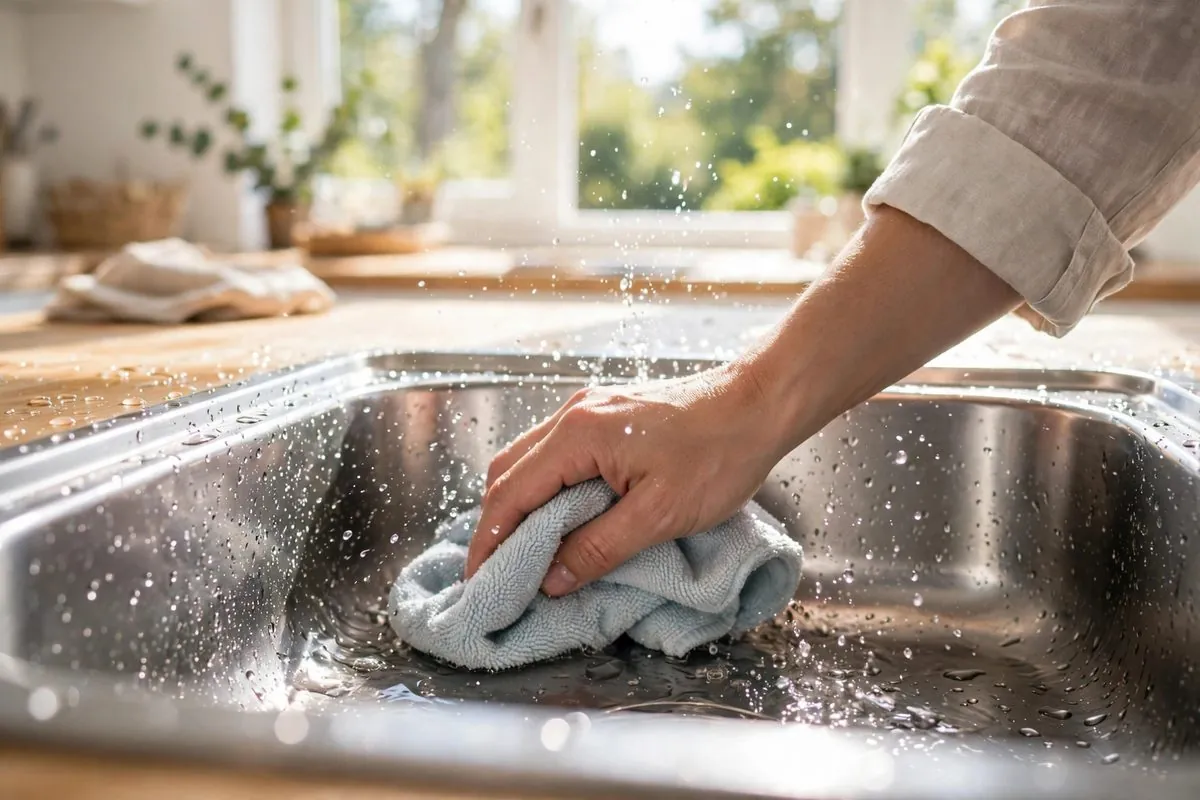
How to clean a stainless steel sink without scratching it comes down to the grain: a stainless steel sink scratches when it is cleaned across its grain with something harder than the steel. The safe routine is short — find the grain, clean with it, and keep the harsh tools out of the sink entirely.
The short answer: how to clean a stainless steel sink without scratching it
A stainless steel sink scratches when it is cleaned across its grain with something harder than the steel. Find the grain, clean with it, use a soft cloth and warm soapy water for daily cleaning, and keep steel wool and abrasive powders out of the sink entirely. Most sinks do not need a special cleaner; they need a gentle routine done regularly.
Step by step: cleaning a stainless steel sink
- Clear the sink and rinse it first. Remove dishes, food scraps, and anything sitting in the basin. Rinse with warm water to wash away grit, because grit trapped under a cloth is what causes fine scratches, even with a soft cloth.
- Find the grain. Look closely at the steel in good light. You will see faint lines running in one direction — that is the grain. All rubbing, wiping, and drying should follow that direction, not go across it. If you cannot see the grain, it usually runs front to back in most sinks, but check in bright light before you start.
- Wash with warm, soapy water and a soft cloth. Use ordinary dish soap and a soft sponge, microfiber cloth, or soft cotton cloth. Wipe with the grain, including the basin, the rim, and around the drain. For everyday cleaning, this is enough, and it is the step to do daily, not weekly.
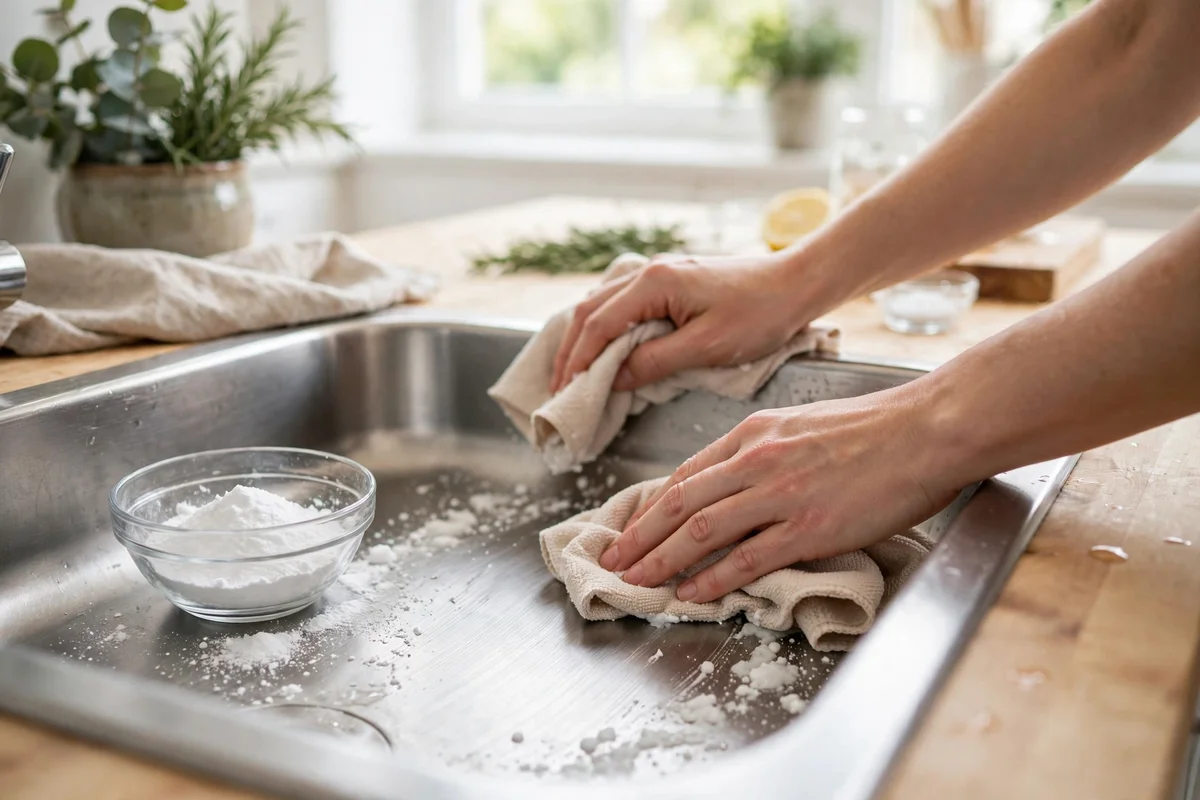
- Use a baking soda paste for stains and dull areas. For water marks, dull patches, or light stains, make a paste of baking soda and a little water, spread it on the area, and leave it for 10 to 15 minutes. Rub gently with a soft cloth, following the grain, then rinse well. Do not use the paste with a scouring pad — the paste is gentle, but a harsh pad is not.
- Rinse and dry straight away. Rinse all soap and paste away with clean water, then dry the sink with a soft towel, again following the grain. Drying is what prevents most water spots, especially in hard-water areas. A sink left wet will spot, however well you cleaned it.
- Clean the drain area separately. Lift out the drain strainer if yours comes out, wash it with soapy water, and wipe around the drain opening with a soft cloth. Food and soap build up here first, and it is often the source of a smell that seems to come from the whole sink.
- Finish with a quick polish if you want shine. For a brighter finish, buff the dry sink lightly with a clean, dry microfiber cloth, still following the grain. You do not need oil or a special polish for a normal kitchen sink, and oil can attract dust and feel greasy on a surface you wash dishes in.
Common mistakes to avoid
- Scrubbing across the grain. This is the main cause of visible scratches. Even a soft cloth, used across the grain for months, will leave marks. Always follow the grain.
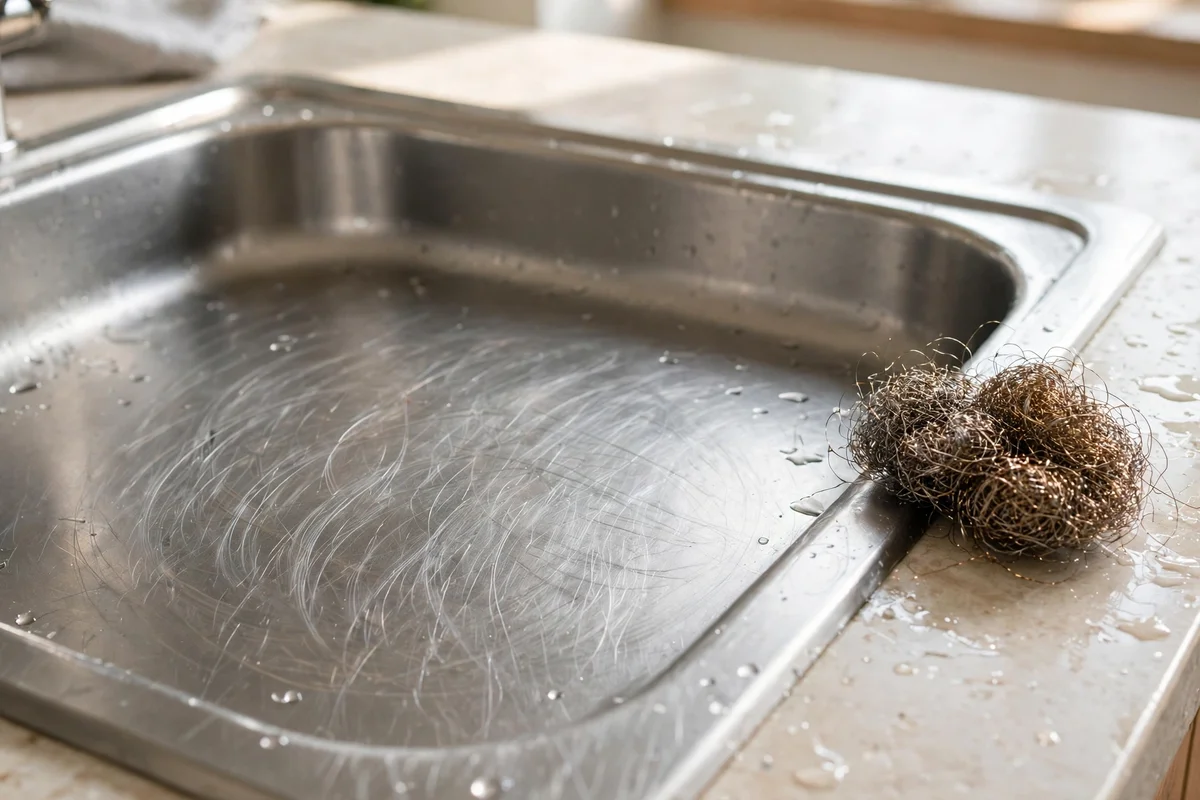
- Using steel wool, metal scourers, or abrasive powder. These are too hard for stainless steel and will scratch it permanently. Once scratched, a sink catches dirt more easily and looks dull faster.
- Leaving wet dishes, cast iron, or metal items sitting in the sink. Heavy metal items can scratch the basin when they are moved, and wet items left for hours can leave rust marks from the item itself, not from the sink steel. Rinse and dry items, and do not store them in the sink.
- Leaving bleach or harsh chemicals sitting in the sink. Do not leave strong cleaners, bleach, or drain products sitting in a stainless steel basin for a long time. Rinse them away promptly and ventilate the room if you use them at all.
- Skipping drying. In hard-water areas, a sink that is cleaned but left wet will spot within hours, and the spots will look like the cleaning did not work. Drying takes a minute and prevents most of the problem.
- Using the same scouring sponge for the sink and for pans. A sponge that has picked up grit from a pan can scratch the sink. Keep a soft sink cloth separate from any scouring tools.
What you need — and what to skip
You need dish soap, baking soda, a soft sponge or microfiber cloth, and a soft towel for drying. That is the complete routine for most sinks. A dedicated sink cloth, kept separate from scouring pads, is worth having, because it stays grit-free.
Skip steel wool, abrasive powders, metal scourers, and any cleaner that says it is abrasive on the label. Skip stainless steel polishes and oils unless your sink is badly dulled and you have already tried the baking soda paste — for a normal sink, they add a layer you do not need. Skip leaving any cleaner to soak in the sink for hours; a short paste treatment is enough.
Daily, weekly, and occasional cleaning
| How often | What to do | Time it takes |
|---|---|---|
| Daily | Rinse, wipe with warm soapy water, dry with a soft towel | About 2 minutes |
| Weekly | Baking soda paste on dull areas, clean the drain strainer | About 10 minutes |
| Occasionally | Buff dry with a microfiber cloth for shine | About 2 minutes |
| Never | Steel wool, abrasive powder, harsh chemicals left to soak | — |
When to stop — and what cannot be fixed
Stop cleaning when the sink feels smooth and looks even in bright light, with no dull patches or rough areas. Water spots that return after drying are usually a hard-water problem, not a cleaning failure, and drying after every use is the best fix.
Deep scratches from steel wool or heavy metal items cannot be washed away, and trying to polish them out with abrasive products will usually make them worse. If a sink is deeply scratched all over, it will still work fine as a sink — it will just look dull. Replacement is a cosmetic choice in that case, not a hygiene one, unless the surface is damaged in a way that traps food and cannot be cleaned.
Related on Kitchenlify
- Cleaning Essentials
- How to Clean a Burnt Stainless Steel Pan Without Scratching It
- How to Clean a Burnt Baking Sheet Without Scratching It
- How to Clean a Garlic Press Properly
- All guides
The faucet sits right above the sink, and limescale shows there first — see How to Remove Limescale From a Kitchen Faucet.
Frequently asked questions
How do I find the grain of my stainless steel sink?
Look at the steel in bright light. You will see faint lines running in one direction. That is the grain. Wipe, rub, and dry in that direction, not across it, to avoid visible scratches.
Can I use baking soda on a stainless steel sink?
Yes. A paste of baking soda and a little water, left for 10 to 15 minutes and rubbed gently with a soft cloth in the direction of the grain, is safe for most sinks. Rinse well and dry afterwards.
Why does my sink get water spots even after cleaning?
Water spots are usually caused by hard water drying on the surface, not by dirt. Drying the sink with a soft towel after every wash prevents most spots, even if the water in your area is hard.
What should I never use on a stainless steel sink?
Steel wool, metal scourers, and abrasive powders. They scratch the steel permanently, and a scratched sink catches dirt more easily and looks dull faster. Keep a soft sink cloth separate from scouring tools.
Can scratches in a stainless steel sink be removed?
Light marks may fade with gentle cleaning, but deep scratches from steel wool or heavy items cannot be washed away, and abrasive polishing usually makes them worse. A deeply scratched sink still works fine; replacement is usually a cosmetic choice.
Can I use vinegar on a stainless steel sink?
Yes, briefly, for water spots, but rinse it away fully with clean water and dry the sink. Do not leave vinegar or other acids sitting on the steel for a long time.
Why does my sink look dull even after cleaning?
Dullness is often hard water deposits or soap film, not damage. A baking soda paste followed by a full rinse and drying usually restores shine.
Should I dry my sink after every use?
Drying after washing helps a lot. It prevents water spots and mineral marks, especially in hard water areas, and it takes only a few seconds with a soft cloth.
Can I use a scouring pad on a stainless steel sink?
No, not a steel or abrasive pad, because it can scratch the surface and trap rust. Use a soft sponge or microfiber cloth, and always rub in the direction of the grain.