How to Clean Waffle Maker Plates Without Submerging It
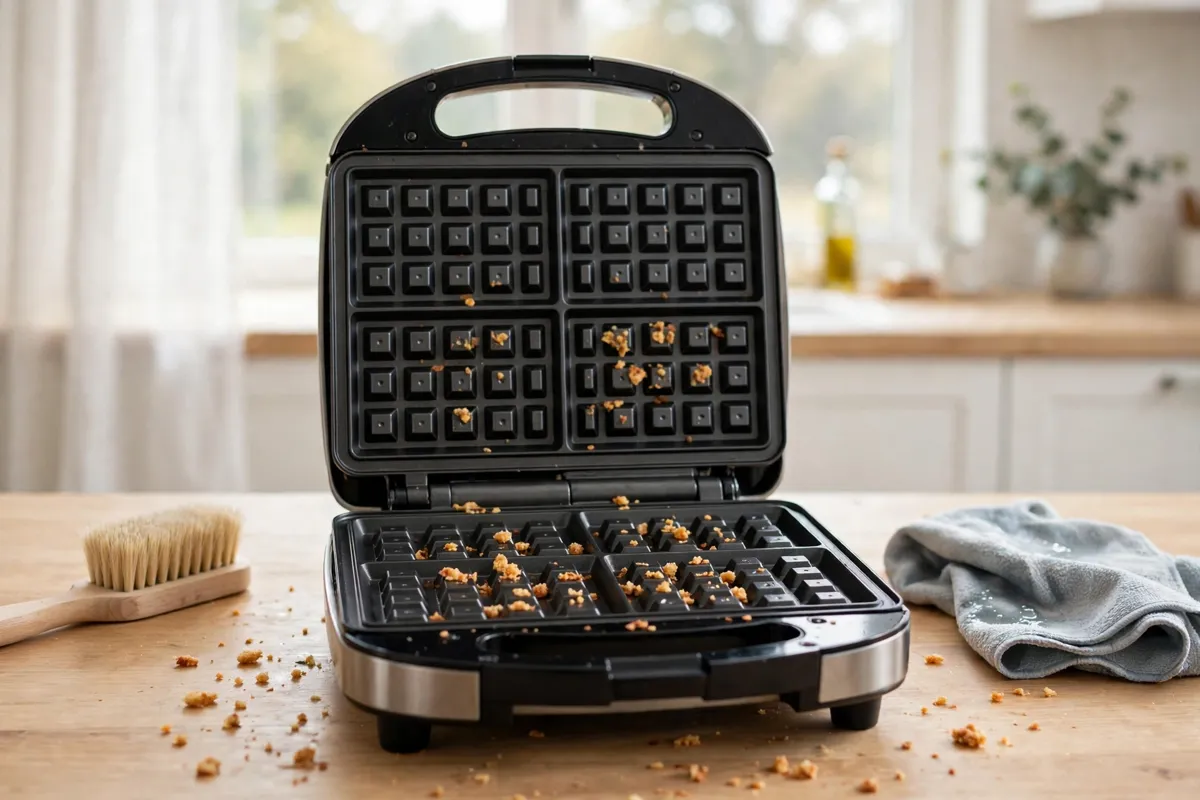
How to clean waffle maker plates without submerging it means cleaning the plates in place, with a damp cloth and a soft brush, while the body and electrics stay dry. Batter bakes into grid corners, and water near electrics feels risky for good reason: submerging a waffle maker can damage electrical parts and rust internal metal. This guide uses fixed, non-removable plates as the main worked example, because those are the hardest to clean, and it gives removable plates a separate short section at the end of the steps.
The short answer: how to clean waffle maker plates without submerging it
Unplug the maker, let it cool until it is warm, not hot, and brush crumbs out of the grids from the hinge toward the front edge. Wipe both plates with a cloth wrung out in warm, soapy water, working along the grids, then wipe again with a clean cloth dampened with plain water to remove soap. For stuck batter, soften it with a few drops of neutral cooking oil for a few minutes, or a baking soda paste on cool plates, lift it with a soft plastic scraper, wipe clean, and dry with the lid open before storing. Never submerge the maker, never pour water over the plates, and never use a metal scraper or steel wool on nonstick grids.
What do you need, and what should you skip?
You need a soft pastry brush or silicone brush, a soft cloth, a sponge, mild dish soap, warm water, a soft plastic scraper, and a dry towel. A soft toothbrush helps for grid corners and hinge edges, and a small bowl for soapy water keeps the cloth damp, not dripping. You do not need a special waffle cleaner, because soap, oil, and baking soda paste handle everyday and stuck batter without harsh chemicals.
Skip submerging the maker in a sink, skip pouring water over the plates, and skip running water into the hinge, controls, or cord area. Skip metal scrapers, steel wool, and abrasive pads, which scratch nonstick coatings, and skip harsh cleaners that can leave residue on cooking surfaces. Skip cleaning a maker that is still plugged in or still hot enough to burn, and skip closing and storing a maker whose plates are still damp.
How do you do it, step by step?
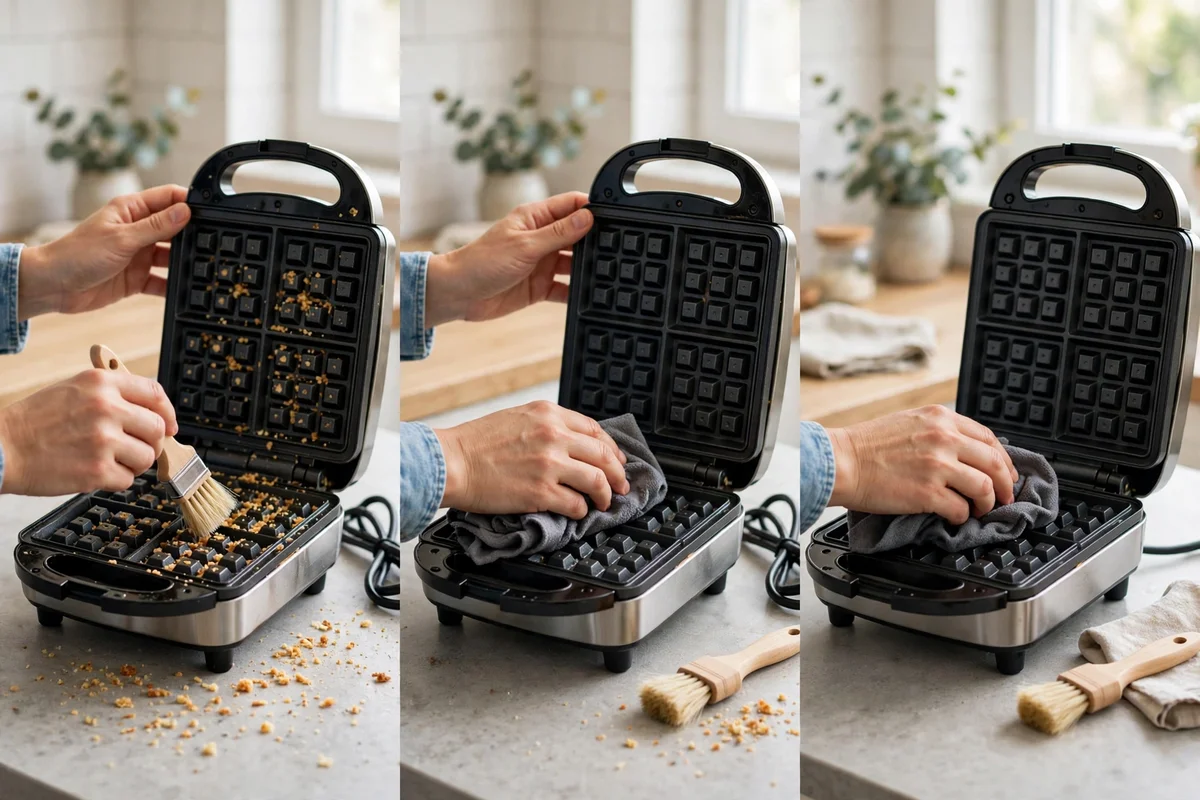
- Unplug the maker and let it cool until warm, not hot. Turn the maker off, unplug the cord, open the lid, and let it sit until the plates are warm, not hot, to the touch. A little remaining warmth helps loosen grease without risking burns, while a fully hot plate burns hands and a fully cold plate holds grease harder. Keep the cord away from water and crumbs while you work, and do not start wiping until you can hold a hand near the plates without heat discomfort.
- Brush crumbs out dry, from hinge to front edge. Use a soft pastry brush, silicone brush, or dry paper towel to sweep crumbs and loose batter out of each grid, working from the back hinge toward the front edge, so crumbs fall onto the counter or a tray where you can wipe them away. Brush both plates, top and bottom, and brush the hinge area gently, because batter collects there and a damp wipe alone pushes it deeper into the hinge. Do this dry step before any moisture, because wet crumbs turn to paste and stick harder in grid corners.
- Work a worked example: one weekend waffle maker, batter in every grid. For a worked example, take a fixed-plate waffle maker used for 4 waffles on a weekend morning, with batter baked into grid corners and a thin grease film on both plates. Unplug it, cool it until warm, brush crumbs from hinge to front, and wipe both plates with a soapy cloth, working along the grids. Wipe again with a plain-water cloth, check grid corners with a toothbrush, soften 2 stuck spots with oil for a few minutes, lift them with a plastic scraper, wipe clean, and dry with the lid open. The maker is clean when a dry cloth wipes the grids without picking up batter or grease, and no soap film remains.
- Wipe both plates with a damp, soapy cloth, along the grids. Mix a small bowl of warm water with a drop of mild dish soap, dip a soft cloth or sponge, and wring it until it is damp, almost dry, so water does not run into controls or electrical parts. Wipe along the grids, not across them in a rush, covering both plates, the rim, and the outer edge where batter overflowed. Wring the cloth often, so you are wiping with a damp cloth, not flooding the plates, and keep the cloth away from the cord and control area.
- Soften stuck batter with oil or baking soda paste, then lift it gently. For batter that survives the soapy wipe, put a few drops of neutral cooking oil on the hardened spots, leave them for a few minutes to soften, and lift the residue with the edge of a paper towel or a soft plastic scraper. For a burnt film that oil does not shift, spread a baking soda and warm water paste on the cool, unplugged plates over the worst spots, leave it for 10 to 15 minutes, and scrub gently with a soft brush or toothbrush. Wipe the paste off fully with a damp cloth, because paste left in grids hardens and affects the next batch.
- Wipe with plain water, then dry with the lid open. Go over both plates again with a clean cloth dampened with plain water only, to remove soap, oil, and paste residue, because soap left on plates affects the taste of the next waffles. Dry both plates with a soft towel, and leave the maker open to air dry fully before storing, so no moisture sits in grids or the hinge. Wipe the outside with a damp cloth and dry it too, and empty and wash any crumb tray separately, drying it fully before refitting.
- Clean removable plates separately, only if your maker has them. If your maker has removable plates, unplug it, cool it, and release the plates following the maker instructions, then hand wash them in warm, soapy water, rinse, and dry fully before refitting. Check the manual before using a dishwasher for removable plates, because some makers allow it and others warn that dishwasher heat harms the coating over time. Never wash the maker body itself in water, even when plates are removable, and never refit plates that are still damp, because moisture trapped under a plate reaches the body.
Fixed plates vs removable plates: what changes?
| Step | Fixed, non-removable plates | Removable plates |
|---|---|---|
| Main method | Wipe in place with a damp cloth, never submerge | Release plates, hand wash in warm, soapy water |
| Stuck batter | Oil drops or baking soda paste in place, plastic scraper | Soak briefly in warm, soapy water, then soft sponge |
| Water rule | Cloth damp, almost dry, no pouring or flooding | Plates only in water, body never in water |
| Dishwasher | No, plates cannot be removed | Only if manual explicitly allows it for your plates |
| Drying | Dry with lid open, air dry fully before storing | Dry plates fully before refitting, then air dry open |
| Hinge and controls | Brush hinge dry first, keep cloth away from controls | Clean hinge area on body with a damp cloth only |
What mistakes should you avoid?
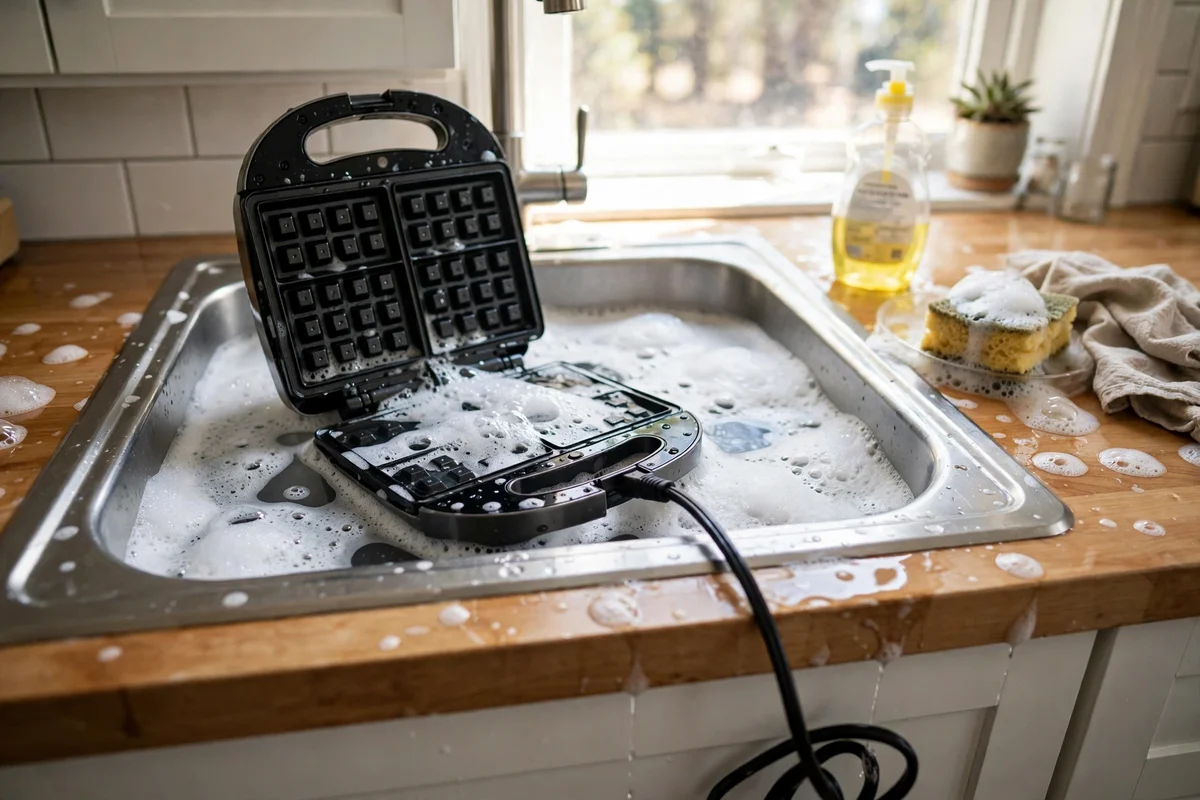
- Submerging the whole maker in a sink. Water in electrics, hinge, and controls can damage the maker and rust internal parts. Fix: wipe plates in place with a damp, wrung-out cloth, and wash only removable plates separately, never the body.
- Pouring water over the plates to rinse them. Poured water runs into the hinge and controls, even when plates look clean. Fix: rinse by wiping with a clean cloth dampened with plain water, wrung out well.
- Using a metal scraper or steel wool on nonstick grids. Metal and abrasive pads scratch nonstick coating, and scratched grids stick worse next time. Fix: use a soft plastic scraper, soft brush, or paper towel edge for stuck batter.
- Cleaning while the maker is still plugged in or hot. A plugged-in maker can heat unexpectedly, and hot plates burn hands. Fix: turn off, unplug, open the lid, and cool until warm, not hot, before wiping.
- Skipping the plain-water wipe after soap. Soap left on plates affects the taste of the next waffles and builds a film. Fix: wipe again with a plain-water cloth, then dry, every time you use soap.
- Storing the maker closed while plates are still damp. Damp plates in a closed maker trap moisture in grids and the hinge. Fix: dry with a towel, leave the lid open to air dry fully, and store only when dry.
What is the quick checklist?
- Turn off, unplug, open the lid, and cool until warm, not hot.
- Brush crumbs dry from hinge to front edge, both plates, before any moisture.
- Wipe both plates with a damp, soapy cloth along the grids, wringing often.
- Soften stuck batter with oil or baking soda paste, lift with a plastic scraper.
- Wipe again with a plain-water cloth to remove all soap, oil, and paste.
- Dry with a towel, air dry with the lid open, and store only when fully dry.
When should you stop?
Stop when a dry cloth wipes the grids without picking up batter, grease, or soap film, and the plates feel dry, not tacky. Stop and check the manual if the coating is flaking, a grid is chipped, the maker smells of burning after cleaning, or water got into the hinge or controls: do not plug the maker in until it is fully dry, and do not use a maker with flaking coating for cooking until you have checked maker guidance. Never plug in a maker whose plates or hinge are still wet, and never store a maker closed while it is damp.
Related on Kitchenlify
Frequently asked questions
How do I clean waffle maker plates without submerging the maker?
Unplug it, cool it until warm, brush crumbs dry from hinge to front, wipe both plates with a damp, soapy cloth along the grids, wipe again with a plain-water cloth, and dry with the lid open. Never pour water over the plates or submerge the maker, because water near electrics damages it.
Can I submerge a waffle maker in water?
No, never submerge a waffle maker, even if the plates are removable. Water can damage electrical parts and rust internal metal. Wipe fixed plates in place, and wash only removable plates separately, keeping the body itself dry.
How do I clean fixed waffle maker plates?
Fixed plates are cleaned in place as the main method in this guide: unplug, cool, brush crumbs dry, wipe with a damp, soapy cloth, soften stuck batter with oil or baking soda paste, lift with a plastic scraper, wipe with plain water, and dry with the lid open.
How do I clean removable waffle maker plates?
Unplug and cool the maker, release the plates following the maker instructions, hand wash them in warm, soapy water, rinse, and dry fully before refitting. Check the manual before using a dishwasher, because some makers warn it harms the coating over time.
What removes stuck batter from a waffle maker?
A few drops of neutral cooking oil left on hardened spots for a few minutes softens most stuck batter, which you then lift with a paper towel edge or soft plastic scraper. For a burnt film, a baking soda and warm water paste left for 10 to 15 minutes on cool plates, then gently brushed, works next.
Can I use a metal spatula to scrape a waffle maker?
No, metal scrapers and steel wool scratch nonstick coatings, and scratched grids stick worse next time. Use a soft plastic scraper, a soft brush, or the edge of a paper towel, and let oil or paste soften batter first instead of forcing it off.
Should I clean a waffle maker while it is still hot?
No, turn it off, unplug it, and let it cool until the plates are warm, not hot. A little warmth helps loosen grease, but a hot plate burns hands and smears soft batter instead of lifting it, and a plugged-in maker should never be wiped.
How do I get rid of a burnt smell from a waffle maker?
Clean the plates fully with the steps in this guide, wipe with plain water to remove all residue, and dry with the lid open. If a burnt smell stays after a full clean, check grid corners and the hinge with a toothbrush, because old batter hides there and reheats with the next batch.
Do I need to oil waffle maker plates after cleaning?
No, not as a routine step. Oil is used here only in small drops to soften stuck batter, and it is wiped off fully after. A thin oil wipe before the first use is a separate maker instruction for some models, so check your manual, and do not leave a thick oil layer on clean plates.