How to Cook Pasta Al Dente for Beginners
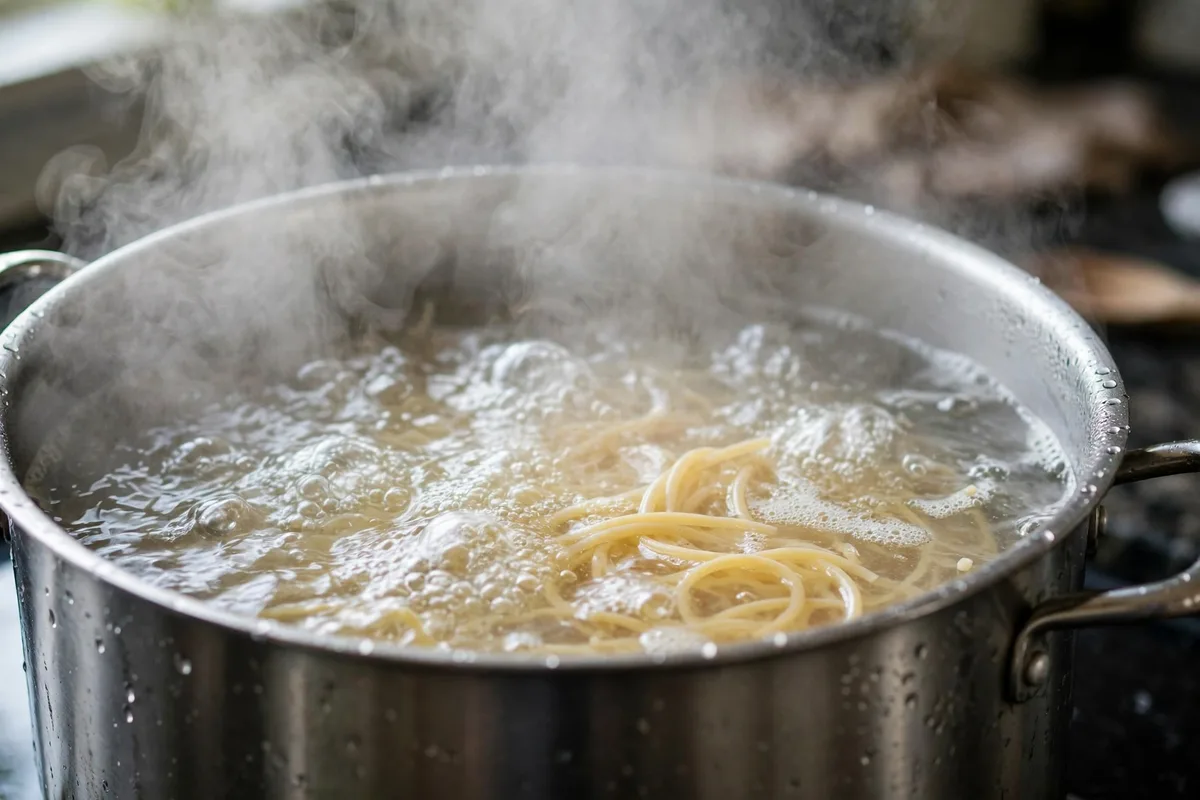
How to cook pasta al dente for beginners? Use plenty of well-salted water at a rolling boil, add the pasta, and start tasting 2 minutes before the package time — al dente means tender on the outside with a firm, springy bite in the center, never crunchy and never mushy. Cook 2 to 3 minutes less than the package says, reserve a cup of the starchy water, drain without rinsing, and finish the pasta in the sauce for 1 to 2 minutes.
how to cook pasta al dente for beginners — what is the short answer?
Al dente is Italian for to the tooth, and it is a texture, not a time: the pasta is tender on the outside and still offers slight resistance when you bite into it. Start with a big pot and 4 to 6 quarts of water per pound of pasta, so the pieces have room to move and cook evenly. Salt the water until it tastes pleasantly salty — about 1 to 2 tablespoons per gallon — because this is the only chance to season the pasta itself. Wait for a full rolling boil before the pasta goes in, stir immediately for 10 to 30 seconds so nothing sticks, and use the package time as a starting point, not a rule: set your timer for 2 to 3 minutes less, then taste every 30 to 60 seconds. That is how to cook pasta al dente for beginners step by step in one paragraph — big pot, salty water, rolling boil, taste early.
How do I do it step by step?

- Use a big pot with 4 to 6 quarts of water per pound. Fill a large pot with 4 to 6 quarts of water for every pound of pasta — a pound of spaghetti needs a big pot, not a small saucepan. Plenty of water keeps the temperature up when the pasta goes in and gives the pieces room to move, so they cook evenly instead of clumping. Crowded pasta cooks unevenly and sticks.
- Salt the water until it tastes pleasantly salty. Add about 1 to 2 tablespoons of salt per gallon of water — KitchenAid's guide uses about 1 tablespoon for every 3 quarts — and stir it in. Taste the water: it should taste pleasantly salty, like seawater. This is the only chance to season the pasta itself, because salt added after cooking only sits on the surface.
- Wait for a full rolling boil. Bring the water to a vigorous rolling boil over high heat, with bubbles breaking across the whole surface. Do not add pasta to water that is only simmering: it cooks unevenly and takes longer. You can cover the pot to heat it faster, but take the lid off once the water boils.
- Add the pasta and stir immediately. Add all the pasta at once and stir right away for 10 to 30 seconds, so no two pieces weld themselves together. For long pasta like spaghetti, push it down gently with tongs as it softens into the water. Do not add oil to the water — it is a myth, and it stops sauce from sticking to the pasta later.
- Set the timer for 2 to 3 minutes less than the package. Whatever the package says — 11 minutes for rigatoni, 10 minutes for spaghetti — set your timer for 2 to 3 minutes less. The package time is a starting point, not a rule, and different brands, shapes, and pots all shift it. The timer gets you close; your teeth do the rest.
- Start tasting 2 minutes before the package time. Fish out a piece every 30 to 60 seconds and bite into it. Al dente pasta is tender on the outside with a firm, springy center — if it is chalky or crunchy in the middle, it needs more time; if it is soft all the way through, you have gone past al dente. Cut a piece open and look for a thin white line in the center: that line means it is ready to drain if it will finish in sauce.
- Reserve water, drain without rinsing, finish in sauce. Before you drain, scoop out 1 cup of the starchy pasta water — it binds sauce to pasta and makes it creamy. Drain the pasta in a colander and do not rinse it: rinsing washes away the surface starch that helps sauce cling. Toss the hot pasta with the sauce right away and cook them together for 1 to 2 minutes, adding splashes of pasta water as needed.
What mistakes should I avoid?

- Trusting the package time instead of tasting. The package time is a starting point, not a rule — brands, shapes, and pots all shift it by a minute or two. Fix: set the timer for 2 to 3 minutes less than the package and taste every 30 to 60 seconds.
- Adding pasta before the water boils. Pasta added to water that is only simmering cooks unevenly and takes longer, and it sticks more. Fix: wait for a full rolling boil, with bubbles across the whole surface, before the pasta goes in.
- Using too little water. A small pot for a pound of pasta means crowded noodles that cook unevenly and clump together. Fix: 4 to 6 quarts of water per pound, in the biggest pot you have.
- Rinsing the pasta after draining. Rinsing washes away the surface starch that helps sauce cling, so the sauce slides right off. Fix: drain and toss with sauce immediately — rinse only if the pasta is for a cold salad.
- Adding oil to the cooking water. Oil floats on the water and does nothing to stop sticking — and it coats the pasta so sauce cannot cling. Fix: stir the pasta for the first 10 to 30 seconds instead; that is what actually stops clumping.
- Leaving the pasta in the colander while the sauce waits. Pasta keeps cooking from its own heat and dries out in the colander, so by the time the sauce is ready it is soft and sticky. Fix: have the sauce hot and ready, drain, and toss the pasta with the sauce right away.
What do I need, and what should I skip?
You need a large pot; 4 to 6 quarts of water per pound of pasta; salt; a timer; tongs or a fork for tasting; a colander; a mug for reserving pasta water.
Skip a small pot for a pound of pasta. Skip adding pasta before the water boils. Skip oil in the cooking water. Skip trusting the package time instead of tasting. Skip rinsing the pasta after draining. Skip leaving the pasta sitting in the colander while the sauce waits.
How to tell when pasta is al dente — which time for which shape?
| Pasta | Al dente time | Test from |
|---|---|---|
| Capellini / angel hair | 3 to 5 minutes | 2 minutes |
| Spaghetti | 8 to 10 minutes | 6 minutes |
| Fettuccine | 10 to 12 minutes | 8 minutes |
| Penne | 11 to 13 minutes | 9 minutes |
| Rigatoni | 12 to 14 minutes | 10 minutes |
| Fresh pasta | 2 to 4 minutes | 1 minute |
What does the worked example look like?
Worked example: a package that says 10 minutes, and water for 2 pounds. Take a package of spaghetti that says 10 minutes. Al dente is 2 to 3 minutes less than the package, so you set the timer for 7 to 8 minutes — 10 minus 3 is 7, and 10 minus 2 is 8 — and you start tasting at 8 minutes. The water scales the same way: 1 pound of pasta needs 4 to 6 quarts of water, so 2 pounds need 8 to 12 quarts — 4 times 2 is 8, and 6 times 2 is 12. So for 2 pounds of spaghetti, fill the pot with 8 to 12 quarts of salted water, bring it to a rolling boil, cook for 7 to 8 minutes, and taste every 30 to 60 seconds until the center is firm but not chalky.
When should I stop?
Stop cooking and taste the pasta the moment the timer hits 2 minutes before the package time — pasta goes from al dente to soft in about a minute, and there is no way back. Stop and drain immediately if the pieces are soft all the way through: you have passed al dente, so toss the pasta with sauce right away instead of finishing it in the pan, or it will go mushy. And stop adding salt if the water already tastes like seawater — more salt does not make better pasta, it just makes salty pasta.
What is the quick checklist?
- 4 to 6 quarts of water per pound of pasta.
- Salt the water until it tastes pleasantly salty.
- Full rolling boil before the pasta goes in.
- Stir immediately for 10 to 30 seconds.
- Timer set 2 to 3 minutes less than the package.
- Taste every 30 to 60 seconds; look for a thin white line in the center.
- Reserve 1 cup of pasta water, drain without rinsing, finish in sauce.
What else helps on Kitchenlify?
- How to Keep Pasta From Sticking
- How to Reheat Pasta Without Drying Out
- How to Chop Vegetables Evenly for Beginners
- How to Boil Potatoes Without Them Falling Apart
- All guides
Al dente is only half the job — the Pasta Per Person Calculator works out how much dry pasta to cook per person, so you do not end up with a second dinner.
Frequently asked questions
How to cook pasta al dente for beginners step by step?
Use 4 to 6 quarts of salted water per pound of pasta, bring it to a rolling boil, add the pasta and stir for 10 to 30 seconds, set the timer for 2 to 3 minutes less than the package, and taste every 30 to 60 seconds until the center is firm but not chalky. That is how to cook pasta al dente for beginners step by step — and how to cook pasta al dente comes down to the same thing every time: big pot, salty water, rolling boil, taste early.
How to tell when pasta is al dente?
Bite into a piece: al dente pasta is tender on the outside with a firm, springy bite in the center — not crunchy, not mushy. That is how to tell when pasta is al dente by taste, and by eye you can cut a piece open and look for a thin white line in the center. If the white line is thick and chalky, it needs more time; if there is no white at all and the pasta is soft edge to edge, you have gone past al dente.
How much salt do I put in pasta water?
About 1 to 2 tablespoons of salt per gallon of water, or about 1 tablespoon for every 3 quarts. The water should taste pleasantly salty, like seawater. This is the only chance to season the pasta itself — salt added after cooking only sits on the surface.
Should I add oil to pasta water?
No. Oil floats on the water, does nothing to stop sticking, and coats the pasta so sauce cannot cling to it later. Stir the pasta for the first 10 to 30 seconds instead — that is what actually stops the pieces from welding together.
Why should I not rinse pasta?
Rinsing washes away the surface starch that helps sauce cling to the pasta, so the sauce slides right off and the flavors do not meld. Drain the pasta and toss it with sauce immediately instead. Rinse only if the pasta is for a cold salad.
What is the white line in the center of pasta?
It is a thin line of starch that has not fully hydrated yet, and it is the classic sign of al dente: the outside is tender and the very center still has a firm bite. If the line is thick and chalky, the pasta is undercooked; if there is no line at all, the pasta is fully cooked and should go straight onto the plate.
How long do I cook spaghetti al dente?
Spaghetti takes 8 to 10 minutes al dente, and you should start tasting at 6 minutes. Use the package time as a starting point and subtract 2 to 3 minutes — a package that says 10 minutes means al dente at 7 to 8 minutes. Taste every 30 to 60 seconds, because brands and pots shift the time.
Can fresh pasta be al dente?
Not really in the same way: fresh pasta is already soft and cooks in 2 to 4 minutes, so it never has the firm white core that dried pasta has. Judge fresh pasta by bite alone — it is done when it is tender with a slight spring, and it is ready almost as soon as it floats.
Why is my pasta mushy?
Usually it cooked too long: pasta goes from al dente to soft in about a minute, and finishing it in hot sauce adds more cooking time on top. Set the timer for 2 to 3 minutes less than the package, drain it while the center is still firm, and finish it in the sauce for only 1 to 2 minutes.