How to Keep Herbs Fresh Longer in the Fridge
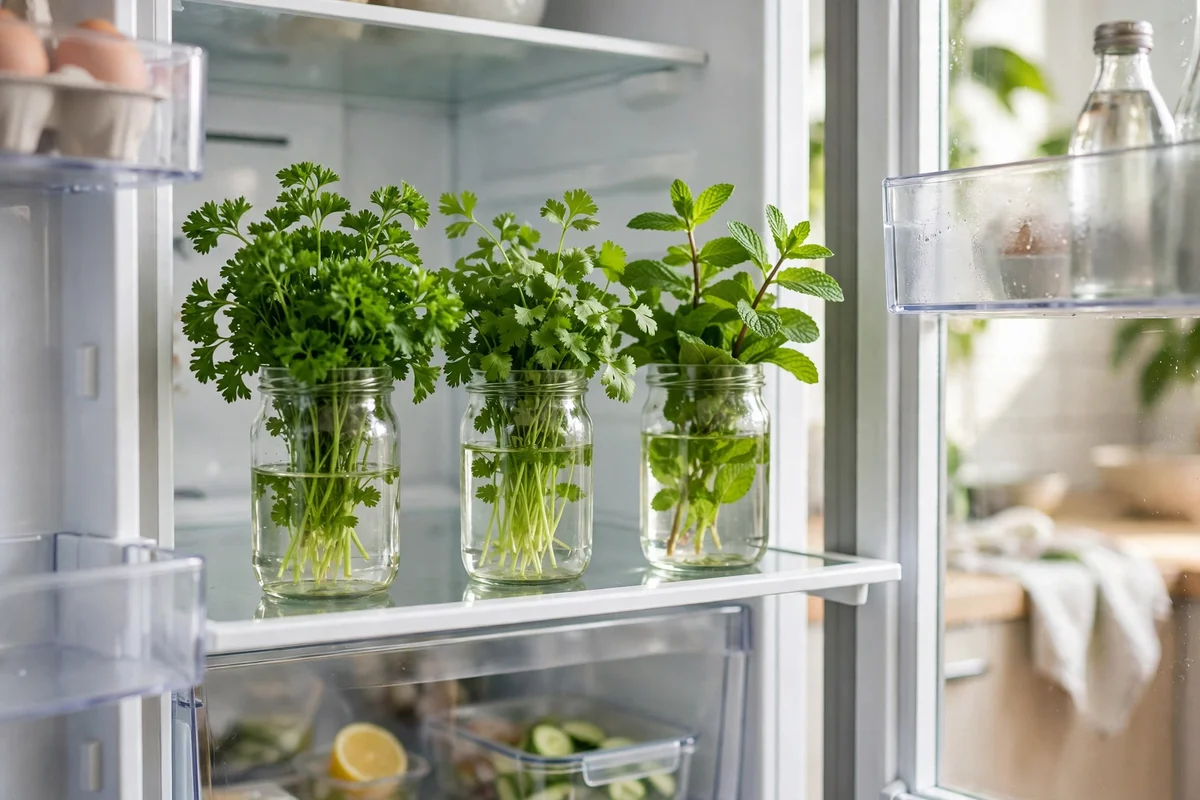
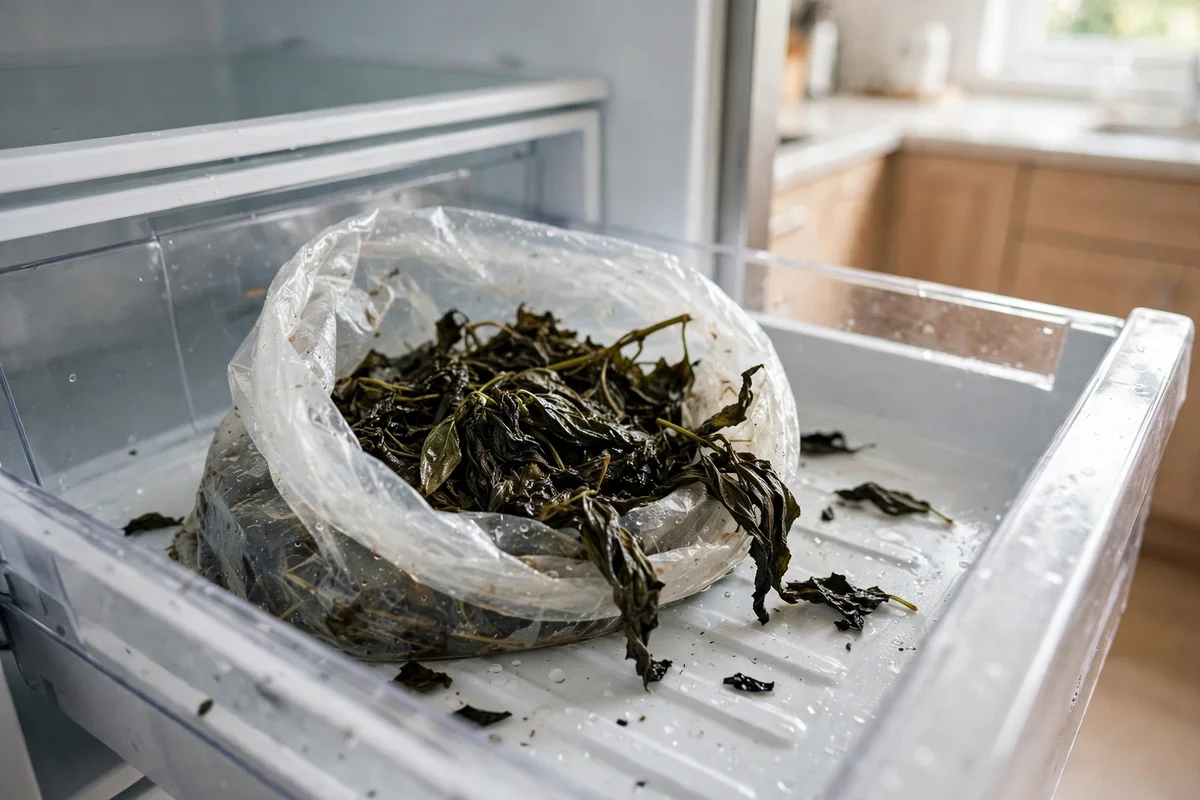
How to keep herbs fresh longer in the fridge starts with moisture, not age: fresh herbs often wilt in the fridge long before you finish the bunch, because too much water turns tender leaves slimy, while too little air and dryness makes them droop and darken. The fix is not a single trick that works for every herb — tender herbs and woody herbs behave differently, and basil is an exception that does not like the fridge at all. Once you sort your herbs by type and give each group the right amount of moisture and air, a bunch that used to last two days can often last a week or more.
The short answer: how to keep herbs fresh longer in the fridge
The short answer is to sort herbs first, then store them by type. Treat tender herbs such as parsley, cilantro, dill, and mint like a bouquet: trim the stems, stand them in a jar with a little water, and cover the leaves loosely. Store woody herbs such as rosemary, thyme, and sage wrapped in a slightly damp towel inside a container or bag, where they stay moist but not wet. Keep basil at room temperature in a jar of water instead of in the fridge, because cold air darkens its leaves. Change the jar water every two to three days, check for wilted leaves, and keep herbs away from the coldest part of the fridge.
Step by step
- Sort tender herbs from woody herbs. Start by sorting the bunch before anything goes into the fridge. Tender herbs have soft stems and soft leaves: parsley, cilantro, dill, mint, and chives belong in this group. Woody herbs have firm stems and tougher leaves: rosemary, thyme, sage, and bay fall here. This split matters because tender herbs lose water quickly and wilt, while woody herbs tolerate drier storage and last longer. If you store them all the same way, one group will always suffer. Take a minute to separate them, discard any leaves that are already yellow or slimy, and keep the groups apart from this point on.
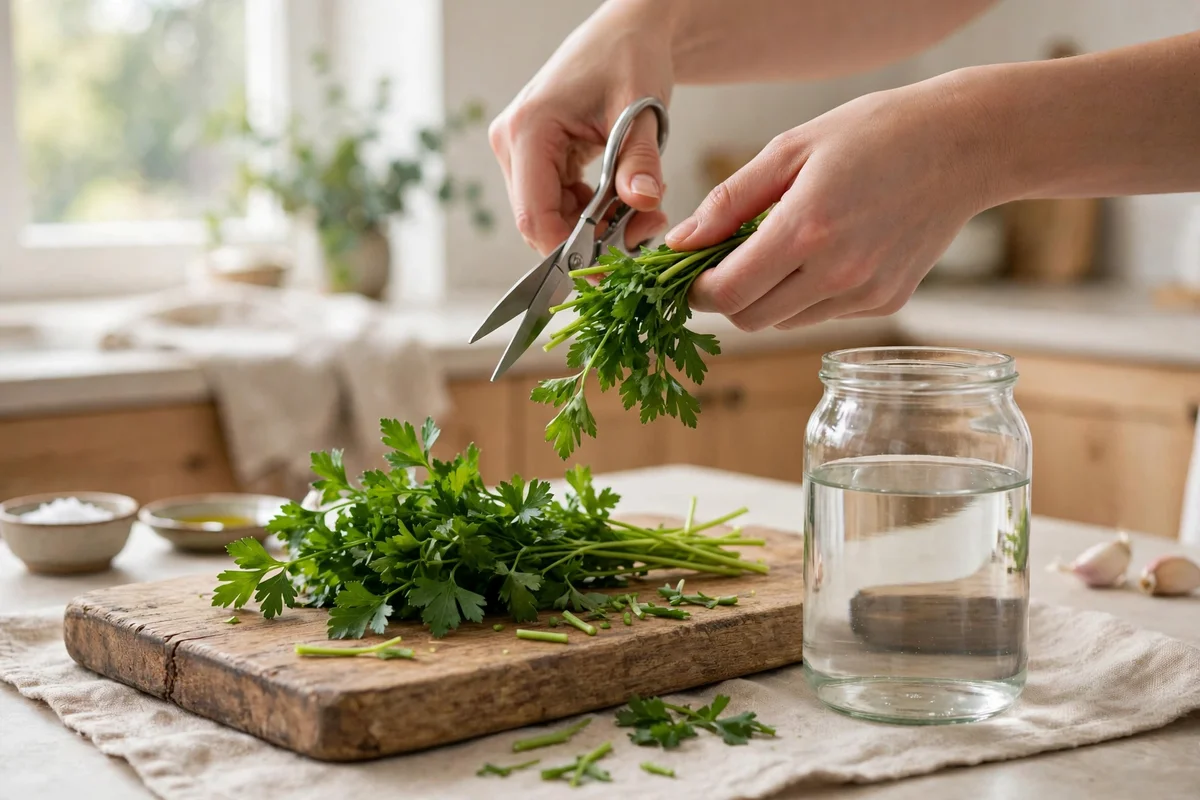
- Trim the stems and remove damaged leaves. Trim about a centimeter (about 1/2 inch) off the bottom of the stems with a sharp knife or scissors, just as you would with cut flowers. A fresh cut lets tender herbs take up water again, which revives leaves that have started to droop. Remove any leaves that sit below the water line or that are already soft, dark, or slimy, because one rotting leaf can spoil the rest of the bunch. Do not wash the herbs yet unless they are visibly dirty. Washing adds surface moisture that speeds up decay, so save the full wash for just before you cook with them.
- Store tender herbs upright in a jar of water. Place tender herbs upright in a jar or tall container with two to three centimeters (about 1 inch) of fresh water at the bottom, stems down and leaves up. Cover the leaves loosely with a bag or an inverted container lid left ajar, which holds in humidity without trapping the leaves against wet plastic. Set the jar in the main part of the fridge, not against the back wall where it may freeze. This bouquet method keeps parsley, cilantro, dill, and mint hydrated from the stems while the loose cover slows moisture loss from the leaves.
- Use the damp-towel method for woody herbs. For woody herbs, lay the sprigs on a clean kitchen towel or paper towel that is slightly damp, not dripping wet, then roll the towel loosely around them. Place the roll inside a container with a lid or a reusable bag with most of the air pressed out, and store it in the fridge. The towel keeps humidity steady around the leaves without letting water pool, which is what causes sliminess. Rosemary, thyme, and sage stored this way often stay fragrant and usable for two weeks or longer, far beyond a loose bunch tossed in a drawer.
- Try a silicone bag or a box for short-term storage. If you prefer not to use a jar, a reusable silicone bag or a shallow container with a lid works well for both groups, with one adjustment. For tender herbs, wrap them first in a slightly damp towel before placing them in the bag or box, so the leaves do not sit in condensation. For woody herbs, the towel wrap alone is enough, and the box simply protects them from being crushed. Leave a little air space rather than packing the container tight, and open it once a day to let stale, damp air out if you notice condensation building up.
- Keep basil out of the fridge. Basil is the exception to every fridge rule in this guide. Cold air turns basil leaves black and dulls their flavor, sometimes within a day. Store basil on the counter in a jar of water, like a small bouquet, away from direct sunlight and drafts. Change the water every two days and trim the stems again if they look slimy. If your kitchen is very warm, basil may still last only a few days, but that is still longer than it would survive in the fridge, where cold damage appears quickly and cannot be reversed.
- Change the water and check the bunch every few days. Set a simple routine: every two to three days, change the water in herb jars, refresh the damp towel if it has dried out or turned sour, and pick out any leaves that have wilted or darkened. This short check takes under a minute and is the single habit that extends herb life the most, because decay spreads from damaged leaves to healthy ones. Label the jar or box with the day you bought the herbs so you can judge freshness honestly. When a bunch is more than half wilted or smells sour, compost it rather than trying to rescue it.
Common mistakes to avoid
- Storing all herbs the same way. Tender and woody herbs need different moisture levels. A method that suits parsley will leave rosemary damp and prone to mold, and a dry method that suits rosemary will wilt cilantro in a day. Sort first, then choose the method.
- Putting basil in the fridge. Basil is sensitive to cold and its leaves darken quickly below fridge temperature. Keeping it in the fridge is the most common reason a fresh basil bunch turns black overnight.
- Leaving herbs loose in the crisper drawer. A loose bunch in the drawer dries out, gets crushed by other items, and sits in its own moisture. A jar, towel wrap, or lidded box protects the leaves and controls humidity far better.
- Washing herbs before storing them. Washing adds water to the leaves and speeds up sliminess. Store herbs dry, or only lightly damp for the towel method, and wash them just before use.
- Using a soaking-wet towel. A towel that drips water will make herbs slimy instead of fresh. Wring the towel out until it feels just damp, and replace it if it becomes wet or sour-smelling.
- Ignoring the first wilted leaves. One slimy leaf releases moisture and odor that spoils its neighbors. Pick out damaged leaves every few days so the rest of the bunch stays fresh longer.
What you need — and what to skip
You need a jar or tall container, a clean kitchen towel or paper towels, a lidded container or reusable silicone bag, and scissors or a knife for trimming stems. That is the complete kit. A loose cover for the jar, such as a bag placed lightly over the leaves, helps hold humidity without sealing the leaves in wet plastic. Keep the setup simple: if the routine takes more than a few minutes, you are less likely to repeat it, and the water-change routine is what actually keeps herbs fresh.
Skip special herb-keeping gadgets and single-use storage products unless you already own them, because a jar, a towel, and a container do the same job. Skip airtight sealing for tender herbs in a jar, since leaves need a little air circulation and trapped condensation causes sliminess. Skip storing herbs next to strong-smelling foods without a lid, because soft leaves pick up odors easily. Finally, skip freezing herbs you plan to use fresh in salads, since freezing changes their texture even though it preserves flavor for cooking.
Fridge-life guide by herb type
The times below are general guides for herbs stored with the methods in this article, in a fridge kept at normal fridge temperature. Actual life varies with how fresh the bunch was when you bought it and how often you change the water and check the leaves.
| Herb | Best method | Typical fridge life |
|---|---|---|
| Parsley (tender) | Jar of water, loosely covered | About 2 to 3 weeks |
| Cilantro (tender) | Jar of water, loosely covered | About 2 to 3 weeks |
| Dill (tender) | Jar of water, loosely covered | About 1 to 2 weeks |
| Mint (tender) | Jar of water, loosely covered | About 2 to 3 weeks |
| Chives (tender) | Damp-towel wrap in a container | About 1 to 2 weeks |
| Rosemary (woody) | Damp-towel wrap in a container | About 2 to 4 weeks |
| Thyme (woody) | Damp-towel wrap in a container | About 2 to 4 weeks |
| Sage (woody) | Damp-towel wrap in a container | About 2 to 3 weeks |
| Basil (exception) | Jar of water at room temperature | A few days on the counter; do not refrigerate |
Jar vs silicone bag vs damp-towel box: which wins for each herb
No single container wins for every herb. A jar keeps stems in water, a silicone bag protects leaves from crushing, and a damp-towel box controls humidity around loose sprigs. The damp-towel method itself has two different forms, and they are not interchangeable. In a damp-towel roll, herbs are rolled inside a slightly damp towel, then the roll goes into a bag or box. In a damp-towel box, a damp towel lines the bottom of a shallow box, herbs are laid flat on it in a single layer, and a second damp towel covers them. A roll suits a bunch with long stems that should stay together. A box suits short, loose sprigs that you want to pick out one at a time without unrolling the whole bunch.
| Herb group | Jar of water | Silicone bag | Damp-towel roll | Damp-towel box |
|---|---|---|---|---|
| Tender leafy herbs: parsley, cilantro, dill, mint | Best choice. Stems stay in water and leaves stay crisp for the longest time. | Good for a few days only, and only with a towel wrap inside. A bag alone traps condensation and turns leaves slimy. | Good backup when no tall jar fits. Wrap the bunch loosely so air can still move. | Good for loose leaves picked from the bunch. Lay them flat and do not pack them tight. |
| Fine tender herbs: chives and dill fronds | Works well if the jar is tall enough to keep leaves out of the water. | Fair for short storage with a towel wrap. Check daily, because fine leaves go slimy fast. | Best choice for chives. The roll keeps thin stems together without bending them. | Good for small amounts. Keep the layer thin so the bottom leaves do not sit in water. |
| Woody herbs: rosemary, thyme, sage | Not needed. Woody stems do not need constant water, and a jar takes up shelf space for no gain. | Good with a towel wrap, since the bag protects sprigs from being crushed. | Best choice for long bunches. Roll loosely, then store the roll in a box or bag. | Best choice for loose sprigs. Flat layers make it easy to take one sprig without disturbing the rest. |
| Basil | Best choice, but only at room temperature. A jar of water on the counter beats every fridge container. | Do not use. Cold plus trapped moisture turns basil black fastest. | Do not use in the fridge. A towel roll cannot protect basil from cold damage. | Do not use in the fridge for the same reason. Keep basil out of the fridge entirely. |
Fridge life by container, not just by herb
The same herb can last a week or three weeks depending on the container, so a life guide by herb type alone misleads. The table below assumes a normal fridge temperature, water changed every two to three days for jars, and towels re-dampened before they dry out. A bunch that was already old when bought will fall at the short end of every range, and a bag used without a towel wrap will fall shorter still.
| Herb | Jar of water | Silicone bag, towel-wrapped | Damp-towel box |
|---|---|---|---|
| Parsley | About 2 to 3 weeks | About 1 week | About 1 to 2 weeks |
| Cilantro | About 2 to 3 weeks | About 1 week | About 1 to 2 weeks |
| Dill | About 1 to 2 weeks | About 5 to 7 days | About 1 week |
| Mint | About 2 to 3 weeks | About 1 week | About 1 to 2 weeks |
| Chives | About 1 to 2 weeks | About 1 week | About 1 to 2 weeks |
| Rosemary | Not recommended | About 2 to 3 weeks | About 2 to 4 weeks |
| Thyme | Not recommended | About 2 to 3 weeks | About 2 to 4 weeks |
| Sage | Not recommended | About 2 weeks | About 2 to 3 weeks |
The pattern is clear. Tender herbs gain the most from a jar, woody herbs gain the most from a towel box, and a silicone bag is a useful short-term container for either group only when a towel is inside it. If you can only buy one extra container, choose the method that matches the herbs you buy most often, not the method that looks neatest on the shelf.
Worked example: one bunch of each type, stored three ways
Buy one bunch of parsley, one bunch of rosemary, and one bunch of basil on the same day. Keep the basil on the counter in a jar of water as the exception, and do not put it in the fridge at all. Split the parsley into three equal parts: one part upright in a jar of water with a loose cover, one part wrapped in a slightly damp towel inside a silicone bag, and one part laid flat in a damp-towel box. Split the rosemary the same way, except the jar portion goes into a damp-towel roll instead, since woody herbs do not need a water jar. Label each container with the herb name, the method, and the purchase date, then check all of them on the same three days.
On day 3, change the parsley jar water, feel each towel, and remove any wilted leaves. The jar parsley should still look bright and upright. The towel portions should still feel damp, not wet or dry. Re-dampen any towel that feels dry by sprinkling it lightly, not by soaking it, and wring it until it feels just damp again. The rosemary in all three containers should still smell strong and feel firm.
On day 7, repeat the same check and expect the first split. The jar parsley is usually still crisp, while the silicone-bag parsley often starts to soften at the leaf edges, especially if condensation built up in the bag. The damp-towel box parsley sits between the two. The rosemary, by contrast, usually still looks good in both towel methods, which is why woody herbs are the wrong test for judging a jar. Remove any dark or slimy leaves at this check, because leaving them in speeds up decay in the rest of the container.
On day 14, judge each portion honestly. The jar parsley may still be usable if the water was changed on schedule, though the outer leaves will be older. The silicone-bag parsley is often finished by now, and the towel-box parsley is usually close behind. The rosemary in the towel roll and the towel box is often still fragrant and usable, which shows why container choice matters more than a single fridge-life number. Compost any portion that is more than half wilted or smells sour, and keep the winning method for each herb next time you shop.
Maintenance checklist: water changes and re-dampening
Use this short checklist every two to three days, and the containers above will last as long as the tables promise. First, change jar water completely, rinse the jar, and trim any slimy stem ends before refilling with fresh water. Second, feel each towel with your fingers: it should feel damp like a wrung-out cloth, not dripping and not dry. Third, re-dampen a dry towel by sprinkling water over it and wringing it out, and replace any towel that smells sour instead of reusing it. Fourth, pick out wilted, dark, or slimy leaves from every container before they spread decay. Fifth, check that no jar sits against the back wall of the fridge, where leaves can freeze. Sixth, change the basil counter water every two days and trim its stems again if they look slimy. If you do only one item on this list, make it the jar-water change, because stale water is the fastest way to lose an otherwise healthy bunch.
When to stop
Stop trying to rescue a bunch when more than half the leaves are wilted, dark, or slimy, or when it smells sour even after you remove the damaged leaves. At that point the flavor is gone and the texture will not recover, no matter how fresh the water is. Compost the bunch and start fresh. As a safety note, discard any herbs that have visible mold, and wash your hands and the container before storing a new bunch, so mold spores and sour moisture do not carry over. When in doubt, trust your nose: fresh herbs smell bright and clean, and herbs that smell off should go.
Related on Kitchenlify
- Food Storage
- How to Organize a Pantry With Storage Containers
- How to Clean a Garlic Press Properly
- All guides
Frequently asked questions
How long do fresh herbs last in the fridge?
With the right method, tender herbs such as parsley and cilantro often last two to three weeks in a jar of water, and woody herbs such as rosemary and thyme often last two to four weeks in a damp-towel wrap. The exact time depends on how fresh the bunch was when you bought it and whether you change the water and remove wilted leaves regularly.
Should I wash herbs before storing them in the fridge?
No, it is better to store herbs unwashed and wash them just before use. Extra water on the leaves speeds up sliminess and decay. The exception is the damp-towel method, where a slightly damp towel provides controlled humidity rather than loose water on the leaves.
Why does basil turn black in the fridge?
Basil is sensitive to cold, and fridge temperatures damage its leaves, turning them black and dulling their flavor. Store basil on the counter in a jar of water instead, changing the water every two days, and keep it away from direct sunlight.
Is a jar or a bag better for storing herbs?
A jar of water works best for tender herbs because the stems stay hydrated, while a damp-towel wrap inside a container or silicone bag works best for woody herbs. A bag alone, without a towel wrap, often traps condensation and makes leaves slimy.
How often should I change the water for herbs in a jar?
Change the water every two to three days, and trim the stems again if they look slimy. Fresh water slows bacterial growth and keeps the stems able to take up water, which is what keeps the leaves crisp.
How do I store chives or dill fronds differently from parsley?
Chives store best in a damp-towel roll, which keeps the thin stems together without bending them. Dill fronds also need care because fine leaves go slimy fast, so check them daily. A jar works for chives or dill only if it is tall enough to keep the leaves out of the water.
What is the difference between a damp-towel roll and a damp-towel box?
In a damp-towel roll, herbs are rolled inside a slightly damp towel, then the roll goes into a bag or box, which suits a bunch with long stems that should stay together. In a damp-towel box, a damp towel lines the bottom of a shallow box, herbs are laid flat on it in a single layer, and a second damp towel covers them, which suits short, loose sprigs you want to pick out one at a time.
Where in the fridge should I store herb jars?
Store herb jars in the main part of the fridge, not against the back wall, where leaves can freeze. Keep the leaves loosely covered to hold in humidity, and keep herbs away from the coldest part of the fridge.
Can I store tender herbs in a silicone bag for a few days?
Yes, for short-term storage, but only with a slightly damp towel wrap inside the bag, so the leaves do not sit in condensation. Without a towel wrap, a bag alone often traps condensation and makes leaves slimy. Check the bag daily and open it if condensation builds up.