How to Remove Onion Smell From Hands
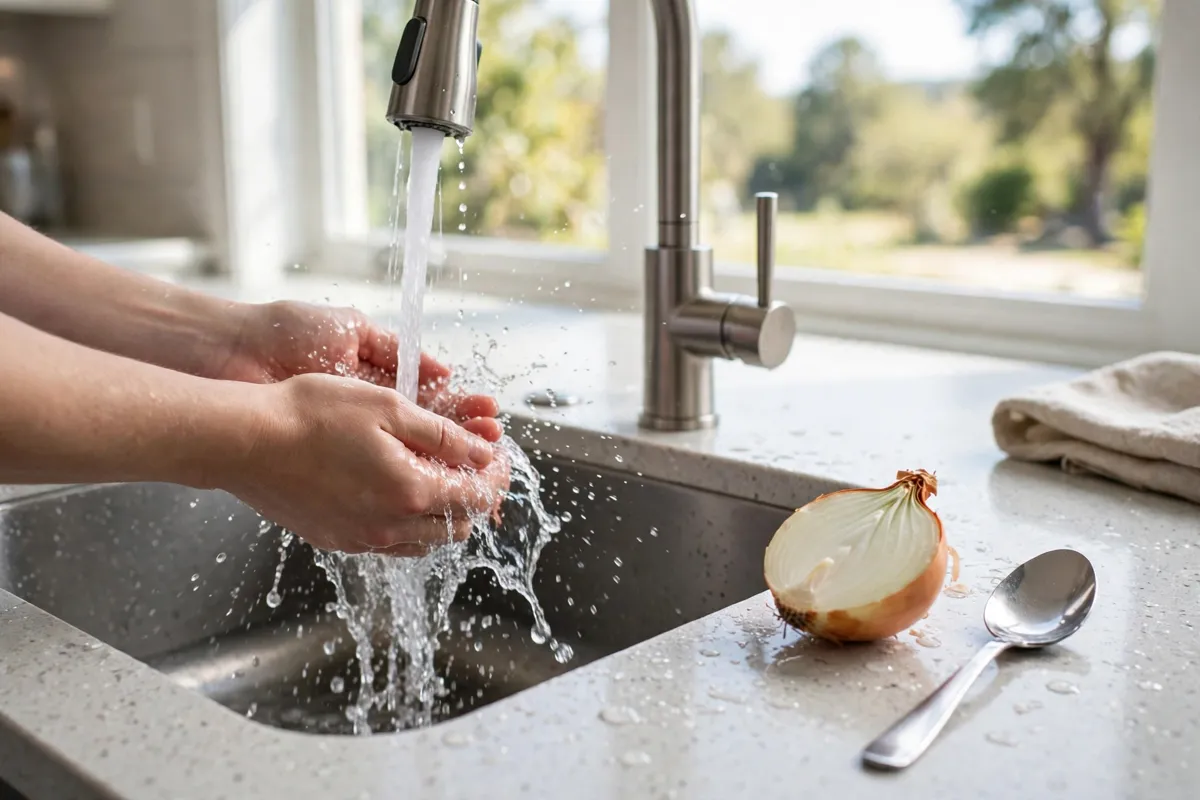
How to remove onion smell from hands works best in one order: wash with cold water and soap first, scrub around your nails and knuckles second, and only then use a stainless steel rub or a short lemon or vinegar rinse. Onion smell clings to skin oils and hides in nail edges and skin lines, so a quick splash of water alone leaves most of it behind. Do the steps in order, and check your hands by smelling the backs of your fingers, not just your palms.
The short answer: how to remove onion smell from hands
Start with cold water and dish soap, scrubbing palms, backs of hands, thumbs, and between fingers for about 20 seconds, then rinse. Next, scrub under your nails and along your knuckles with a nail brush or a clean toothbrush and a dot of soap for 10 to 15 seconds. Then rub your wet hands on stainless steel under cold running water for about 20 seconds, or rub a teaspoon of lemon juice over damp hands for 10 to 15 seconds, rinse, and wash once more with soap. If a trace is still there, repeat the nail step and wash again, rather than starting over with a stronger product.
What do you need, and what should you skip?
You need cold running water, dish soap, a nail brush or a clean toothbrush, and either a stainless steel spoon, a stainless steel sink, or a lemon. A pinch of salt can help as a gentle scrub for skin lines, and a plain hand moisturizer for after is useful, because repeated washing dries skin. You do not need a special odor-removing soap, and you do not need to buy a steel soap bar if you already have a stainless steel spoon or sink.
Skip hot water at the start, because hot water feels cleansing but many guides warn it lets odor settle deeper into warm skin, while cold water keeps the routine simple and consistent. Skip bleach entirely: it is not a hand cleaner, it irritates skin, and it must never be used on hands for odor. Skip scrubbing hard enough to redden skin, skip lemon or vinegar on cut or cracked skin, and skip perfumed lotion as a cover-up before you have washed, because it only layers a second smell over the first.
How do you do it, step by step?

- Wash with cold water and soap for 20 seconds. Wet your hands under cold running water, add dish soap, and scrub palms, backs of hands, thumbs, and between fingers for about 20 seconds, then rinse well. Soap lifts the skin oils that hold onion compounds, and 20 seconds gives it time to work instead of just moving the film around. Worked example: after chopping 2 onions for soup, wash this way once, rinse, and smell the backs of your fingers before moving on, so you know how much smell is left and which step fixed it.
- Scrub nails, knuckles, and cuticle lines. Put a small dot of soap on a nail brush or a clean toothbrush and brush under your nails and along cuticle lines and knuckles for 10 to 15 seconds, with light pressure, then rinse. Onion smell loves nail edges, because juice and tiny pieces collect there and a flat palm wash never reaches them. Rub your nails against the opposite palm with soap and a pinch of salt, or a paste of baking soda and a few drops of water, if you want a little extra grip on skin lines, but do not grind, and stop if skin turns red.
- Rub stainless steel under cold running water. Rub your wet hands on a stainless steel spoon, faucet, or sink under cold running water for about 20 seconds, covering palms, backs, and fingers, then wash with dish soap again. Many home cooks use this step because steel gives odor compounds a surface to transfer to instead of staying on skin. If you have no steel spoon handy, the side of a stainless steel sink works the same way, and you do not need a special steel bar to try it.
- Try a short lemon or vinegar rinse only if a trace is left. If a trace of smell is still there after the steel step, put about a teaspoon of lemon juice, or a splash of white vinegar mixed with water, on damp hands, rub for 10 to 15 seconds, rinse, and wash once more with soap. Acid changes how the leftover film behaves on skin, and the final soap wash clears the acid and the lifted film together. Do not use lemon or vinegar on cuts, cracked skin, or eczema patches, and rinse fast if it stings.
- Dry, check, and repeat only the nail step if needed. Dry your hands fully, then smell the backs of your fingers and around your nails, not just your palms, because palms rinse clean first while nail edges hold the last trace. If you still catch onion, repeat the nail scrub and one soap wash, rather than repeating every step or reaching for a stronger product. Most everyday onion chopping clears in this one routine, and a second nail pass fixes the cases that do not.
- Moisturize, and prevent the next round. Rub in a plain moisturizer after washing, because repeated soap and acid steps strip skin oils and dry hands will pick up odor again faster. Next time, wear thin disposable gloves for a big onion batch, or rinse your hands and knife under cold water right after chopping, before the juice dries in skin lines. Wiping hands dry before washing does not replace washing, but it stops you from spreading juice to handles, towels, and your face while you work.
Which step should you pick, and when?
| Step | When to use it | How long | Watch out for |
|---|---|---|---|
| Cold-water soap wash | First step, every time | 20 seconds | A quick splash is not enough, scrub all surfaces |
| Nail and knuckle scrub | Smell stays after the first wash | 10 to 15 seconds | Light pressure only, do not scrub skin raw |
| Stainless steel rub | Trace smell after washing | About 20 seconds | Use clean steel, then wash with soap again |
| Lemon juice rinse | Sharp, fresh trace left | 10 to 15 seconds | Avoid on cuts or cracked skin, rinse fast if it stings |
| Vinegar rinse | Sharp smell, no lemon handy | 10 to 15 seconds | Dilute it, rinse well, then wash with soap |
| Baking soda paste | Smell sits in skin lines | About 10 seconds | Gentle rub only, rinse and wash with soap after |
What mistakes should you avoid?

- Starting with hot water. Hot water feels thorough, but many guides warn it opens skin and lets odor settle deeper. Fix: start cold, wash with soap, and keep hot water for rinsing dishes, not for the first hand wash.
- Skipping the nails and knuckles. A palm-only wash leaves juice in nail edges and skin lines, so the smell seems to come back minutes later. Fix: brush under nails and along knuckles with soap every time, not only when the smell is strong.
- Using lemon or vinegar first, on dry hands. Acid on dry, unwashed hands sits on top of the oil film instead of clearing it. Fix: wash with soap first, then use a short acid rinse on damp hands, then wash with soap again.
- Scrubbing hard enough to redden skin. Hard scrubbing strips skin and makes hands sore, without removing more odor than a light, timed scrub. Fix: use light pressure, a soft brush, and a pinch of salt at most, and stop if skin turns red.
- Trying bleach or a harsh cleaner on hands. Bleach is not a hand wash and can irritate skin badly. Fix: never use bleach on hands, and stick to soap, steel, lemon, or vinegar in the order in this guide.
- Covering the smell with perfumed lotion first. Perfume layers over onion instead of removing it, and the mix often smells worse. Fix: wash, scrub nails, and use steel or acid first, then moisturize with a plain cream after.
What is the quick checklist?
- Wash with cold water and soap for 20 seconds, all surfaces, then rinse.
- Scrub under nails and along knuckles for 10 to 15 seconds with a brush and soap.
- Rub wet hands on stainless steel under cold water for about 20 seconds, then wash again.
- If a trace is left, use a short lemon or vinegar rinse, then wash with soap again.
- Dry fully and check the backs of fingers and nail edges, not just palms.
- Repeat only the nail step if needed, then moisturize with a plain cream.
When should you stop?
Stop when your hands smell neutral at the backs of your fingers and around your nails after drying, not just while they are wet and soapy. Stop scrubbing if skin turns red, stings, or feels raw, and stop using lemon or vinegar at once if it stings a cut: rinse with plain water, wash gently with soap, and moisturize. If smell stays after two full rounds, wash once more, change the towel you dried with, and check your knife handle and cutting board, because a second source can re-deposit odor on clean hands.
Related on Kitchenlify
Frequently asked questions
How do you remove onion smell from hands fast?
Wash with cold water and soap for 20 seconds, scrub under nails and knuckles for 10 to 15 seconds, then rub wet hands on stainless steel under cold water for about 20 seconds and wash again. That three-step order clears most everyday onion smell in a few minutes.
Does stainless steel really remove onion smell from hands?
Many home cooks use a stainless steel spoon or sink for this, because odor compounds transfer from skin to the steel surface during the rub. It works best after a soap wash, not instead of one, and you should wash with soap again after the steel step.
Should I use hot or cold water to remove onion smell?
Use cold water for the first wash. Many guides warn that hot water lets odor settle deeper into warm skin, while cold water keeps the routine simple. Soap, not water temperature alone, does the lifting, so scrub for a full 20 seconds.
How do I get onion smell out from under my nails?
Put a dot of soap on a nail brush or a clean toothbrush and brush under nails and along cuticle lines for 10 to 15 seconds with light pressure, then rinse. Onion juice collects at nail edges, so a palm-only wash leaves it behind even when palms smell clean.
Is lemon juice good for onion smell on hands?
Yes, as a short second step, not as the first wash. After soap and a nail scrub, rub about a teaspoon of lemon juice over damp hands for 10 to 15 seconds, rinse, and wash with soap again. Avoid lemon on cuts or cracked skin, and rinse fast if it stings.
Can vinegar remove onion smell from hands?
Yes, a short vinegar rinse can help when a sharp trace is left after washing. Splash diluted white vinegar on damp hands, rub for 10 to 15 seconds, rinse well, and wash with soap again. Do not use vinegar on broken skin, and do not mix it with bleach.
Why do my hands still smell like onion after washing?
Usually because juice stayed under nails, in knuckle lines, or on a knife handle, towel, or board that touched your hands again. Repeat the nail scrub and one soap wash, dry with a clean towel, and check those second sources before trying a stronger product.
Can I use baking soda to remove onion smell from hands?
Yes, as a gentle extra step for smell sitting in skin lines. Mix 1 teaspoon of baking soda with a few drops of water into a paste, rub gently over damp hands for about 10 seconds, rinse, and wash with soap. Use light pressure and moisturize after, because baking soda can dry skin.
How do I prevent onion smell on hands next time?
Wear thin disposable gloves for a large onion batch, and rinse hands and the knife under cold water right after chopping, before juice dries in skin lines. Wash in the same order right away, rather than waiting until the smell has set, and moisturize after washing.
Does baking soda paste remove onion smell from hands?
Yes. Mix baking soda with a few drops of water into a paste, rub it over your hands and nails for 20 seconds, then rinse and wash with soap. Use it after the first soap wash and before the stainless steel step, because the paste lifts the oily film that holds the smell, and the steel step finishes the job.
How do I remove garlic smell from hands?
Use the same steps as for onion: cold-water soap wash, nail scrub, then stainless steel under cold running water. Garlic smell is stronger, so repeat the nail scrub once more, and finish with a lemon rinse only if a trace is left, because lemon on clean skin works better than lemon on oily skin.
How do I get onion smell off a cutting board or knife?
Scrub the board or knife with hot soapy water, then rub it with a paste of baking soda and water, or half a lemon, and rinse well. For a wooden board, sprinkle baking soda over the surface, leave it for 10 minutes, then scrub and rinse, and dry the board standing up. Do not soak a wooden board, because it warps.
How do I get onion smell out of clothes?
Wash the clothes as soon as you can in the warmest water the label allows, with your usual detergent and half a cup of white vinegar in the rinse. Do not put them in the dryer until the smell is gone, because dryer heat sets the smell into the fabric. If the smell stays after one wash, soak the clothes in vinegar water for 30 minutes and wash again.