How to Store Garlic So It Does Not Sprout

How to store garlic so it does not sprout? Keep whole, unpeeled bulbs in a cool, dry, dark, well-ventilated place at 60 to 65°F — a pantry shelf in a mesh bag, a paper bag, or a ceramic garlic keeper — and never in the fridge or a sealed plastic bag. Warmth above 70°F wakes the bulb up and starts sprouting, and the cold of the fridge triggers sprouting once the bulb warms up again. Stored right, a whole bulb lasts 3 to 6 months.
how to store garlic so it does not sprout — what is the short answer?
Garlic sprouts when it thinks it is time to grow, and three things tell it that: warmth, moisture, and light. The fix is the opposite of all three: a cool pantry shelf at 60 to 65°F, dry air at about 50 to 60 percent humidity, darkness, and airflow. Keep the bulb whole and unpeeled — breaking off cloves starts the clock, and a loose clove lasts only 7 to 10 days. Put the bulbs in a breathable container, a mesh bag, a paper bag, a wire basket, or a ceramic keeper with vents, and keep them away from the stove, the dishwasher, and sunlight. That is the best way to store garlic at home in one paragraph — cool, dry, dark, and breathing — and how to store garlic so it does not sprout for beginners starts with picking the right spot, not the right container.
How do I do it step by step?
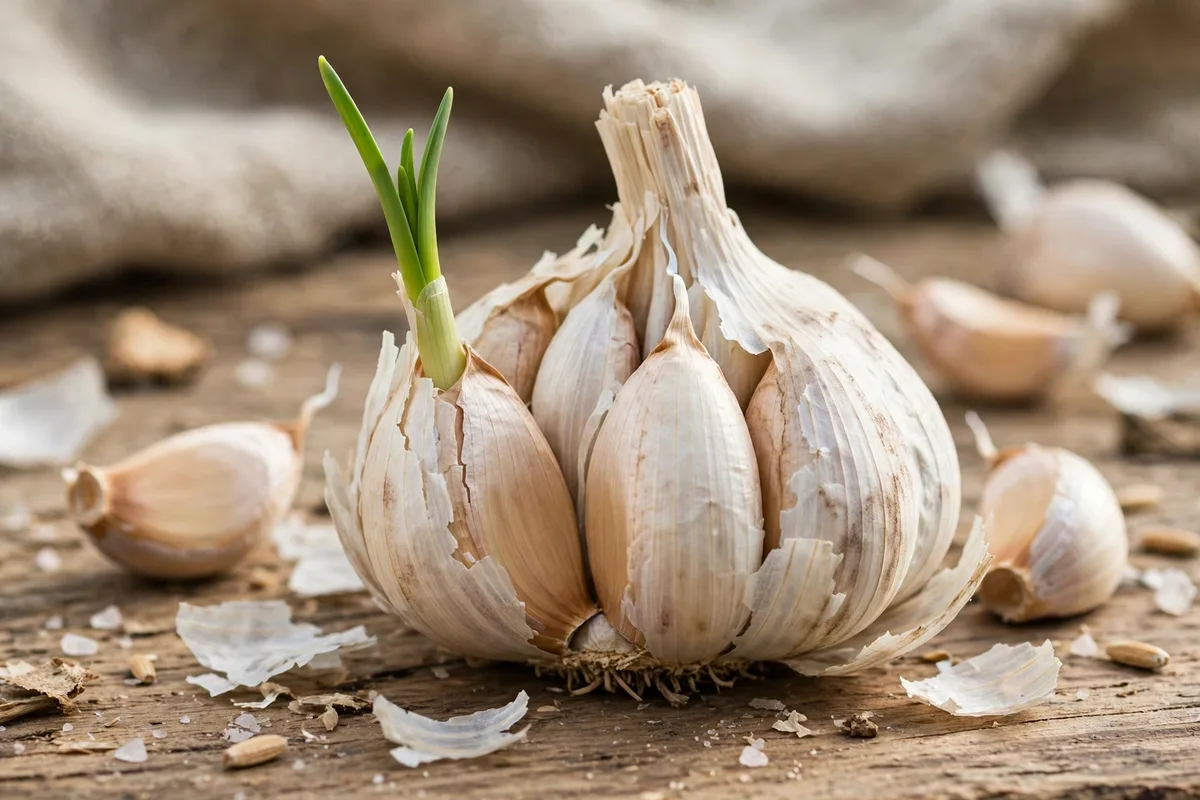
- Pick whole, firm bulbs. Choose bulbs that feel firm and heavy, with tight, dry skins and no soft spots, black or gray patches, or green shoots already showing. A bulb with a soft, mushy clove is already going bad, and it will spoil the bulbs stored next to it. Buy garlic you will use within a few months — the longer it sits, the more likely it is to sprout.
- Do not wash the garlic. Do not wash garlic before storing it: moisture on the skins encourages mold and sprouting. Brush off loose dirt with your hands or a soft brush if you need to, and leave the papery skins on — they are the bulb's own packaging, and they keep the cloves dry and protected.
- Find a cool spot at 60 to 65°F. Put the garlic on a pantry shelf or in a cupboard that stays around 60 to 65°F (15 to 18°C) — ideally a lower shelf, where it is a few degrees cooler than the top. Keep it away from the stove, the oven, and the dishwasher, because heat from cooking warms the shelf and wakes the bulbs up. Above 70°F, sprouting speeds up fast.
- Use a breathable container. Store the bulbs in a mesh bag, a paper bag, a wire basket, or a ceramic garlic keeper with side vents — anything that lets air move around the bulbs. Airflow stops moisture from pooling on the skins, and pooled moisture is what starts mold and sprouting. A paper bag also absorbs small spikes of dampness, which helps in a humid kitchen.
- Keep it dark and away from other produce. Keep the garlic in the dark, away from sunlight and away from onions, potatoes, and ethylene-producing fruits like apples, bananas, and tomatoes. Ethylene gas speeds up sprouting, and onions and potatoes give off moisture that softens garlic skins. Garlic and onions may look like pantry neighbors, but they store badly together.
- Check the bulbs every couple of weeks. Look at the bulbs every couple of weeks and use the oldest ones first. If you see a tiny green shoot, the garlic is still fine to eat — the shoot is edible, just milder — so trim the shoot off and use that bulb promptly. If a clove is soft, mushy, or moldy, throw that clove away so the mold does not spread.
- Handle peeled cloves differently. Once you peel a clove, the rules change: peeled cloves go in an airtight container in the fridge and last up to 1 week, and use minced garlic within 3 days. For longer storage, freeze peeled cloves — spread them on a tray, freeze them, then move them to a zip-top bag, where they keep for up to 6 months. Never store raw garlic in oil at room temperature: it can grow the bacteria that cause botulism.
What mistakes should I avoid?
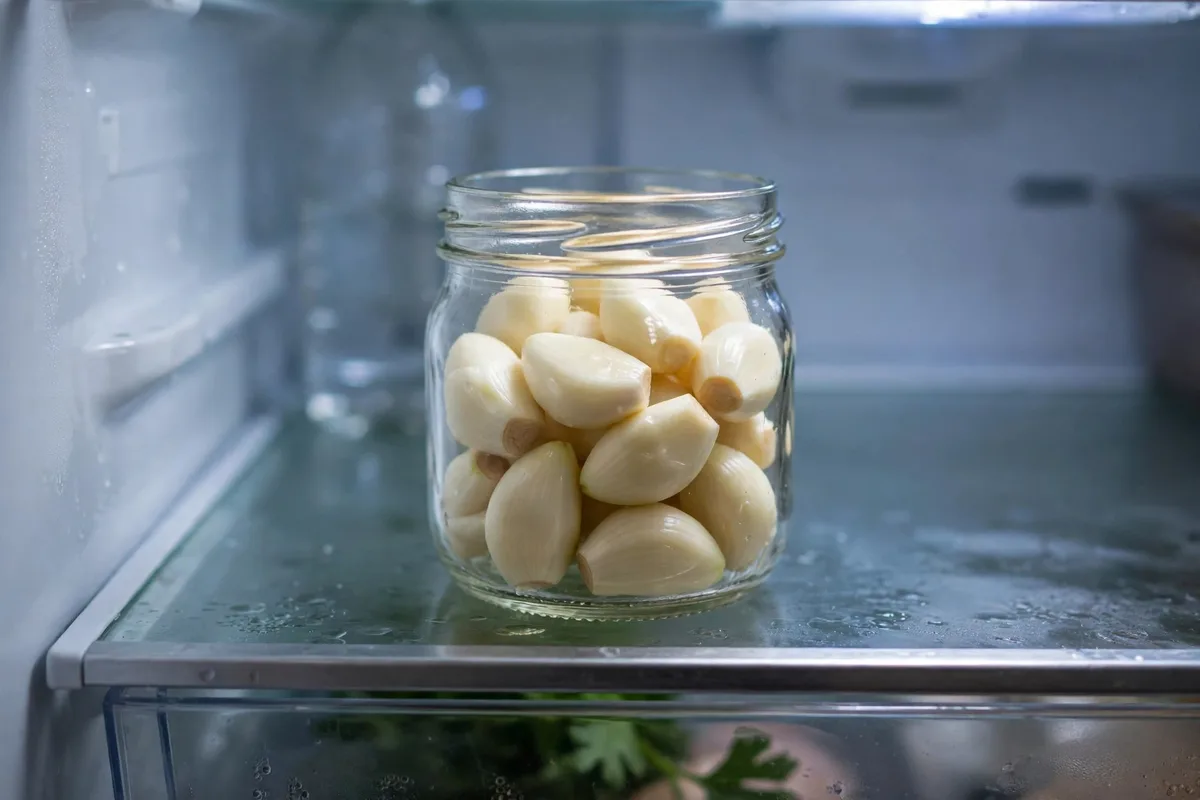
- Storing whole bulbs in the fridge. The cold of the fridge breaks the bulb's dormancy, so it sprouts once it warms up again — and the humidity in the fridge adds moisture that feeds mold. Fix: keep whole bulbs in a cool pantry at 60 to 65°F, and refrigerate only peeled cloves.
- Using a sealed plastic bag. A sealed bag traps humidity against the cloves, and trapped moisture is exactly what starts mold and sprouting. Fix: use a mesh bag, a paper bag, a wire basket, or a vented ceramic keeper — air has to move.
- Storing garlic next to onions or potatoes. Onions and potatoes give off moisture, and fruits like apples, bananas, and tomatoes give off ethylene gas — both push garlic toward sprouting. Fix: give garlic its own spot on the pantry shelf, away from other produce.
- Washing garlic before storing it. Water on the skins encourages mold, and wet skins do not dry out inside a bag or a keeper. Fix: brush off loose dirt dry, and leave the papery skins on until you cook with the garlic.
- Storing raw garlic in oil at room temperature. Raw garlic stored in oil without acid can grow Clostridium botulinum, the bacteria that cause botulism — and you cannot see, smell, or taste it. Fix: never store raw garlic in oil at room temperature; refrigerate garlic oil and use it within a few days, or freeze it.
- Breaking the bulb apart to store it. Every clove you break off starts its own countdown: a loose clove lasts 7 to 10 days, while the whole bulb lasts 3 to 6 months. Fix: keep the bulb whole and break off only the cloves you are about to use.
What do I need, and what should I skip?
You need whole, firm garlic bulbs; a mesh bag, paper bag, wire basket, or ceramic keeper; a cool pantry shelf at 60 to 65°F; a dark cupboard away from heat; an airtight container for peeled cloves; a freezer bag for long-term storage.
Skip the fridge for whole bulbs — the cold triggers sprouting. Skip sealed plastic bags or airtight containers for whole bulbs. Skip storing garlic next to onions, potatoes, or fruit. Skip washing garlic before storing it. Skip storing raw garlic in oil at room temperature. Skip keeping garlic above the stove or next to the dishwasher.
Best way to store garlic at home — which form lasts longest?
| Form | Where | How long |
|---|---|---|
| Whole bulb, softneck | Cool pantry, breathable bag | 6 to 8 months |
| Whole bulb, hardneck | Cool pantry, breathable bag | 3 to 6 months |
| Whole bulb, any type | Fridge or sealed bag | Sprouts fast — do not do this |
| Loose unpeeled clove | Counter, dry and breathable | 7 to 10 days |
| Peeled cloves | Fridge, airtight container | Up to 1 week |
| Peeled cloves, frozen | Freezer, zip-top bag | Up to 6 months |
What does the worked example look like?
Worked example: a whole bulb versus a loose clove. A whole bulb stored at 60 to 65°F lasts 3 to 6 months — that is 90 to 180 days. A loose clove broken off the bulb lasts only 7 to 10 days. At the short end, 90 days is 9 times 10 days — 90 divided by 10 is 9. At the long end, 180 days is about 26 times 7 days — 180 divided by 7 is about 26. So keeping the bulb whole and unpeeled buys you roughly 9 to 26 times the storage life of a loose clove, which is why the first rule of garlic storage is simple: do not break the bulb apart until you need it.
When should I stop?
Stop storing a bulb that is soft, mushy, or has black or gray patches — throw the bad cloves away, because mold spreads to the bulbs next to them. Stop using garlic that smells musty or damp instead of sharp and garlicky: that smell means mold or rot has started inside. And stop keeping garlic in oil at room temperature the moment you realize what it is — throw the oil away, because botulism has no smell and no taste, and the risk is not worth it.
What is the quick checklist?
- Whole, firm bulbs with tight, dry skins.
- Do not wash before storing.
- Cool spot at 60 to 65°F, away from the stove and dishwasher.
- Breathable container: mesh bag, paper bag, basket, or vented keeper.
- Dark, and away from onions, potatoes, and fruit.
- Check every couple of weeks; use the oldest bulbs first.
- Peeled cloves in the fridge up to 1 week; freeze for longer.
What else helps on Kitchenlify?
- How to Clean Garlic Press Properly
- How to Mince Garlic Without a Press
- How to Store Onions So They Last Longer
- How to Store Potatoes So They Do Not Sprout
- All guides
Frequently asked questions
How to store garlic so it does not sprout for beginners?
Keep whole, unpeeled bulbs in a cool, dry, dark, well-ventilated place at 60 to 65°F — a pantry shelf in a mesh bag, a paper bag, or a ceramic keeper — and never in the fridge or a sealed plastic bag. That is how to store garlic so it does not sprout for beginners: cool, dry, dark, and breathing, and the bulb stays whole until you need it.
Best way to store garlic at home?
A mesh bag, paper bag, wire basket, or vented ceramic keeper on a cool pantry shelf at 60 to 65°F, in the dark, away from onions, potatoes, and fruit. That is the best way to store garlic at home — whole bulbs last 3 to 6 months that way, while a fridge or a sealed bag makes them sprout fast.
Why does my garlic sprout in the fridge?
Because the cold breaks the bulb's dormancy: refrigeration tricks the garlic into thinking winter has passed, so it sprouts when it warms up again. The fridge is also humid, which adds moisture. Whole bulbs belong in a cool pantry at 60 to 65°F — refrigerate only peeled cloves, in an airtight container, for up to 1 week.
Is sprouted garlic safe to eat?
Yes. Sprouted garlic is not unsafe — the green shoots are edible, just milder in flavor and softer in texture. Trim the shoots off and use the cloves promptly, because sprouting means the bulb is moving toward spoilage and will not store much longer.
How long does garlic last?
A whole bulb stored at 60 to 65°F lasts 3 to 6 months — softneck garlic up to 6 to 8 months, hardneck 3 to 6 months. Once you break off a clove, use it within 7 to 10 days, and use the rest of the head within about 2 weeks. Peeled cloves last up to 1 week in the fridge, and frozen peeled cloves last up to 6 months.
Can I store garlic in oil?
Not at room temperature. Raw garlic stored in oil without acid can grow the bacteria that cause botulism, and you cannot see, smell, or taste it. If you make garlic oil, refrigerate it and use it within a few days, or freeze it — never leave it on the counter.
Should I store garlic with onions?
No. Onions give off moisture, and garlic stored next to onions softens and sprouts faster. Keep garlic in its own spot on the pantry shelf, away from onions, potatoes, and ethylene-producing fruits like apples, bananas, and tomatoes.
What temperature is best for storing garlic?
Around 60 to 65°F (15 to 18°C), with humidity around 50 to 60 percent. Above 70°F, sprouting speeds up fast. Below 55°F, condensation can form on the bulbs when they warm up again, which encourages mold — so a cool pantry is better than a cold fridge.
Can I freeze garlic?
Yes — freezing is the best long-term option. Peel the cloves, spread them on a tray, freeze them, then move them to a zip-top bag: they keep for up to 6 months, and whole peeled cloves can keep up to 1 year. Use frozen garlic straight from the freezer in cooking; it softens as it thaws, so it is best for cooked dishes rather than raw use.