How to Store Small Kitchen Appliances You Do Not Use Every Day
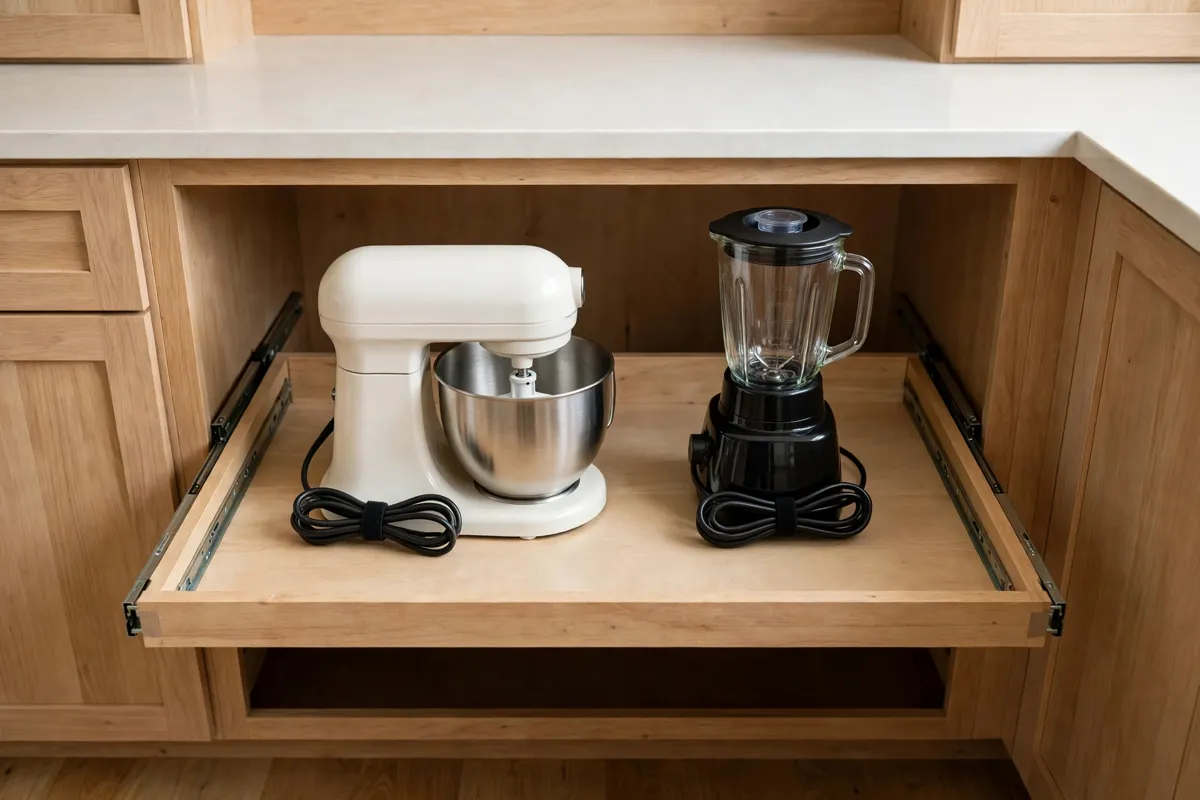
How to store small kitchen appliances you do not use every day starts with how often you use them: rotate appliances by how often you use them — daily appliances stay on the counter, weekly appliances go in a low pull-out cabinet, and monthly or rarely used appliances go higher, or in a pantry or closet, with heavy items always low. Cool every appliance and unplug it before storing, tame its cord so it does not snag, and keep its parts together, so bringing it out takes one trip, not three. Large appliances are out of scope here, because they need different space, wiring, and lifting rules, and this post covers small countertop appliances only, such as blenders, food processors, stand mixers, slow cookers, and waffle makers.
This post covers small appliances only, by use frequency, and it links to the counter post for what stays out. Keep the rotation rule simple, and the counter will stay clear without hiding weekly appliances so well that you stop using them.
How to store small kitchen appliances you do not use every day — how do you do it, step by step?
- List every small appliance and mark how often you use it. Gather every small appliance you own, including ones in closets and on high shelves, and mark each one daily, weekly, monthly, or rarely, based on the last three months, not on what you hope to cook. Daily usually means a coffee maker, kettle, or toaster. Weekly usually means a blender, air fryer, or hand mixer. Monthly or rarely usually means a stand mixer for some households, a food processor, a slow cooker, or a specialty maker. If an appliance has not been used in a year, move it out of the kitchen rotation entirely, because an appliance you never use takes a cabinet that a weekly appliance needs.
- Measure your largest appliance and your cabinet before you place anything. Measure the height, width, and depth of your largest appliance, such as a stand mixer, including its height with the bowl fitted, because a mixer that fits a cabinet without its bowl may not fit with it. Measure your cabinet openings, shelf heights, and pull-out depth, and check that the appliance can be lifted in and out without tilting it sharply or hitting the shelf above. Heavy appliances need a low, pull-out spot, because lifting a heavy mixer from a high shelf risks dropping it and injuring your back or foot. If no cabinet fits your largest appliance, that appliance needs a pantry shelf, a closet shelf, or a rolling cart, not a forced cabinet fit.
- Place daily appliances on the counter, in one zone. Keep daily appliances on the counter, in the zone where you use them, such as a coffee maker on a coffee tray, or a kettle near the sink, and keep their cords short and tidy so they do not trail across the prep stretch. Daily does not mean every appliance you like; it means every appliance you actually use every day, and in a small kitchen that is usually one or two, not five. If a daily appliance has parts, such as a filter or a jug, keep those parts with it, so the morning routine takes one reach, not a search through a cabinet.
- Place weekly appliances in a low pull-out cabinet. Put weekly appliances in a low cabinet with a pull-out shelf or drawer, so you can slide the shelf out, lift the appliance onto the counter, and slide it back without moving other items. Put the heaviest weekly appliance, often a stand mixer or food processor, on the lowest pull-out shelf, and lighter weekly appliances above it, so weight stays low and lifting stays safe. Keep each appliance's cord wrapped and clipped to itself, not tangled with the next appliance, and keep its attachments in a small bin or bag with it, labeled if needed. Test the pull-out by sliding it fully out and back with the appliance on it, before you load the rest of the cabinet.
- Place monthly and rarely used appliances higher, or in a pantry or closet. Put monthly appliances on a higher pantry shelf, or in a nearby closet, where they are safe, dry, and out of daily way, but still reachable without a ladder for a monthly use. Rarely used appliances, used a few times a year, can go higher still, or in a labeled box in a closet, as long as the box is not so heavy that lifting it risks injury. Keep a note inside the cabinet or on the box listing what is inside, so you do not buy a duplicate or forget an appliance you already own. If a rarely used appliance is heavy, keep it low even in a closet, because a heavy box on a high shelf is a falling hazard.
- Cool, unplug, clean, and tame cords before storing. Let every appliance cool fully before you store it, because a hot appliance stored in a cabinet traps heat and can damage nearby items. Unplug it, wipe it clean and dry according to the maker's guidance, and wrap its cord neatly, using a cord wrap or a simple loop secured so it does not snag on the next appliance. Keep blades, bowls, and attachments with the appliance, in a bag or bin if needed, so bringing it out is one trip. Never store an appliance with a damaged cord, a cracked bowl, or a loose part, and get it repaired or replaced before you use it again.
- Work through a worked rotation for a weekly cooking household. Use the worked example below for a household that cooks daily, blends weekly, and bakes monthly. Change only the appliances to match your kitchen, and keep the rule: daily on the counter, weekly low pull-out, monthly higher or pantry, heavy always low, cords tamed, cool and unplug before storing. A rotation built this way keeps the counter clear without hiding weekly appliances so well that you stop using them.
What does a worked example look like?
Here is a worked example for a household with six small appliances, one low pull-out cabinet, and one pantry shelf.

| Appliance in the example | Where it lives | Why it sits there |
|---|---|---|
| Counter, coffee zone | Coffee maker, kettle | Daily, one zone, cords short and tidy |
| Low pull-out, bottom | Stand mixer, heavy | Weekly to monthly, heaviest low, pull-out tested |
| Low pull-out, top | Blender, hand mixer | Weekly, lighter, attachments in a bin with each |
| Pantry shelf, low | Food processor | Monthly, low pantry shelf, parts in a bag with it |
| Pantry shelf, high | Waffle maker, slow cooker | Monthly, lighter, labeled, reachable without a ladder |
| Closet box | Specialty maker, rarely used | Few times a year, labeled box, not heavy on high shelf |
Which option should you choose?
| Choice | Use it when | Watch out for |
|---|---|---|
| Daily on counter | Coffee maker, kettle, toaster | Keeping five daily appliances on a small counter |
| Weekly low pull-out | Blender, air fryer, hand mixer | A pull-out that cannot slide past other items |
| Monthly pantry shelf | Food processor, slow cooker | A heavy appliance on a high pantry shelf |
| Rarely used closet box | Specialty makers, few times a year | A heavy box on a high closet shelf |
| Rolling cart | No cabinet fits, appliances moved to use | A cart blocking a walkway or door |
What are the common mistakes, and how do you fix them?
- Keeping every appliance on the counter. Every appliance on the counter leaves no prep space, even if each appliance is used sometimes. Fix: daily only on the counter, weekly low, monthly higher, and rarely used in a closet, so the counter holds one or two appliances, not six.
- Storing heavy appliances on high shelves. A heavy mixer or processor on a high shelf risks dropping it and injuring your back or foot when you lift it down. Fix: heavy items always low, even in a pantry or closet, and use a pull-out shelf for the heaviest weekly appliance.
- Storing appliances hot, plugged in, or with tangled cords. A hot appliance traps heat in a cabinet, a plugged-in appliance can be switched on by accident, and tangled cords snag the next appliance when you pull one out. Fix: cool fully, unplug, clean and dry, and wrap cords neatly before storing.
- Separating an appliance from its parts. A blender without its jug, or a processor without its blades, takes three trips to use and often stays unused. Fix: keep blades, bowls, and attachments in a bag or bin with the appliance, labeled if needed.
- Blocking vents or crowding appliances in a cabinet. Appliances packed tight trap heat, scratch each other, and make the back appliance impossible to reach. Fix: leave breathing room around appliances, especially air fryers and microwaves in use, and do not stack heavy appliances on light ones.
- Keeping an appliance you have not used in a year in prime space. An unused appliance takes a low pull-out cabinet that a weekly appliance needs, and it stays unused because it is in the way. Fix: move unused appliances out of the kitchen rotation, to a closet box or out of the home, and free the prime spot.
What do you need, and what should you skip?
You need a tape measure, a low pull-out shelf or drawer if your cabinet allows it, cord wraps or simple ties, and small bags or bins for attachments. Labels for pantry shelves or closet boxes help if two people share the kitchen, and a cloth for wiping appliances clean and dry before storing completes the kit. Measure your largest appliance first, because its height and weight decide where it can safely live.

Skip buying a cabinet system before you list appliances by use frequency, since a system sized for every appliance you own wastes prime space on appliances you never use. Skip storing large appliances, such as a full-size oven or refrigerator, under this rotation, because they are out of scope and need different space and wiring rules. Skip stacking heavy appliances on light ones in a cabinet, because weight damages light appliances and makes lifting unsafe.
When should you stop?
Cool appliances fully and unplug them before storing, and never store an appliance with a damaged cord, cracked bowl, or loose blade. Lift heavy appliances with both hands, keep them low, and do not reach for a heavy appliance on a high shelf while standing on a chair or step. If an appliance smells, sparks, or trips a breaker, stop using it, unplug it, and get it checked before you store it or use it again.
What is the quick checklist?
- Appliances listed by use: daily, weekly, monthly, rarely
- Daily on counter, one zone, cords tidy
- Weekly in low pull-out, heaviest lowest
- Monthly higher or pantry, rarely used in closet box
- Heavy items always low, never on high shelves
- Cooled, unplugged, cleaned, cords wrapped
- Parts kept with appliance, in a bag or bin
Related on Kitchenlify
- How to Clean an Air Fryer Basket Without Damaging Coating
- How to Choose an Air Fryer Size for a Family of 2
- Small Appliances
- All guides
Frequently asked questions
Where should I store small appliances I do not use every day?
Rotate them by use: weekly appliances in a low pull-out cabinet, monthly appliances on a higher pantry shelf or in a closet, and rarely used appliances in a labeled closet box. Daily appliances stay on the counter, and heavy appliances always stay low.
How do I decide if an appliance is daily, weekly, or monthly?
Mark it by the last three months, not by what you hope to cook. Daily means every day, weekly means about once a week, monthly means about once a month, and rarely means a few times a year or less.
Where should a heavy stand mixer go?
On the lowest pull-out shelf you have, or a low pantry shelf, where you can lift it safely without reaching high. Never put a heavy mixer on a high shelf, and test the pull-out by sliding it fully out and back with the mixer on it.
Should I unplug appliances before storing them?
Yes, and let them cool fully first. A hot appliance traps heat in a cabinet, and a plugged-in appliance can be switched on by accident, so cool, unplug, clean and dry, and wrap the cord before storing.
How do I keep appliance cords tidy?
Wrap each cord neatly and clip or tie it to its own appliance, so it does not tangle with the next appliance when you pull one out. Keep cords short on counter appliances, so they do not trail across the prep stretch.
How do I keep appliance parts together?
Keep blades, bowls, and attachments in a small bag or bin with the appliance, labeled if needed, so bringing it out takes one trip. An appliance separated from its parts often stays unused because using it takes three trips.
Can I store small appliances in a pantry or closet?
Yes, for monthly and rarely used appliances, as long as the spot is dry, reachable without a ladder for monthly use, and low enough for heavy items. Label closet boxes, so you do not forget or duplicate an appliance you already own.
What about large appliances?
Large appliances are out of scope for this post, because they need different space, wiring, and lifting rules. This post covers small countertop appliances only, such as blenders, processors, mixers, slow cookers, and waffle makers.
What should I do with an appliance I have not used in a year?
Move it out of the kitchen rotation, to a closet box or out of the home, and free its prime cabinet spot for a weekly appliance. An unused appliance in prime space stays unused and blocks the appliances you do use.
What is an appliance garage?
An appliance garage is a cabinet with a roll-up or lift-up door that hides appliances on the counter, so they stay plugged in but out of sight. It works best for one or two daily appliances, such as a coffee maker or toaster, and it needs a power outlet inside or nearby. Do not store an appliance in a closed garage while it is still hot, and keep the door open while it cools.
Where else can I store appliances I rarely use?
Use a rolling cart in a closet or pantry for monthly appliances, so you can roll them out when you need them and roll them away after. A garage or outbuilding works for large, rarely used appliances, such as a big stand mixer or a bread maker, if the space is dry and clean, but do not store an appliance anywhere damp or dusty, because moisture rusts parts and dust clogs vents.