How Long Do Leftovers Last in the Fridge by Food Type
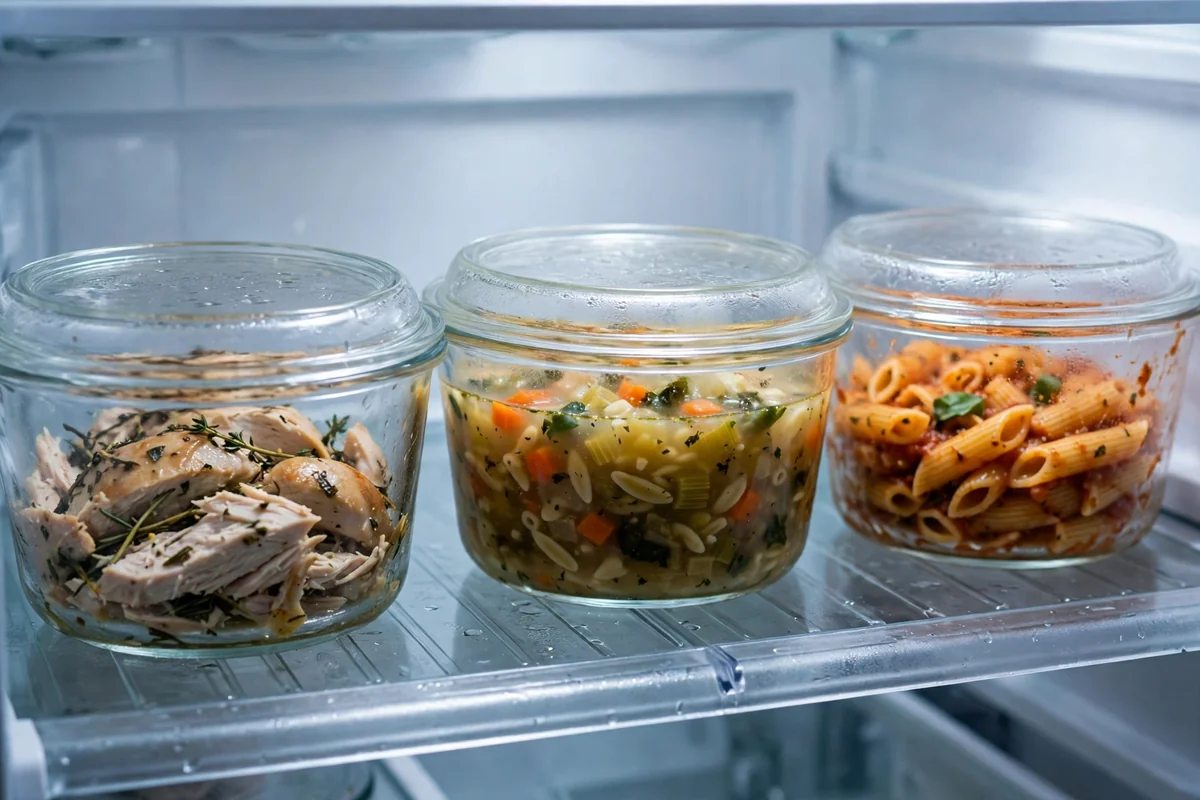
How long do leftovers last in the fridge by food type? Yesterday’s rice, chicken, soup, and pasta all sit in the same refrigerator, but they do not all last the same number of days, and the sniff test is not a reliable way to tell. Most cooked leftovers follow one general rule, 3 to 4 days in a refrigerator at or below 40 degrees Fahrenheit, but a few foods are shorter, a few are longer, and how fast food got into the refrigerator matters as much as the date on the container — and this guide gives you a dish-by-dish table you can actually use, plus a chilling and reheating routine that keeps the table honest.
How long do leftovers last in the fridge by food type — what is the short answer?
Most cooked leftovers last 3 to 4 days in the refrigerator at or below 40 degrees Fahrenheit, when they are chilled promptly within 2 hours of cooking, stored in shallow, covered containers, and labeled with the cooking date. Cooked seafood and creamy dishes lean toward 3 days, soups, stews, cooked meat, poultry, pasta, and cooked vegetables sit at 3 to 4 days, and hard-cooked eggs in the shell last about 1 week. Reheat leftovers once, until steaming hot throughout, and throw away food that has passed its window or sat out too long, even if it smells fine.
Why is 3 to 4 days the general rule for leftovers?
Refrigeration slows bacterial growth but does not stop it, so every cooked food has a window after which risk rises even if taste, smell, and appearance have not changed yet. The 3 to 4 day rule is a conservative, memorable window that covers most cooked dishes in a home refrigerator at or below 40 degrees Fahrenheit, without asking you to memorize a different number for every recipe. It works because most cooked meat, poultry, grains, vegetables, and mixed dishes spoil at a similar pace once they are chilled and covered.
Exceptions exist because some foods are more perishable or more stable than the average dish. Cooked seafood loses quality fastest and leans toward the short end, creamy and dairy-heavy dishes are limited by their dairy, and egg salads and mayonnaise-based salads also lean shorter. Hard-cooked eggs in the shell, hard cheeses, and some cured foods last longer, because their structure or salt content slows spoilage, but those are separate foods with their own rules, not a reason to stretch a mixed leftover past its window.
Chilling speed is the hidden variable behind the table. Food that sits on the counter for 3 hours before going into the refrigerator has already used up part of its safe window, and reheating later does not reset that clock or destroy every toxin that bacteria can leave behind. That is why prompt chilling, shallow containers that cool fast, and a cooking date on every container matter as much as the day count itself. A table without a chilling routine is just a guess.
What is a worked example you can follow?
Work through a real Sunday cooking example: on Sunday evening you cook roast chicken, rice, vegetable soup, and pasta with sauce, and you have leftovers of all four. Do not put four deep, uncovered pots in the refrigerator and hope for the best. Instead, while the food is still warm but not piping hot, divide each dish into shallow, covered containers, label each one with the dish name and Sunday’s date, and put them in the refrigerator within 2 hours of cooking. Shallow containers cool faster than one deep pot, which is what gets food through the warm zone quickly.
Now set the eating order for the week. Eat the pasta with sauce and the soup on Monday and Tuesday, since sauced pasta and creamy or mixed soups lean toward the shorter, fresher end and taste best early. Eat the roast chicken on Tuesday and Wednesday, within its 3 to 4 day window. Eat the rice on Monday or Tuesday as well, since cooked rice needs prompt chilling and careful handling — cool it within an hour and do not keep reheating the same rice container day after day. By Wednesday evening, any container still left from Sunday should be thrown away or frozen, not carried into Thursday on hope.
If Wednesday arrives and you still have chicken and soup left, freeze them on Wednesday, not on Thursday when the window has already closed. Freezing on the last good day preserves food that is still within its window, while freezing after the window has passed does not make it safe again. Label frozen containers with the dish name and the freezing date, and thaw them in the refrigerator, not on the counter, when you are ready to eat them.
How do you do it, step by step?
- Chill leftovers promptly, within 2 hours of cooking. Do not leave cooked food on the counter to cool for hours. Divide hot food into shallow containers so it cools fast, and put it in the refrigerator within 2 hours of cooking, or within 1 hour if the room is above 90 degrees Fahrenheit. If food has sat out longer than that, throw it away rather than refrigerating it late, since chilling does not reset the clock.
- Store leftovers in shallow, covered, labeled containers. Use shallow containers with tight lids, so food cools quickly and stays protected from drips and odors. Label each container with the dish name and the cooking date, and keep containers on main fridge shelves, not in the door where temperature varies. Keep ready-to-eat leftovers away from raw meat and poultry, so juices cannot drip onto them.
- Use the dish-by-dish table to set the eating order. Check the table below for each dish, and plan meals so the shortest-window foods get eaten first. Cooked seafood, creamy dishes, and egg salads go first, then soups, stews, meat, poultry, pasta, and vegetables within 3 to 4 days, with hard-cooked eggs as the longer exception. When a dish mixes ingredients, use the shortest window among its ingredients.
- Reheat leftovers once, until steaming hot throughout. Reheat leftovers only once, stirring soups and sauced dishes so heat reaches every part, and heat food until it is steaming hot throughout, with sauces, soups, and gravies brought to a rolling boil. Do not reheat a small portion, put the rest back, and reheat it again tomorrow. If you only need part of a container, take out that part, reheat it, and keep the rest chilled and untouched.
- Freeze leftovers on the last good day, not after the window closes. If you cannot eat leftovers within their refrigerator window, freeze them promptly while they are still within that window, in freezer containers labeled with the dish name and freezing date. Thaw frozen leftovers in the refrigerator, not on the counter, and eat thawed leftovers promptly. Freezing does not make food that has already passed its window safe again.
- Check before eating and throw away doubtful food. Before eating, check for off smell, mold, slimy texture, or color change, and throw the food away if any sign appears or if the container has passed its window. Do not taste doubtful leftovers to decide whether they are safe, since spoilage bacteria can grow without changing taste or smell. When in doubt, throw it out.
- Clean containers and reset the shelf each week. Once a week, check the refrigerator for containers past their window, throw them away, and wash the containers before reuse. A weekly reset stops old containers from hiding behind new ones and keeps date labels honest, so the next batch of leftovers starts from a clean, visible shelf.
What should you use, and what should you skip?
You need shallow containers with tight lids in a few sizes, labels or tape plus a marker for cooking dates, and a refrigerator that holds at or below 40 degrees Fahrenheit. A refrigerator thermometer helps if your fridge does not show its temperature. Small containers are better than one large pot, because they cool faster and let you reheat one portion without warming the whole batch.

Skip deep, uncovered pots in the refrigerator, skip leaving cooked food on the counter for hours to cool, and skip reheating the same container day after day. Skip the sniff test as a safety decision, skip mixing fresh food into an old leftover container, and skip freezing food after its refrigerator window has already closed. Skip storing leftovers in the refrigerator door, where temperature varies every time the door opens.
How do the options compare?
Use this dish-by-dish table to plan the week, and when a dish mixes types, use the shortest window among its ingredients.
| Leftover dish | Fridge at or below 40 degrees Fahrenheit | Eat first or note | Freezer quality guide |
|---|---|---|---|
| Cooked chicken or turkey | 3 to 4 days | Eat by day 4, sooner if sliced thin | 2 to 6 months |
| Cooked beef, pork, or lamb | 3 to 4 days | Eat by day 4 | 2 to 6 months |
| Cooked fish or seafood | 3 to 4 days, aim for 3 | Quality fades fastest, eat first | 2 to 3 months |
| Soups and stews | 3 to 4 days | Reheat to a rolling boil, stir well | 2 to 3 months |
| Cooked rice | 3 to 4 days, chill promptly | Cool fast, do not leave out, reheat once | Up to 6 months for quality |
| Cooked pasta, plain or sauced | 3 to 4 days | Sauced pasta follows its most perishable ingredient | 1 to 2 months |
| Cooked vegetables | 3 to 4 days | Eat within window, check texture and smell | 2 to 3 months |
| Pizza | 3 to 4 days | Count from when you refrigerated it | 1 to 2 months |
| Egg, chicken, tuna, or macaroni salad | 3 to 4 days, aim for 3 | Mayonnaise-based salads lean shorter | Not recommended |
| Casseroles with eggs or dairy | 3 to 4 days, aim for 3 | Creamy dishes lean shorter | 2 to 3 months |
| Hard-cooked eggs, in shell | About 1 week | Do not freeze hard-cooked eggs | Do not freeze |
| Cooked beans and lentils | 3 to 4 days | Treat like soups and stews | 2 to 3 months |
What are the 6 mistakes to avoid?
- Leaving cooked food out for hours to cool. Food left out for more than 2 hours ages fast, and later refrigeration does not reset the clock. Fix: divide food into shallow containers and refrigerate within 2 hours, or within 1 hour above 90 degrees Fahrenheit.
- Using the sniff test as a safety check. Bacteria can grow without changing smell, taste, or appearance, so food can be unsafe while smelling fine. Fix: use date labels and the dish table, and throw away food past its window without tasting it.
- Reheating the same container every day. Repeated warming and cooling ages food and raises risk, while also drying it out. Fix: reheat only the portion you need, once, until steaming hot throughout, and keep the rest chilled.
- Storing leftovers in one deep pot. A deep pot cools slowly in the middle, so the center stays warm long after the outside feels cold. Fix: use shallow containers that cool fast and evenly.
- Freezing leftovers after the window has closed. Freezing pauses spoilage but does not reverse it, so food frozen late is still past its window when thawed. Fix: freeze on the last good day, while food is still within its refrigerator window.
- Mixing fresh food into an old container. Topping up makes the whole container as old as the oldest food in it, while looking fresh on top. Fix: use a fresh container and a fresh date label for each new batch.
When should you stop, and when should you throw food away?
Stop adjusting when every leftover is chilled within 2 hours, stored in a shallow, covered, labeled container on a main shelf, eaten within its dish window with the shortest-window foods first, and reheated once until steaming hot throughout. Throw away leftovers past their window, leftovers that sat out too long, and any food with off smell, mold, sliminess, or color change, even if it is still within its window and even if it smells fine to someone else.

Safety note: This is general food-safety guidance, not personal advice. Keep your refrigerator at or below 40 degrees Fahrenheit, chill leftovers promptly, reheat them once until steaming hot throughout, and throw away doubtful food without tasting it. If you have a health condition that makes food safety more important for you, follow stricter guidance from a qualified professional rather than stretching these general windows.
Related on Kitchenlify
- Food Storage
- How to Store Opened Canned Food in the Fridge Safely
- How to Freeze Soup Without Freezer Burn for Beginners
- All guides
Frequently asked questions
How long do leftovers last in the refrigerator?
Most cooked leftovers last 3 to 4 days in a refrigerator at or below 40 degrees Fahrenheit, when chilled promptly within 2 hours of cooking and stored in covered containers. Hard-cooked eggs in the shell are an exception at about 1 week, and some dishes lean toward 3 days.
How long does cooked chicken last in the refrigerator?
Cooked chicken lasts 3 to 4 days in the refrigerator at or below 40 degrees Fahrenheit, in a shallow, covered, labeled container. Eat it by day 4, and eat sliced chicken sooner, since thin slices lose quality faster.
How long does cooked rice last in the refrigerator?
Cooked rice lasts 3 to 4 days in the refrigerator when chilled promptly and stored covered, but it needs fast cooling and careful handling, so do not leave it out and do not reheat it repeatedly. Reheat rice once, until steaming hot throughout.
Can you eat leftovers after 5 days in the refrigerator?
No, not as a general rule. Most cooked leftovers should be eaten within 3 to 4 days, and throw away food past that window even if it smells fine, since bacteria can grow without changing smell or taste.
How long do soups and stews last in the refrigerator?
Soups and stews last 3 to 4 days in the refrigerator at or below 40 degrees Fahrenheit, in shallow, covered containers. Reheat them once, stirring well, until they reach a rolling boil, and throw away any soup past its window.
How do you reheat leftovers safely?
Reheat leftovers only once, until steaming hot throughout, stirring soups and sauced dishes so heat reaches every part. Bring sauces, soups, and gravies to a rolling boil, and do not reheat a portion, put it back, and reheat it again the next day.
How long can leftovers sit out before refrigerating?
Leftovers should go into the refrigerator within 2 hours of cooking, or within 1 hour if the room is above 90 degrees Fahrenheit. Throw away food left out longer, since later refrigeration does not reset the clock.
Should leftovers be frozen or thrown away on day 4?
If you cannot eat leftovers within their window, freeze them promptly while they are still within that window, in labeled freezer containers. Do not freeze leftovers after the window has closed, since freezing does not make past-window food safe again.
Can you tell if leftovers are bad by smelling them?
No, not reliably. Spoilage bacteria can grow without changing smell, taste, or appearance, so the sniff test is not a safety check. Use cooking dates and the dish-by-dish table, and throw away food past its window or with any sign of spoilage.