How to Avoid Cross Contamination in Small Kitchen
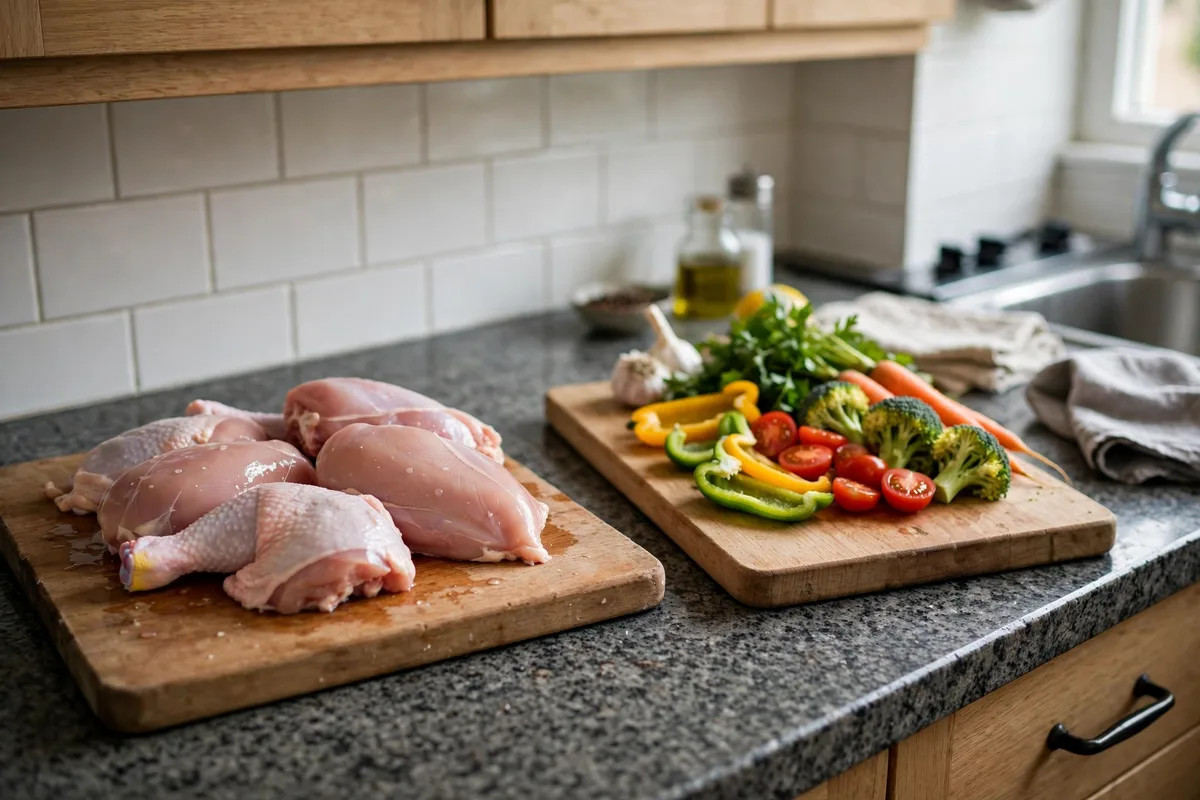
How to avoid cross contamination in small kitchen: use one board for raw meat and a different one for everything else, wash your hands for 20 seconds between jobs, and keep raw meat on the bottom shelf away from ready-to-eat food. Cross contamination is what happens when bacteria from raw meat reach food you eat without cooking — usually through a shared board, a shared knife, unwashed hands, or a drip in the fridge. This guide shows the order of work that keeps a small kitchen safe.
how to avoid cross contamination in small kitchen — what is the short answer?
Keep raw meat away from ready-to-eat food at every step. Use one cutting board for raw meat and a different one for everything else, wash your hands for 20 seconds between jobs, and work in this order: ready-to-eat food first, raw meat last. Store raw meat sealed on the bottom shelf of the fridge, below food you eat raw, and clean boards, knives, and counters with hot soapy water after raw meat touches them. If raw meat juice has touched food you eat raw, throw that food away — rinsing it does not make it safe. That is the whole method for how to prevent cross contamination in a small kitchen: separate boards, clean hands, and raw meat kept away from ready-to-eat food.
How do I do it step by step?

- Plan the order: ready-to-eat first, raw meat last. Before you start, decide the order of work. Make the salad, slice the bread, and prepare anything you will eat raw first, and set it aside covered. Prep raw meat last, so nothing it touches still needs to go back on the board.
- Use a separate board for raw meat. Keep one cutting board for raw meat and a different one for vegetables, bread, and ready-to-eat food. Color-coded boards help in a small kitchen, but two plain boards kept apart work just as well. Never use the meat board for salad, even if it looks clean.
- Use a separate knife, or wash it between jobs. Use a different knife for raw meat, or wash the knife with hot soapy water before it touches anything else. A knife that cut raw chicken carries the same bacteria as the board, and a quick rinse under the tap does not clean it.
- Wash your hands for 20 seconds between jobs. Wash your hands with soap and warm water for 20 seconds — about the time it takes to hum a short tune twice — after touching raw meat and before touching anything else. Dry them on a clean towel or paper towel, not on the cloth you used for the meat.
- Clean boards and counters after raw meat. Wash the meat board and knife with hot soapy water, and wipe the counter where the meat sat. In a small kitchen the counter is shared by everything, so a wipe after raw meat is not optional — it is the step that protects the next job.
- Store raw meat sealed on the bottom shelf. Keep raw meat in a sealed container or on a tray on the bottom shelf of the fridge, below ready-to-eat food. Raw meat juices drip down, not up, so the bottom shelf is the only place a drip cannot land on food you eat raw.
- Wash cloths that touched raw meat. Put any cloth, towel, or sponge that touched raw meat juice in the laundry or the bin, and use a clean one for the next job. A damp cloth spreads bacteria further than a dry hand does, so a used cloth is not a clean cloth.
What mistakes should I avoid?

- Using the same board for meat and salad. A board that held raw chicken passes bacteria to food you eat raw, even if it looks clean. Fix: use a separate board, or wash the board with hot soapy water first.
- Washing raw chicken. Washing sprays bacteria in droplets around the sink, the tap, and the counter. Fix: do not wash it — cooking kills the bacteria.
- Not washing hands between jobs. Hands carry bacteria from raw meat to everything they touch next. Fix: wash for 20 seconds with soap after raw meat, every time.
- Storing raw meat above ready-to-eat food. Raw meat juices drip down onto the food below. Fix: store raw meat sealed on the bottom shelf.
- Reusing marinade as a sauce. Marinade that held raw meat carries its bacteria. Fix: throw it away, or boil it hard before you serve it as a sauce.
- Wiping with a used cloth. A cloth that wiped up raw meat juice spreads it further. Fix: use a clean cloth, and put the used one in the laundry.
What do I need, and what should I skip?
You need two cutting boards — one for raw meat, one for everything else; a separate knife, or time to wash one between jobs; soap, warm water, and clean towels for hands and surfaces; sealed containers or a tray for raw meat in the fridge.
Skip washing raw chicken, which sprays bacteria around the sink. Skip using the same board for meat and then salad, even if it looks clean. Skip wiping up with a cloth that already touched raw meat. Skip storing raw meat above salad or leftovers in the fridge.
How to prevent cross contamination in a small kitchen — which method should I choose?
| Method | How it works | Best for a small kitchen |
|---|---|---|
| Two boards | One board for meat, one for everything else | Best — no washing between jobs |
| One board, washed between | Wash with hot soapy water before the next job | Works if you have only one board |
| Disposable cutting sheets | Use once for raw meat, then throw away | Good for a very small kitchen |
What does the worked example look like?
Worked example: chicken and salad in a small kitchen. You are cooking chicken and a salad in a small kitchen with one counter. Make the salad first: wash the vegetables on the clean board, slice them, and put the salad in a covered bowl on the side. Then prep the chicken on the meat board, with a separate knife. Wash your hands for 20 seconds, wash the meat board and knife with hot soapy water, and wipe the counter. Only then do you plate the salad and the cooked chicken together. The salad never touched the meat board, the meat knife, or your unwashed hands — and that is the whole method, in one meal. A small kitchen makes every one of these habits matter more, and cross contamination in the kitchen how to avoid it is the question this whole guide answers.
When should I stop?
Stop and throw the food away if raw meat juice has touched food you eat raw — a salad, bread, or fruit that raw chicken dripped on cannot be saved by rinsing it. Rinsing spreads the bacteria further and does not remove them. When in doubt about a board, a knife, or a counter, wash it with hot soapy water before it touches anything else.
What is the quick checklist?
- Ready-to-eat food first, raw meat last.
- Separate boards for meat and everything else.
- Wash hands for 20 seconds between jobs.
- Wash the knife or use a separate one.
- Store raw meat sealed on the bottom shelf.
- Clean boards and counters after raw meat.
What else helps on Kitchenlify?
- Food Safety & Kitchen Safety
- How to Store Raw Meat in the Fridge Safely
- How to Store Opened Canned Food in the Fridge Safely
- How to Clean Food Processor Blades and Bowl Safely
- All guides
Frequently asked questions
How to prevent cross contamination — what is it, and where does it start?
Cross contamination is bacteria moving from raw meat, poultry, or seafood onto food you eat without cooking, or onto surfaces and tools that touch that food. It happens through shared boards, knives, hands, cloths, and drips in the fridge — and it is one of the most common causes of food poisoning at home. Knowing what it is comes first in how to prevent cross contamination: it is the transfer of germs from raw food, hands, or tools onto ready-to-eat food.
Do I really need two cutting boards?
It is the simplest way to stay safe, and in a small kitchen it matters most, because everything is close together. If you have only one board, wash it with hot soapy water between raw meat and anything else — that works too, but it takes time and you must not skip it.
Should I wash raw chicken before cooking?
No. Washing raw chicken sprays bacteria in tiny droplets around the sink, the tap, and the counter, and it does not make the chicken cleaner. Cooking kills the bacteria — washing only spreads them.
Can I use the same knife for meat and vegetables?
Only if you wash it with hot soapy water between jobs. A knife that cut raw chicken carries the same bacteria as the board, and a quick rinse does not clean it. A separate knife is faster when you cook often.
How long should I wash my hands?
For 20 seconds with soap and warm water — about the time it takes to hum a short tune twice. Wash after touching raw meat and before touching anything else, and dry your hands on a clean towel, not the cloth you used for the meat.
Where should I store raw meat in the fridge?
Sealed in a container or on a tray, on the bottom shelf, below ready-to-eat food. Raw meat juices drip down, not up, so the bottom shelf is the only place a drip cannot land on food you eat raw.
Can I reuse marinade as a sauce?
Only if you boil it hard first. Marinade that held raw meat carries its bacteria, so serving it as it is would pass them on. Throw it away, or bring it to a rolling boil for a few minutes before you serve it.
What about sponges and cloths?
A sponge or cloth that touched raw meat juice is not clean, even if it looks clean. Put it in the laundry or throw it away, and use a fresh one for the next job. In a small kitchen, a used cloth is one of the easiest ways to spread bacteria.
What matters most in a small kitchen?
The order of work. Make ready-to-eat food first, prep raw meat last, and wash hands and boards between jobs. In a small kitchen you cannot rely on distance to keep foods apart, so the order and the washing have to do the job instead. The short answer to cross contamination in the kitchen how to avoid it is: separate boards, wash hands for 20 seconds, and keep raw meat on the bottom shelf.