How to Clean a Dishwasher Filter
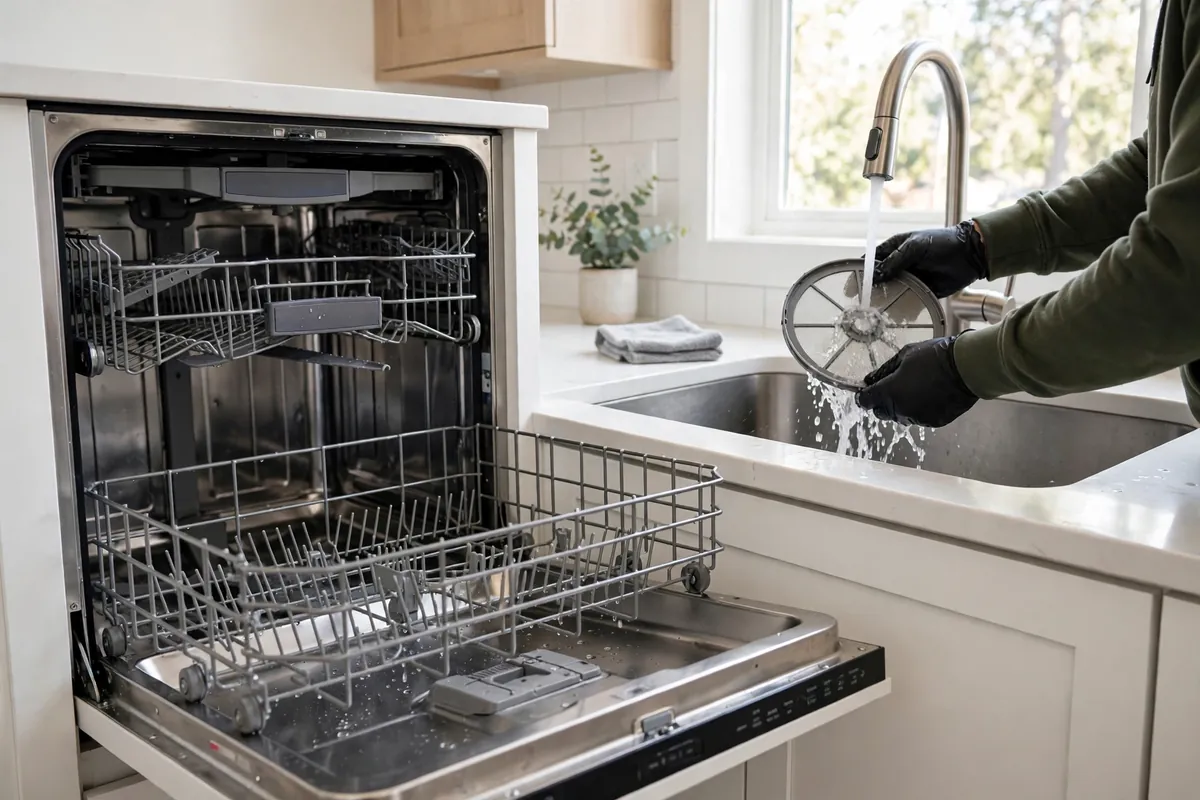
How to clean a dishwasher filter starts with the lower rack: take out the lower rack, lift the filter out, rinse it under warm running water, brush the mesh gently with a soft brush, and refit it until it locks. The whole routine takes about 10 minutes, and most of that is rinsing and refitting, not scrubbing — first check which type you have, because a manual filter needs this hand cleaning, while a self-cleaning filter uses water pressure to clear itself. If your dishwasher has a manual filter and dishes come out gritty or the machine smells stale, a dirty filter is the first place to look.
How to clean a dishwasher filter — what do you need to clean it?
You need a soft brush or an old toothbrush, a non-scratch sponge, warm water, a small amount of dish soap, a towel, and a trash can or a small bowl for food bits you pick out. A bowl of equal parts white vinegar and warm water is useful only for a stubborn, crusty filter, as a 30-minute soak after the first rinse. That is the whole kit. You do not need a screwdriver for most manual filters, because they twist and lift out by hand, but check the manual if yours looks screwed down, and do not force it.
What should you skip?
Skip a wire brush, a scouring pad, and abrasive cleaners on the filter mesh, because they can tear or stretch the mesh and leave it fitting poorly. Skip bleach in a strong mix on the filter, skip putting the filter in the dishwasher to clean it, and skip running the dishwasher with the filter out or only half-seated. Skip pushing food bits down into the filter well, because they can go into the pump area, and skip ignoring the filter well itself, which also needs a quick wipe while the filter is out.
How do you clean a dishwasher filter step by step?
- Check whether your filter is manual or self-cleaning. Open the dishwasher, take out the lower rack, and look at the bottom of the tub, near the base of the lower spray arm. A manual filter is a round or cylindrical mesh assembly you can twist and lift out by hand. A self-cleaning filter, found in some older machines, has no such lift-out assembly to clean by hand, because it uses water pressure and a grinder or spray action to clear particles itself. If you cannot find a lift-out filter, check the manual for your model before going further, because the steps below are for a manual filter.
- Take out the lower rack and lift the filter out. Slide the lower rack out and set it aside, so you can reach the bottom of the tub without leaning over dishes. Give the upper part of a manual filter a quarter turn counterclockwise, lift it out, then lift or slide the lower mesh filter forward and out, following the manual for your model. Work slowly, because food bits on the filter can drop into the filter well, and some bits may be sharp, such as a small bone or a piece of glass, so wear gloves if the filter looks rough.
- Tip food bits into the trash and rinse under warm water. Tip the filter over a trash can and tap it lightly to drop loose food bits out, then rinse it under warm running water, holding it at an angle so water flows through the mesh. Most everyday soil rinses off at this stage, and you should see daylight through the mesh again. Pick out any bits stuck in the mesh with your fingers or a soft brush, but do not push them through the mesh into the filter well.
- Brush gently with dish soap, and soak only if crusty. If food still clings after rinsing, wash the filter with warm water and a small amount of dish soap, brushing gently with a soft brush or an old toothbrush along the mesh. For a crusty or chalky filter, soak it for 30 minutes in equal parts white vinegar and warm water after the soap wash, then brush again gently and rinse well. Do not use a wire brush or a scouring pad at any point, because a torn mesh lets food through to the pump and spray arms.
- Wipe the filter well and check the spray arm holes. While the filter is out, wipe the empty filter well with a damp cloth and pick out any large food bits sitting in it, so they do not go back in with the clean filter. Look at the holes in the lower spray arm for seeds, labels, or scale blocking them, and clear a blocked hole gently with a soft brush or a toothpick, without forcing anything into the arm. Put the spray arm back in its normal position if you moved it, and check that it spins freely by hand.
- Refit the filter and lock it in place. Put the lower filter back first, seating it under its tabs so the upper filter lines up with the round opening in the tub bottom, then set the upper filter in and turn it clockwise until you feel it drop into position and lock. If the filter still turns freely, it is not seated, so keep turning it clockwise until it locks. A filter that is not locked can move during a cycle, let food through, and leave dishes gritty, so this check matters as much as the cleaning itself.
- Put the rack back and run a short check cycle. Slide the lower rack back in, close the door, and run a short or rinse cycle with the dishwasher empty, to check that water drains normally and no grit appears in the tub. After the cycle, open the door and check that the filter is still locked and seated, and that the tub smells fresher. If dishes still come out gritty after a clean, locked filter, check the spray arms again and the rinse-aid level, and check the manual for your model.
What does a worked example look like?
Here is a worked example timed to about 10 minutes. A household runs the dishwasher daily, dishes have started coming out with a gritty film, and the filter has not been cleaned in two months. The cook takes out the lower rack at minute 0, twists the upper filter counterclockwise and lifts both filter parts out by minute 2, and tips a tablespoon of food bits into the trash. Rinsing under warm water takes until minute 5, and a gentle soap wash with a soft brush takes until minute 7, because a crusty corner needs an extra minute of brushing. Wiping the filter well and checking the spray arm holes takes until minute 8, refitting and locking the filter takes until minute 9, and sliding the rack back takes until minute 10. A short empty rinse cycle afterward runs clear, and the next full load comes out without the gritty film, because the clean filter is letting water flow freely again.

Manual filter or self-cleaning filter: which do you have?
Use this table to identify your type before you start, because the cleaning routine is different. If you are unsure, the manual for your model is the final check.
| Filter type | How to tell | What to do |
|---|---|---|
| Manual filter | Round or cylindrical mesh assembly at the tub bottom that twists and lifts out | Clean by hand: rinse, brush gently, refit and lock, about once a month |
| Self-cleaning filter | No lift-out mesh assembly at the tub bottom; the machine clears particles itself | No hand filter to lift out; follow the manual for spray-arm and interior care |
| Triple or two-part manual filter | Upper assembly that turns a quarter turn, plus a lower mesh filter that slides forward | Lift both parts out, rinse and brush both, refit lower first, then lock the upper |
| Three-part filter | Micro, fine, and coarse filters that come out together as one assembly | Lift the assembly out, rinse each part gently, refit as one assembly and lock it |
What should you check before you finish?
- You checked whether the filter is manual or self-cleaning before trying to lift anything out.
- The lower rack was out, the filter parts were lifted out slowly, and food bits went in the trash, not into the filter well.
- The mesh rinses clear and you can see daylight through it, with no torn or stretched area.
- The filter well was wiped, large bits were picked out, and the spray arm holes were checked.
- The filter was refitted lower first, then locked clockwise, and it no longer turns freely.
- The rack is back in, and a short empty cycle ran clear with the filter still locked afterward.
What mistakes should you avoid?
- Running the dishwasher with the filter out or half-seated. Fix: refit and lock the filter before any cycle. An unseated filter lets food through to the pump and spray arms, and dishes come out gritty even after a wash.
- Scrubbing the mesh with a wire brush or scouring pad. Fix: use only a soft brush, an old toothbrush, or a non-scratch sponge. A torn or stretched mesh does not filter well, and it cannot be repaired by cleaning it more.
- Pushing food bits through the mesh into the well. Fix: tip bits into the trash and pick stuck bits out from the top. Bits pushed into the well can go into the pump area, where they are much harder to remove.
- Soaking every filter in vinegar for hours. Fix: rinse and soap-wash first, and use a 30-minute vinegar soak only for a crusty filter. Most filters need only warm water and a soft brush, and a long soak does not replace refitting and locking.
- Cleaning the filter but ignoring the filter well. Fix: wipe the well and pick out large bits while the filter is out. A clean filter over a dirty well puts food straight back into the first cycle.
- Forgetting to lock the filter after refitting. Fix: turn it clockwise until it drops into position and locks, and check that it no longer turns freely. A filter that still spins freely is not seated, even if it looks like it is in place.
When should you stop?
Stop and check the manual or ask a technician if the filter is torn, cracked, warped, or will not lock, if you find glass or a sharp object in the filter well that you cannot remove safely, if the dishwasher leaks, drains poorly, or makes a grinding noise after a clean, locked filter, or if your model has no lift-out filter and you are unsure what to clean. Do not run the dishwasher with a damaged or missing filter, and do not dismantle the pump or spray-arm assembly yourself to reach a blockage.
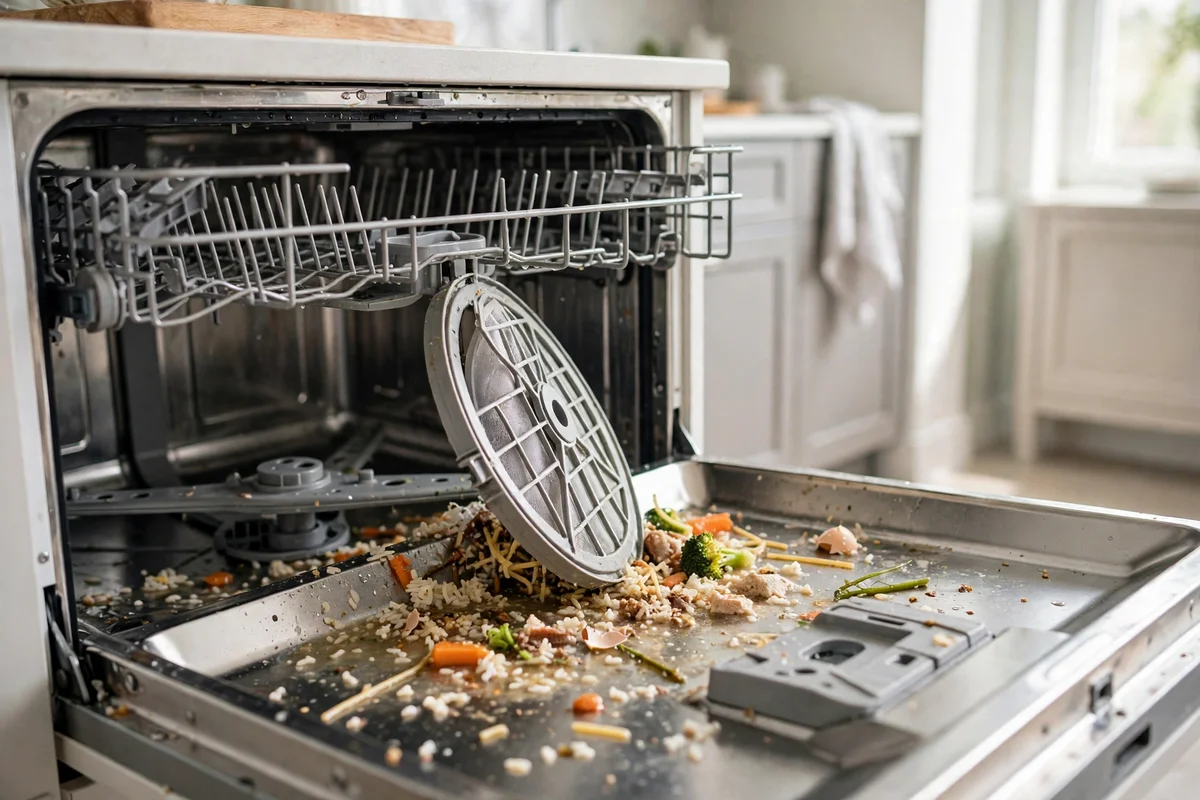
Safety note: Turn the dishwasher off before you start, wear gloves if the filter looks rough, because food bits can be sharp, and do not reach blindly into the filter well. Never run the dishwasher with the filter out, half-seated, or damaged, and keep your hands away from the spray arms while the machine is running.
Related on Kitchenlify
- Cleaning Essentials
- How to Clean Microwave Splatter and Burnt Smell Inside
- How to Clean a Stainless Steel Sink Without Scratching
- All guides
Frequently asked questions
How often should I clean a dishwasher filter?
Clean a manual filter about once a month, or every two weeks if you run the dishwasher daily. If dishes come out gritty, or the machine smells stale, check the filter sooner, even if a month has not passed.
Where is the dishwasher filter?
In most dishwashers it is at the bottom of the tub, near the base of the lower spray arm. Take out the lower rack to see it, and check the manual for your model if you cannot find it.
How do I remove a dishwasher filter?
For most manual filters, give the upper filter a quarter turn counterclockwise and lift it out, then lift or slide the lower filter forward and out. Check the manual for your model, because designs vary, and do not force a filter that will not turn.
Can I wash a dishwasher filter with dish soap?
Yes. Rinse it under warm running water, then wash it with warm water and a small amount of dish soap, brushing gently with a soft brush. Rinse well before refitting it.
Should I soak a dishwasher filter in vinegar?
Only for a crusty or chalky filter, after a soap wash. Soak it for 30 minutes in equal parts white vinegar and warm water, brush gently, and rinse well. Most filters need only warm water and a soft brush.
What is a self-cleaning dishwasher filter?
A self-cleaning filter uses water pressure to clear particles itself, and it has no lift-out mesh assembly to clean by hand in the same way as a manual filter. Check the manual for your model to confirm which type you have.
How do I know the filter is locked back in place?
Turn the upper filter clockwise until you feel it drop into position and lock. If it still turns freely, it is not seated, so keep turning it clockwise until it locks, and check that the lower filter is under its tabs.
Why are my dishes still gritty after cleaning the filter?
Check that the filter is locked, not just sitting in place, check the spray arm holes for blockages, and check the rinse-aid level. If grit stays after those checks, check the manual for your model or ask a technician.
Can I run the dishwasher without the filter?
No. Do not run the dishwasher with the filter out, half-seated, or damaged, because food can go into the pump and spray arms and dishes will come out gritty. Refit and lock the filter before any cycle.