How to Clean a Mandoline Slicer

How to clean a mandoline slicer is a safety job as much as a cleaning job: the blade that slices a potato paper-thin will cut a finger just as easily while you wash it. The good news is that a mandoline is quick to clean if you do it right after use, while the food is still soft. The routine below takes about five minutes, keeps the blade sharp, and keeps your hands away from the edge the whole time.
The short answer: how to clean a mandoline slicer
Rinse it under running water right after use, brush stuck food off from the back of the blade toward the front with a long-handled brush, and never wipe the blade edge with a cloth or sponge in your hand. Wash the blade by hand even if the frame is dishwasher safe, dry it fully before you put the cover on, and store it with the blade covered. The whole routine takes about five minutes.
Clean it right away: the 5-minute routine
- Rinse under running water. Hold the mandoline by the frame under a running tap, blade facing away from your hands, and let the water carry off loose food. Do this within a few minutes of finishing — dried-on food needs scrubbing, and scrubbing means more handling near a sharp edge.
- Brush from the back of the blade. For food stuck on the blade or frame, use a long-handled brush and stroke from the back of the blade toward the front, so the brush moves away from the edge, not into it. A toothbrush kept for kitchen use works for tight corners.
- Wash with warm soapy water. Add a drop of dish soap, work it over the frame and the flat side of the blade with the brush, and rinse again. Keep your fingers on the frame the whole time — never on the blade.
- Check the grooves and the guard. Food collects in the thickness dial, the guard prongs, and the feet. Rinse those parts under the tap and brush them out; dried food in the dial makes the thickness setting stick next time.
- Dry before you store. Shake off the water, stand the mandoline upright on a rack, and let air reach both sides of the blade. Put the cover on only when it is fully dry.
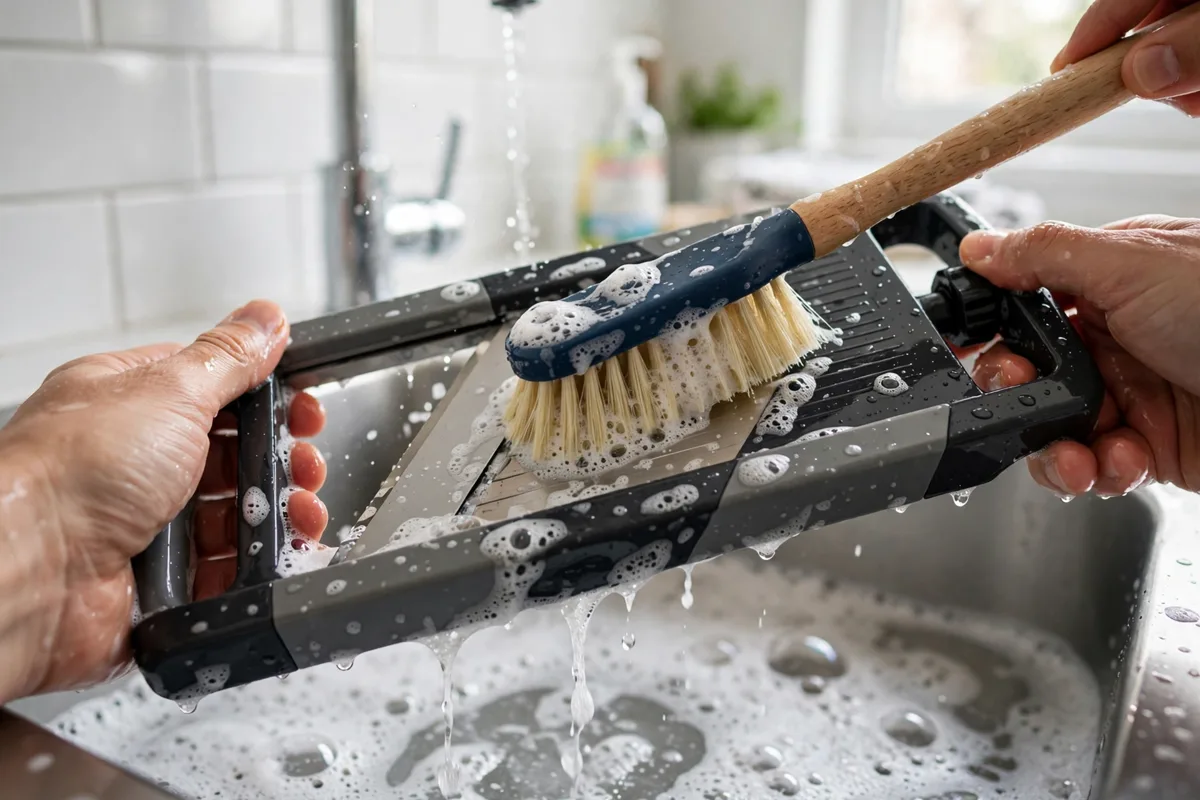
Brush back to front — never a sponge on the blade
This is the one rule that matters most when cleaning a mandoline. The blade edge faces one way, and brushing from the back of the blade toward the front pushes food off the edge without dragging anything across the sharp side. Brushing the other way — or wiping with a sponge — pulls the brush, the sponge, and your fingers straight into the edge. A sponge is the worst choice of all: it catches on the blade, tears, and drags your hand with it. Use running water and a long-handled brush, keep your hands on the frame, and let the water do the work.
Dishwasher-safe parts vs hand-wash parts
| Part | Dishwasher? | What to do |
|---|---|---|
| Plastic frame | Usually yes, top rack | Top rack only, away from the heating element |
| Hand guard | Usually yes, top rack | Top rack, prongs facing down so they drain |
| Blade | Usually no | Wash by hand — heat and rattling dull the edge faster |
| Thickness dial and small parts | Check the instructions | Hand wash if unsure; small parts can fall through the rack |
| Blade cover and storage case | Usually yes | Top rack, or hand wash with the rest |
Check the instructions that came with your model before you put anything in the dishwasher — the rules vary by brand. When in doubt, wash it by hand: a mandoline is quick to wash, and hand washing keeps the blade sharp far longer. For more on using the tool safely in the first place, see our guide on how to use a mandoline slicer safely.
Drying and rust prevention
Rust starts with trapped moisture, so drying matters as much as washing. Shake the water off, then stand the mandoline upright or lay it blade-up on a drying rack where air can reach both sides of the blade. Do not put the blade cover on while it is still wet, and do not store it in a closed drawer while damp. If you see small rust spots forming, scrub them gently with a paste of baking soda and water, rinse, and dry it fully — and check whether your blade is meant to be oiled lightly after washing, as some stainless blades benefit from a thin wipe of food-safe oil.
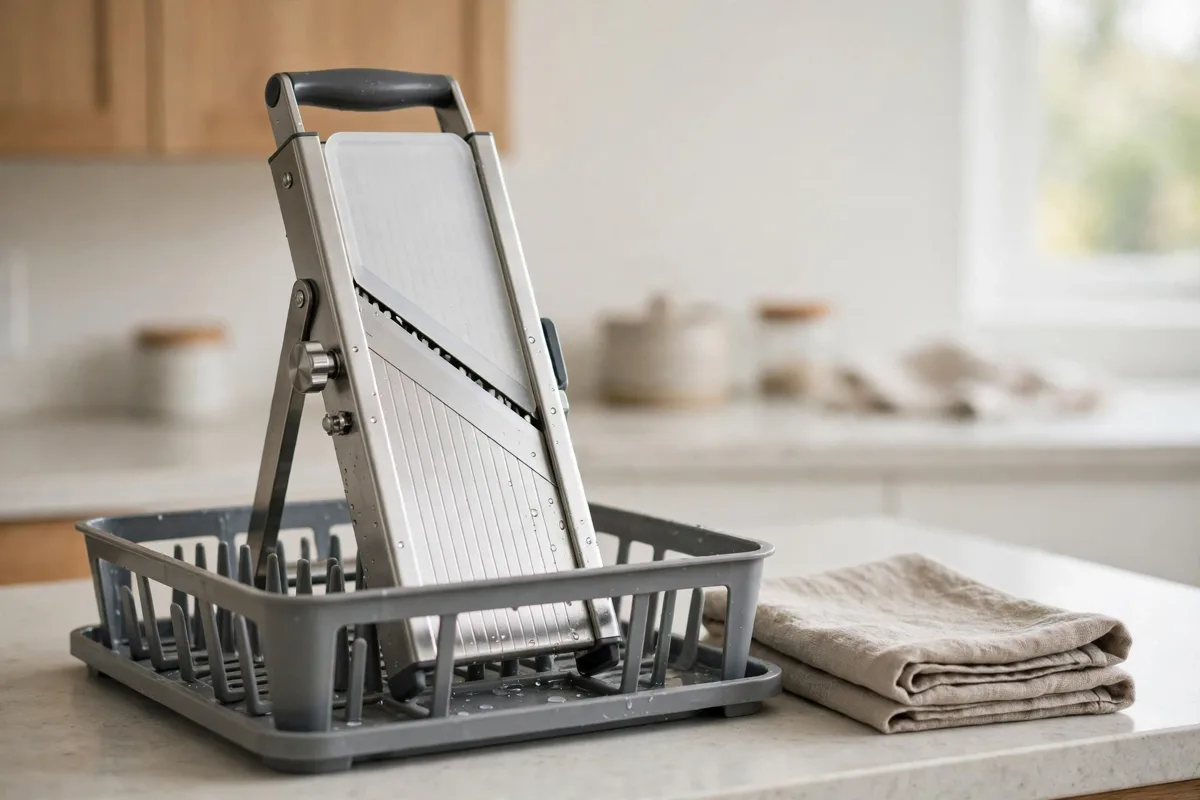
Storing a mandoline safely
Store it dry, with the blade cover on, where it cannot slide out onto your hand — a sleeve, a box, or a high shelf away from children. Never store it loose in a drawer with other tools, and never store it blade-down where someone might reach for it. If your model came with a storage case, use it: it protects the blade from knocks that dull the edge, and it protects everyone who opens the cupboard. If you are choosing a first mandoline and storage is tight, our guide on how to choose a mandoline slicer for beginners covers what to look for in a blade cover and case.
Removing stains from the blade and frame
Turmeric, carrot, and beetroot stain plastic frames yellow or orange, and the stain sets fast if the mandoline sits unwashed. Wash first with warm soapy water, then rub the stained plastic with a paste of baking soda and water and leave it for ten minutes before rinsing. Sunlight also fades yellow stains — leave the frame in a sunny spot for a few hours. Do not use bleach on the blade, and do not scrub the blade edge with anything abrasive, or you will dull it. For stains on plastic containers, the same tricks are covered in our guide on how to remove turmeric stains from plastic containers.
Related on Kitchenlify
- How to Use a Mandoline Slicer Safely
- How to Choose a Mandoline Slicer for Beginners
- How to Remove Turmeric Stains From Plastic Containers
- Best Safe Mandoline Slicer
- All guides
Frequently asked questions
How soon should I clean a mandoline after using it?
Right away, within a few minutes of finishing. Food dries onto the blade and frame fast, and dried-on food needs scrubbing — which means more handling near a sharp edge. A quick rinse straight after slicing takes less than a minute and keeps the blade sharp longer.
Can I put a mandoline slicer in the dishwasher?
It depends on the model. Many plastic frames and guards are dishwasher safe on the top rack, but the blade itself is usually better washed by hand — dishwasher heat and rattling dull the edge faster. Check the instructions that came with your model, and when in doubt, wash the blade by hand.
How do I clean a mandoline without cutting myself?
Hold it by the frame, never by the blade edge, and rinse it under running water with the blade facing away from your hands. Use a long-handled brush to clear stuck food, brushing from the back of the blade toward the front. Never wipe along the blade edge with a cloth or sponge in your hand.
Why should I brush back to front?
The blade edge faces one way, and brushing from the back of the blade toward the front pushes food off the edge without dragging your hand or the brush across the sharp side. Brushing the other way pulls the brush — and your fingers — straight into the edge.
How do I dry a mandoline so it does not rust?
Shake off the water, stand the mandoline upright or lay it blade-up on a drying rack, and let air reach both sides of the blade before you store it. Do not put the blade cover on while it is still wet, and do not store it in a closed drawer while damp — trapped moisture is what causes rust spots.
How do I remove turmeric or carrot stains from a mandoline?
Wash it first with warm soapy water, then rub the stained plastic parts with a paste of baking soda and water, or leave them in sunlight for a few hours, which fades yellow stains. For stains on plastic containers, the same tricks are in our guide on how to remove turmeric stains from plastic containers.
Can I use a sponge on a mandoline blade?
No. A sponge pressed against the blade edge can catch, tear, and pull your fingers into the edge. Use running water and a long-handled brush instead, and keep your hands on the frame at all times.
How should I store a mandoline after cleaning?
Dry, with the blade cover on, in a place where it cannot slide out onto your hand — a sleeve, a box, or a high shelf away from children. Never store it loose in a drawer with other tools, and never store it blade-down where someone might reach for it.