How to Remove Turmeric Stains From Plastic Containers
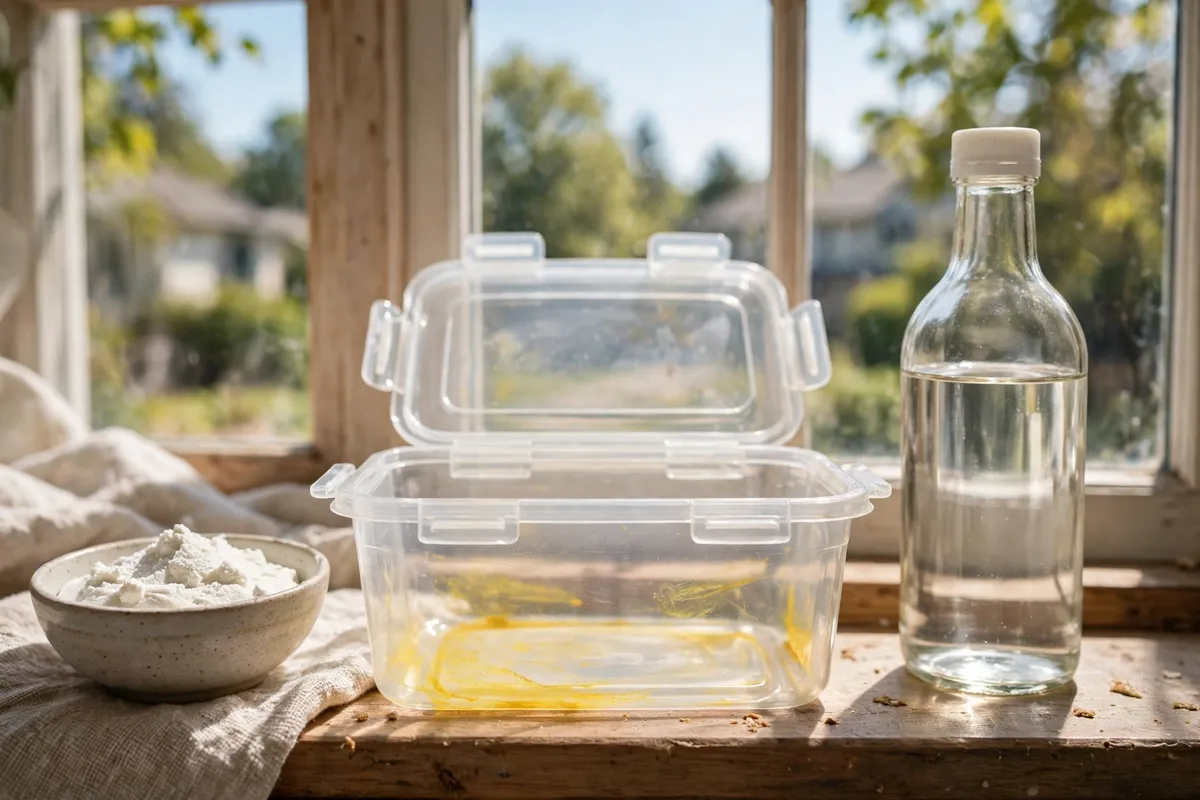
How to remove turmeric stains from plastic containers starts with a cold rinse, not hot water, and then works through a vinegar soak, a baking soda paste, and sunlight, in that order. Turmeric pigment, curcumin, binds strongly to plastic, especially when oil from curry is present, and heat pushes it deeper into the surface. This guide covers plastic containers only, not countertops, sinks, or cloth, because the steps and the risks are different on each surface.
The short answer: how to remove turmeric stains from plastic containers
Rinse the container with cold water as soon as you empty it, then soak it in undiluted white vinegar for 30 minutes to 1 hour. Drain, rinse, and follow with a baking soda paste made from 2 tablespoons of baking soda, a little water, and a squirt of dish soap, left for 30 minutes, then scrub gently and rinse. Finish by placing the clean, damp container in direct outdoor sunlight for several hours, and accept that a stain set by heat, such as microwaving curry in the container, may be permanent even after all three steps.
What do you need, and what should you skip?
You need cold water, white vinegar, baking soda, mild dish soap, a soft sponge or cloth, and a sunny outdoor spot. A soft toothbrush helps for corners and lid grooves, and a second container helps if you want to soak a lid separately. You do not need a special stain remover to start, because the vinegar, paste, and sunlight sequence handles most fresh and set-in stains before stronger options are worth trying.
Skip hot water at the start, because heat opens plastic pores and drives pigment deeper. Skip mixing vinegar and baking soda together in one step without rinsing between them, because the acid and base neutralize each other and the mix does little. Skip steel wool and abrasive pads, which scratch plastic and make future stains grip harder, and skip bleach as a first step, because it is harsh on plastic and unnecessary for most turmeric stains.
How do you do it, step by step?

- Rinse with cold water right away, before anything dries. Empty the container and rinse it under cold running water, wiping out loose curry with a soft sponge, and do not use hot water yet. Cold water removes surface pigment without driving it deeper, while hot water expands plastic pores and lets pigment sink in. Worked example: a 4-cup container that held curry overnight, rinsed cold at once, then soaked as below, usually lightens in the first soak, while the same container rinsed hot first often keeps a deeper yellow after the same steps.
- Soak in undiluted white vinegar for 30 minutes to 1 hour. Fill the container with undiluted white vinegar, enough to cover the stained areas, and let it soak for 30 minutes to 1 hour. Vinegar acidity loosens the curcumin bond to plastic in a way soap and water alone cannot, and a full soak reaches corners and lid grooves that a wipe misses. Keep the container upright and covered if you can, so the vinegar stays on the stain, and do not add baking soda to this soak.
- Drain, rinse, and apply a baking soda paste for 30 minutes. Drain the vinegar, rinse the container with cold water, and spread a paste of 2 tablespoons of baking soda, a small amount of water, and a squirt of dish soap over the stain. Leave the paste for 30 minutes without scrubbing first, then scrub gently with a soft sponge or toothbrush, and rinse well. Rinsing between the vinegar and paste steps matters, because mixing them directly neutralizes both and wastes the work of each step.
- Place the clean, damp container in direct sunlight for several hours. Place the clean, damp container in direct outdoor sunlight for several hours, turning it once so all stained sides face the sun. Sunlight breaks down curcumin pigment, and it often finishes a job that soaking and paste only lightened. Do not place it behind glass if you can avoid it, because glass blocks some of the light that does the fading, and bring it in before evening dew settles on it.
- Repeat once for a deep stain, then judge whether it is permanent. If a yellow tint is still clear after sunlight, repeat the paste and sunlight steps once, and check again in daylight, not under warm kitchen light, which hides yellow. A stain from food microwaved in the container, or stored hot for a long time, can be permanent, because heat set the pigment deep in the plastic. At that point, keep the container for non-staining foods, or replace it, rather than running stronger chemicals through repeated soaks.
- Prevent the next stain while the container is still clean. Next time, rinse curry containers cold right after emptying, and store turmeric-heavy foods in glass or stainless steel when you can, because those materials stain far less. If you must use plastic, a thin wipe of cooking oil inside before filling can act as a barrier, and cooling food before sealing it in plastic reduces heat-setting. Wash the container promptly after use, because residue left to dry bonds harder with every hour.
Which method, in which order, for which stain?
| Stain stage | Method | Time | What it does |
|---|---|---|---|
| Fresh, just emptied | Cold rinse, then soap wash | A few minutes | Removes surface pigment before it bonds |
| Light yellow tint | White vinegar soak | 30 minutes to 1 hour | Loosens curcumin bond to plastic |
| Set-in yellow | Baking soda paste after vinegar | 30 minutes | Lifts pigment left behind after the paste step |
| Faint tint left | Direct outdoor sunlight | Several hours | Breaks down remaining pigment in daylight |
| Deep stain, survives above | Repeat paste plus sunlight once | One more round | Last gentle round before judging permanence |
| Heat-set, microwaved stain | All steps, then judge | Full sequence | May stay yellow, heat can make it permanent |
What mistakes should you avoid?

- Rinsing with hot water first. Hot water expands plastic pores and drives turmeric pigment deeper. Fix: always rinse cold first, and keep hot water for the final soap wash after the stain has lightened.
- Mixing vinegar and baking soda in one step. The acid and base neutralize each other, so the fizzy mix does little for the stain. Fix: soak in vinegar, rinse fully, then apply baking soda paste as a separate step.
- Scrubbing hard with an abrasive pad. Abrasive pads scratch plastic, and scratched plastic grips future pigment harder. Fix: use a soft sponge or cloth, let paste sit, and scrub gently only after soaking.
- Skipping the sunlight step. Sunlight often finishes what soaking and paste only lighten, so skipping it leaves a faint tint that could have faded. Fix: place the clean, damp container in direct outdoor sunlight for several hours.
- Expecting every heat-set stain to vanish. Curry microwaved in plastic, or stored hot, can set pigment permanently. Fix: run the full sequence once, judge in daylight, and reuse or replace the container instead of repeating harsh soaks.
- Using the same steps on countertops or cloth. Countertop and cloth stains need different care, and plastic steps can damage other surfaces. Fix: keep this guide to plastic containers only, and find a surface-specific method for anything else.
What is the quick checklist?
- Rinse the container cold right after emptying, never hot first.
- Soak in undiluted white vinegar for 30 minutes to 1 hour.
- Drain and rinse fully before the next step.
- Apply baking soda paste for 30 minutes, scrub gently, and rinse.
- Place the clean, damp container in direct outdoor sunlight for several hours.
- Repeat paste plus sunlight once if needed, then judge in daylight.
When should you stop?
Stop when the container looks clean in daylight, smells neutral after a soap wash, and feels smooth, not scratched or rough. Stop repeating soaks if a heat-set yellow tint stays the same after one full repeat, because further soaking is unlikely to help and only wears the plastic. Never mix vinegar with bleach, never use undiluted bleach as a first step on a food container, and rinse any container thoroughly with soap and water before using it for food again, after any soak step.
Related on Kitchenlify
- Food Storage
- How to Choose a Food Storage Container Size for Your Shelf
- How to Clean Silicone Food Storage Bags to Remove Smell
- All guides
Frequently asked questions
How do you remove turmeric stains from plastic containers?
Rinse cold first, soak in undiluted white vinegar for 30 minutes to 1 hour, rinse, apply a baking soda paste for 30 minutes, scrub gently, rinse, and place the clean, damp container in direct sunlight for several hours. Run the paste and sunlight steps once more for a deep stain.
Why does hot water make turmeric stains worse on plastic?
Heat expands plastic pores and lets turmeric pigment sink deeper into the surface, so a hot first rinse sets the stain instead of lifting it. Always rinse cold first, and use hot water only for a final soap wash after the stain has lightened.
Does sunlight really remove turmeric stains from plastic?
Yes, sunlight often finishes the job after soaking and paste. Place the clean, damp container in direct outdoor sunlight for several hours, turning it so all stained sides face the sun, because daylight breaks down the curcumin pigment that gives turmeric its color.
Can I mix vinegar and baking soda to remove turmeric stains?
No, not in one step. Vinegar and baking soda neutralize each other when mixed, so the fizzy mix does little for the stain. Soak in vinegar first, rinse fully, then apply a baking soda paste as a separate step.
How long should I soak a turmeric-stained container in vinegar?
Soak it in undiluted white vinegar for 30 minutes to 1 hour, enough to cover the stained areas. For a light tint, 30 minutes is often enough, and for a set-in stain, a full hour gives the acid time to loosen the pigment bond.
What baking soda paste removes turmeric from plastic?
Mix 2 tablespoons of baking soda with a small amount of water and a squirt of dish soap into a thick paste, spread it over the stain, leave it for 30 minutes, scrub gently with a soft sponge, and rinse well. Use it after the vinegar soak and rinse, not mixed into it.
Are turmeric stains on plastic containers permanent?
Sometimes, yes. A stain set by heat, such as curry microwaved in the container or stored hot for a long time, can be permanent even after vinegar, paste, and sunlight. If the tint stays the same after one full repeat, keep the container for non-staining foods or replace it.
How do I prevent turmeric stains on plastic containers?
Rinse containers cold right after emptying, cool food before sealing it in plastic, and store turmeric-heavy foods in glass or stainless steel when you can. A thin wipe of cooking oil inside a plastic container before filling can also act as a barrier against staining.
Does this method work on countertops too?
No, this guide is for plastic containers only. Countertops, sinks, and cloth need different care, and plastic steps can damage other surfaces or fail on them. Use a surface-specific method for countertops, and keep this sequence for plastic containers.
How do I remove turmeric stains without sunlight?
Use the vinegar soak and baking soda paste from the main steps, then soak the container overnight in warm water with a denture-cleaning tablet or a spoonful of oxygen bleach, and rinse well. It works more slowly than sunlight, so leave it overnight, and repeat once if a faint tint stays, because indoor light alone will not fade turmeric.
Can I use bleach on turmeric stains as a last resort?
Yes, but only as a last resort, only on plain white plastic, and only with care. Dilute one tablespoon of unscented household bleach in a quart of cold water, soak the container for 10 minutes, then wash it thoroughly with hot soapy water and rinse twice. Never mix bleach with vinegar or other cleaners, never use it on colored plastic, and stop if the plastic feels rough or smells of bleach after washing.
How do I remove turmeric stains from silicone seals?
Take the seal out if you can, soak it in warm water with baking soda for an hour, then scrub it with a paste of baking soda and water and rinse. If the stain stays, soak the seal in the sun for a few hours, because silicone holds color in its surface and sunlight fades it better than scrubbing. Replace a seal that still smells of curry after washing, because the smell means the stain is deep.