How to Clean Stubborn Kitchen Grease Naturally Without Harsh Chemicals
How to clean stubborn kitchen grease naturally without harsh chemicals starts with heat, time, and a cleaner that can lift fat off a surface — not a stronger chemical, because stubborn kitchen grease is fat, not dirt, which is why hot soapy water does more work than a splash of vinegar on its own. This guide uses only natural, household cleaners — dish soap, baking soda, and hot water — and shows the full sequence on one stubborn spot, so you can see what a first pass achieves and what to do when grease remains.
The short answer
The sequence that works is: loosen with heat, lift with a baking soda paste where the buildup is thick, then wash with hot soapy water and rinse well. Vinegar alone is weak on grease because it is an acid, and grease needs an alkaline cleaner and a surfactant — the part of dish soap that surrounds fat and carries it away in water — far more than it needs acid. Do not mix vinegar and baking soda together and expect a stronger cleaner: mixed, they mostly cancel each other out and leave you with salty water. Use them in order instead, paste first for thick buildup, then a hot soapy wash to carry the loosened grease away, and give each step enough dwell time to work before you scrub.
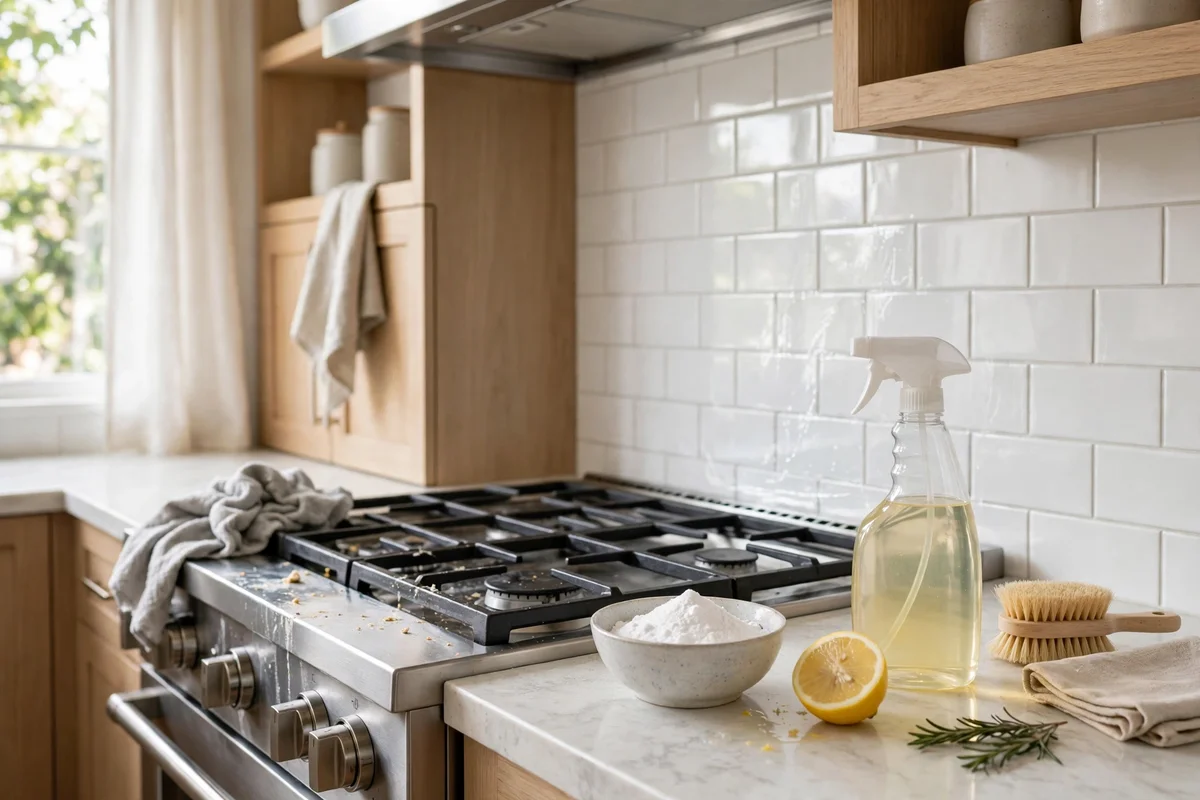
Step by step: how to clean stubborn kitchen grease naturally without harsh chemicals
- Identify the grease level and the surface before you start. Look at the spot and decide whether it is a light film you can see through, a tacky layer that catches dust, or a caked, yellowed buildup that feels rough. Then identify the surface: painted or wood cabinets, stainless steel, a glass stovetop, or stone. Light film on most surfaces needs only a hot soapy wash, while caked buildup needs a paste and dwell time first, and stone and wood need gentler handling than stainless steel. Choosing the method from the surface and the grease level, using the table below, prevents the two most common errors: scrubbing a delicate surface too hard, and washing a thick buildup with a method too weak to move it.
- Clear and protect the area, and heat your water. Remove items from the area, protect anything below the spot with a towel, and heat water until it is hot but still safe to handle with gloves on. Hot water matters: cold water lets grease stay solid and smeary, while hot water softens it so soap can lift it. Put on cleaning gloves, and if you are cleaning above the stove or a hood, make sure the cooking surface is cool and switched off first. Work in a ventilated room, and keep paper towels or a cloth ready for the dirty wash water, so loosened grease is wiped away rather than spread to a clean area.
- Apply a baking soda paste to thick buildup and let it dwell. For caked buildup, mix baking soda with a little water into a thick paste, spread it over the greasy area, and leave it for 10 to 15 minutes. The paste is mildly alkaline, which helps break down fat, and its fine texture gives a gentle scrubbing action without the harshness of a scouring powder. Do not add vinegar to the paste: the fizz looks active, but it neutralizes the paste and wastes both ingredients. While the paste dwells, leave it alone — dwell time is doing work that scrubbing cannot replace, and wiping it off early is the main reason a first pass disappoints.
- Wipe away the paste, then wash with hot soapy water. Wipe the paste off with a damp cloth, working in one direction so loosened grease is collected rather than pushed around, then wash the whole area with hot water and a good amount of dish soap. Dish soap is the key step: its surfactant action surrounds grease and lets water rinse it away, which is why the soapy wash, not the paste alone, finishes the job. Rinse your cloth often in clean hot water, and change the wash water when it looks cloudy or greasy, because washing with dirty water redeposits grease on a surface you just cleaned.
- Rinse well and dry, then check in good light. Rinse the surface with clean water on a fresh cloth, wiping until no soapy film remains, then dry it with a clean towel. Check the spot in good light, running a fingertip lightly over it: a clean surface feels smooth, while remaining grease feels tacky or slightly rough. Drying matters as well as rinsing, because water left on wood can mark it and water left on stainless steel can leave spots. If the surface looks clean but still feels tacky, it needs a second pass, not a stronger chemical.
- Repeat the sequence once for remaining grease, then reassess. If grease remains after the first full sequence, repeat it once: paste again for 10 minutes on the remaining spots only, then a hot soapy wash, rinse, and dry. Most stubborn household grease clears in one or two passes when dwell time and hot water are used properly. If a spot still will not move after two full passes, stop and check whether it is grease at all: it may be a stain, heat discoloration, or a damaged finish, and scrubbing harder will damage the surface without removing it. Note that spot for a different approach rather than forcing it.
- Prevent the next buildup with a quick routine. Wipe the area above the stove and around cooking surfaces with hot soapy water once a week, before a light film becomes a tacky layer and then a caked buildup. Wash hood filters regularly in hot soapy water, following the filter's own care instructions, and wipe cabinet fronts near the stove at the same time. A two-minute weekly wipe prevents the hour-long deep clean, and it keeps natural cleaners sufficient, because light grease never gets the chance to become stubborn grease.

Common mistakes to avoid
- Cleaning grease with vinegar alone. Fix: use vinegar only as a rinse for mineral marks if needed, and clean grease with a baking soda paste followed by a hot soapy wash. Acid alone does not dissolve fat well, no matter how strong it smells.
- Mixing vinegar and baking soda together. Fix: use them in sequence, never mixed. Mixed together they neutralize each other and leave mostly salty water, so the cleaning power of both is lost.
- Using cold water on greasy surfaces. Fix: use water as hot as you can safely handle with gloves. Cold water keeps grease solid and smeary, while hot water softens it so soap can lift it away.
- Scrubbing a delicate surface with a harsh abrasive. Fix: match the tool to the surface — a soft cloth for wood and stone, a non-scratch pad only where the surface allows it, and never steel wool on a glass stovetop or a coated finish. Check an inconspicuous spot first if you are unsure.
- Wiping loosened grease around instead of collecting it. Fix: wipe in one direction, rinse the cloth often, and change cloudy wash water. Grease wiped in circles with a dirty cloth simply moves to a new spot.
- Skipping dwell time and scrubbing harder instead. Fix: let the paste sit for 10 to 15 minutes before wiping. Dwell time softens buildup that force cannot remove, and scrubbing early risks scratching the surface underneath.

What you need — and what to skip
You need baking soda, plain dish soap, hot water, cleaning gloves, soft cloths or towels, and a non-scratch pad for surfaces that allow it. A spray bottle of plain water helps for rinsing, and an old soft toothbrush helps for edges and corners. That is the whole kit, and every item is a normal household cleaner, not a harsh chemical product.
Skip harsh oven cleaners and strong chemical degreasers for everyday grease, skip vinegar as your main grease cleaner, and skip abrasive scouring powders and steel wool on wood, stone, glass stovetops, and coated finishes. Skip mixing cleaners together, especially vinegar with baking soda or any bleach product with anything else, and skip a single dirty cloth for the whole job, since it spreads grease instead of removing it.
Worked example: cabinets above the stove, timed, first pass and second pass
Take one cabinet front directly above the stove, with a yellowed, tacky buildup along its lower edge and around the handle. Start the clock. First, wipe the area with a dry cloth to remove loose dust, then spread a baking soda paste over the greasy band only, not the whole cabinet, and leave it for 15 minutes. At the end of that dwell time, wipe the paste off in one direction with a damp cloth: the cloth comes away yellow-brown, and the lower edge already feels smoother, but a tacky strip remains around the handle, where hands and steam have built grease up thickest. That is a normal first-pass result, not a failure — thick spots rarely clear in one pass. Next, wash the whole front with hot soapy water, rinse the cloth often, rinse the surface with clean water, and dry it. Check in good light: most of the front is clean and smooth, and only the handle strip still feels slightly tacky. Now run the second pass on that strip alone: a fresh, smaller amount of paste for 10 minutes, then a hot soapy wash, rinse, and dry. After the second pass, the strip feels smooth and looks even with the rest of the front. Total active work is about 20 minutes plus dwell time, and no harsh chemical was used at any point. If a faint yellow tint had remained after the second pass with no tackiness, that would be a stain or finish change, not remaining grease, and further scrubbing would risk the finish for no benefit.
Decision table: grease level and surface
| Grease level and surface | Method | Caution |
|---|---|---|
| Light film, any surface | Hot soapy wash, rinse, dry | Change wash water when cloudy |
| Tacky layer, wood or painted cabinets | Baking soda paste 10 minutes, then hot soapy wash | Soft cloth only; do not soak wood |
| Caked buildup, stainless steel | Paste 15 minutes, hot soapy wash, repeat once if needed | Non-scratch pad only; wipe with the grain if visible |
| Caked buildup, glass stovetop | Paste on the spot, dwell, gentle wipe, hot soapy wash | Never use steel wool or harsh abrasive on glass |
| Grease on stone counters or backsplash | Hot soapy wash; paste only briefly and rinse well | Avoid vinegar and acidic cleaners on stone; test a hidden spot first |
| Hood filter with heavy grease | Soak in hot soapy water with baking soda, then wash and rinse | Follow the filter's own care instructions; dry fully before refitting |
When to stop — and surfaces that need a different approach
Stop when the surface feels smooth, looks even in good light, and rinses clean without a tacky or cloudy residue. Do not keep scrubbing a smooth surface that only looks discolored: that is likely a stain, heat mark, or finish change, and extra scrubbing damages the surface without removing it. Stop immediately and rinse well if a cleaner causes discoloration, softening, or a rough patch on wood, stone, or a coated finish, and test any new method on a hidden spot first. For stone, never rely on vinegar or acidic cleaners, and for wood, never leave the surface soaking wet. When grease is gone, a quick weekly hot soapy wipe is the maintenance that keeps natural cleaners enough for the job.
Related on Kitchenlify
- Cleaning Essentials
- How to Clean Greasy Kitchen Cabinets Without Damaging the Finish
- How to Clean a Burnt Stainless Steel Pan Without Scratching It
- How to Clean a Stainless Steel Sink Without Scratching It
- All guides
Frequently asked questions
Does vinegar clean kitchen grease on its own?
Not well. Vinegar is an acid, and grease needs heat plus an alkaline paste and a surfactant from dish soap far more than it needs acid. Use a baking soda paste followed by a hot soapy wash for grease, and save vinegar for mineral marks if needed.
Should I mix baking soda and vinegar for grease?
No. Mixed together they mostly cancel each other out, leaving salty water with little cleaning power. Use them in sequence if you use both at all: paste first for buildup, then a hot soapy wash to carry grease away.
How long should a baking soda paste sit on grease?
About 10 to 15 minutes for thick buildup. Dwell time softens grease that scrubbing alone cannot remove, so wiping it off early is the most common reason a first pass disappoints.
What if grease remains after the first clean?
Repeat the sequence once on the remaining spots only: fresh paste for 10 minutes, then a hot soapy wash, rinse, and dry. If a spot still will not move after two full passes and feels smooth, it is likely a stain or finish change, not grease.
Can I use natural cleaners on a glass stovetop or stone?
Yes, with care: use a soft cloth and a baking soda paste gently on glass, never steel wool or harsh abrasive, and on stone use a hot soapy wash, rinse well, and avoid vinegar and acidic cleaners. Test a hidden spot first if you are unsure.
How do I clean stubborn grease from wood or painted cabinets without damaging the finish?
Use a soft cloth and a baking soda paste for 10 minutes on the greasy area only, then wash with hot soapy water, rinse well, and dry. Do not soak wood, do not use steel wool or a harsh abrasive, and test a hidden spot first if you are unsure.
How do I clean a greasy range hood filter naturally?
Soak the filter in hot soapy water with baking soda, then wash, rinse well, and dry it fully before refitting it. Follow the filter's own care instructions, and wipe the cabinet fronts near the stove at the same time.
How often should I wipe kitchen surfaces to stop grease from becoming stubborn?
Wipe the area above the stove and around cooking surfaces with hot soapy water once a week, before a light film becomes a tacky layer and then a caked buildup. A short weekly wipe keeps light grease from turning into a job that needs a paste and dwell time.
Can I use dish soap alone for light kitchen grease, without a paste?
Yes, for a light film you can see through, a hot soapy wash, rinse, and dry is usually enough. Save the baking soda paste and dwell time for a tacky layer or a caked, yellowed buildup that a soapy wash alone does not move.