How to Store Bananas So They Stay Fresh Longer

How to store bananas so they stay fresh longer comes down to small choices, made in the right order: a bunch of bananas looks perfect on Monday and turns brown, soft, and bruised by Thursday, even though you barely touched it. Bananas keep ripening after you buy them, and heat, bruising, and other ripening fruit all speed that process up. The good news is that those choices can stretch a bunch across a full week: buy at mixed ripeness, keep green bananas cool and undisturbed, wrap the stems once they start to yellow, refrigerate only after they are ripe, and freeze anything you cannot eat in time.
How to store bananas so they stay fresh longer — what is the short answer?
Buy bananas at different stages if you want them to last the week, keep green bananas at cool room temperature away from sun, heat, and other ripening fruit, and wrap the joined stem end snugly in plastic wrap or foil once they start to turn yellow. Move bananas to the refrigerator only after they are fully ripe, when the peel may darken but the fruit inside stays firm for a few more days. Peel and freeze any ripe extras you cannot eat, so they go to smoothies and baking instead of the trash.
Why do bananas ripen so fast on the counter?
Bananas produce ethylene gas as they ripen, and that gas speeds ripening in the bananas themselves and in nearby fruit. A bunch left in a warm spot, stacked under other produce, or sealed in a plastic bag traps that gas and moisture around the fruit, so ripening accelerates instead of slowing down. That is why a bunch that looks fine in the store can turn spotty two days after you bring it home and set it on a sunny counter.
Temperature controls the pace more than any single trick. Warm kitchens ripen bananas quickly, cool rooms slow them down, and cold refrigerator air stops green bananas from ripening properly at all. That is the key distinction beginners miss: the refrigerator is a tool for ripe bananas, not for green ones. Put a green banana in the fridge and you may get a dark peel with hard, starchy fruit inside that never sweetens the way it should.
Bruising is the third accelerator. Every bump, press, and stack mark breaks down the peel and flesh underneath, and those spots brown and soften first. Hanging a bunch, or at least laying it in a single layer where nothing presses on it, keeps the fruit even and slows the soft spots that make a banana look done before it actually is.
What is a worked example you can follow?
Worked example for one week: on Saturday, buy one bunch of 6 bananas that are mostly yellow with green tips, plus a second smaller bunch of 4 bananas that are still mostly green. On Saturday and Sunday, eat from the yellow bunch first, two bananas a day, while the green bunch sits at cool room temperature in a single layer away from apples and avocados. By Monday, the yellow bunch is gone and the green bunch has started to turn yellow at the tips.
On Monday, wrap the joined stem end of the green bunch snugly in plastic wrap, and keep the bunch hanging or in a single layer in the coolest spot on your counter, away from the stove and the window. Check it each morning with a gentle press: when a banana gives slightly and the peel is mostly yellow, it is ready to eat. By Wednesday, eat two a day from that bunch. On Thursday, if two bananas are left and fully ripe, move those two to the refrigerator. Their peels will darken, but the fruit inside will stay firm enough to eat on Friday and Saturday.
If Saturday arrives and one ripe banana is still left, do not leave it to go soft on the counter. Peel it, slice it, freeze the slices in a single layer on a tray, then move the frozen slices to a freezer bag. That banana is now ready for a smoothie or for baking, instead of becoming waste. One shopping trip, two bunches at different stages, and a simple move to the fridge or freezer at the right moment is the whole system.
How do you do it, step by step?
- Buy at mixed ripeness for the week ahead. If you want bananas to last seven days, do not buy one bunch that is all perfectly ripe. Buy part of your bananas ready to eat now and part still green at the tips, so the second group ripens while you eat the first. Check each banana for bruises and soft brown spots before you buy, and skip fruit that is already dented or mushy, since bruised bananas ripen and spoil fastest.
- Keep green bananas at cool room temperature. Set green or firm bananas in a cool spot at room temperature, away from direct sun, ovens, radiators, and warm windows. A cool, dark corner of the counter is better than a sunny fruit bowl by the window. Do not refrigerate green bananas, because cold can stop them from ripening properly and leave the fruit hard and starchy even after the peel darkens.
- Keep bananas away from other ripening fruit. Store bananas away from apples, avocados, pears, and other fruit that is ripening on the counter, because those fruits give off ethylene gas that speeds banana ripening. Give bananas their own spot, not a crowded fruit bowl where they sit pressed against other produce. If you want to ripen a green banana faster, you can reverse this on purpose and put it in a paper bag with an apple for a day, then take it out again.
- Hang the bunch or lay it in a single layer. Hang bananas from a hook if you have one, or lay the bunch in a single layer where nothing sits on top of it. Hanging helps bananas ripen more evenly and prevents the bruising that happens when a bunch rests on a hard counter under other fruit. Do not stack cans, bags, or other produce on top of bananas, and do not squeeze the bunch into a tight bag.
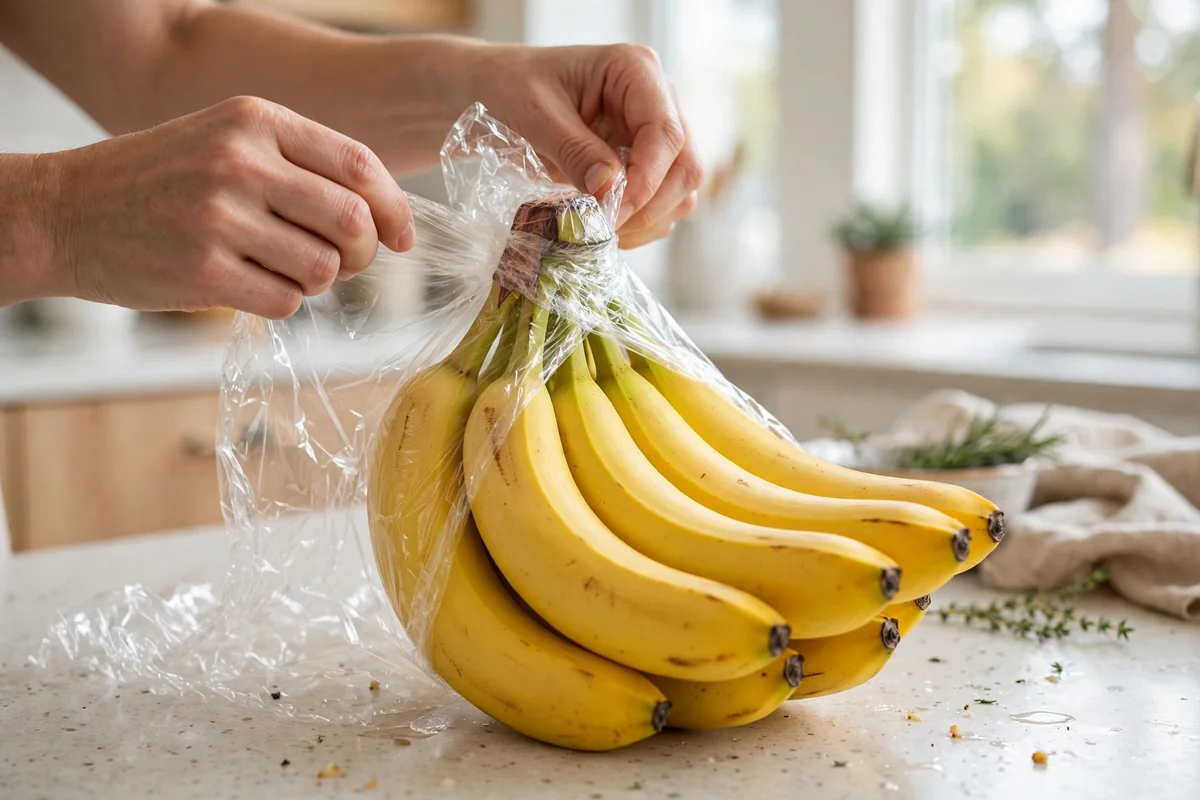
- Wrap the stem end once bananas start to yellow. When bananas begin to turn yellow, wrap the joined stem end of the bunch snugly with a small piece of plastic wrap or foil, pressing it around the crown. The stem is where much of the ripening gas escapes, so covering it slows ripening. Wrap the joined crown, not each banana separately, unless you have already broken the bunch apart, and rewrap snugly if the wrap loosens.
- Move bananas to the refrigerator only after they are ripe. Once a banana is as ripe as you like it, with a mostly yellow peel that gives slightly when pressed, you can move it to the refrigerator to slow further softening. The peel will usually turn brown or black in the fridge, but the fruit inside can still be fresh for a few more days. Do not judge a refrigerated banana by its peel color alone; peel it and check the fruit.
- Peel and freeze ripe extras before they go soft. If you cannot eat ripe bananas in time, peel them before freezing, because frozen peels turn dark and are very hard to remove. Slice the peeled bananas, freeze the slices in a single layer on a tray until solid, then move them to a freezer bag with the air pressed out and the date written on the bag. Use frozen bananas for smoothies and baking, and thaw only what you need.
What should you use, and what should you skip?
You need a cool counter spot away from sun and heat, a hook or a clear single-layer space for the bunch, a small piece of plastic wrap or foil for the stem, and a tray plus freezer bags for freezing extras. A refrigerator is useful only for ripe bananas, and a paper bag is useful only when you want to speed ripening on purpose, not for everyday storage.
Skip the refrigerator for green bananas, skip sealed plastic bags around the whole bunch, and skip a crowded fruit bowl where bananas sit pressed against apples and avocados. Skip leaving bananas in direct sun or next to the stove, and skip freezing bananas with the peel still on, since the peel becomes dark and difficult to remove after freezing. Skip buying one large all-ripe bunch for a whole week if you cannot eat it fast enough, since mixed ripeness is what actually stretches the week.
How do the options compare?
Use this table to match what you see on the banana to the right storage move, instead of guessing from peel color alone.
| Banana stage | Where to keep it | What to do | How long it usually lasts |
|---|---|---|---|
| Green and firm | Cool room temperature, single layer | Keep away from other ripening fruit, do not refrigerate | Several days while it ripens |
| Yellow with green tips | Cool room temperature | Wrap the stem end, hang or lay flat | A few days to full ripeness |
| Fully yellow, slight give | Room temperature for eating, or fridge to hold | Move to fridge only when ripe enough to eat | A few more days in the fridge |
| Yellow with brown speckles | Refrigerator, or peel and freeze | Eat soon, or freeze for smoothies and baking | A few days in the fridge, months frozen |
| Sliced banana | Covered container in the refrigerator | Use promptly, keep covered and cold | About a day for best quality |
| Frozen peeled slices | Freezer bag, air pressed out | Freeze flat first, then bag and date it | Several months for smoothies and baking |
What are the 6 mistakes to avoid?
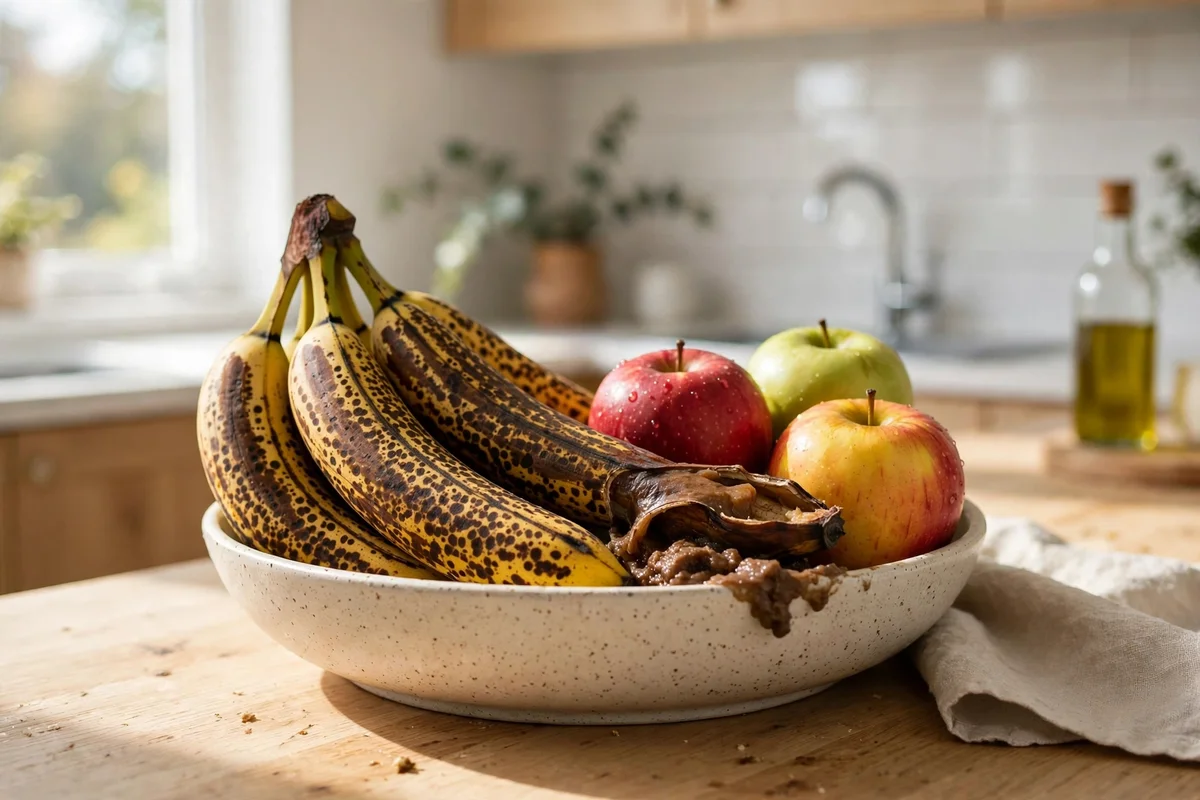
- Refrigerating green bananas. Cold stops green bananas from ripening properly, so you can end up with a dark peel and hard, starchy fruit. Fix: keep green bananas at room temperature until they are fully yellow and give slightly, then refrigerate only to hold them.
- Keeping bananas in a sealed plastic bag. A sealed bag traps ethylene gas and moisture around the fruit, which speeds ripening and can encourage mold. Fix: keep bananas open to the air in a single layer, and wrap only the stem end, not the whole bunch.
- Storing bananas with apples and avocados. Other ripening fruit gives off ethylene gas that pushes bananas to ripen faster than you planned. Fix: give bananas their own spot, and use a paper bag with an apple only when you want faster ripening on purpose.
- Leaving bananas in sun or near heat. Sunlight and stove heat ripen bananas quickly and unevenly, and warm spots create soft patches. Fix: choose the coolest counter spot, away from windows, ovens, and radiators.
- Judging a refrigerated banana by its dark peel. Refrigerated ripe bananas almost always develop brown or black peels, even while the fruit inside stays firm and good to eat. Fix: peel the banana and check the fruit itself before throwing it away.
- Freezing bananas with the peel on. A frozen peel turns dark and sticks to the fruit, making it hard to remove and messy to use. Fix: peel first, freeze slices in a single layer, then bag them with the date on the bag.
When should you stop, and when should you throw food away?
Stop adjusting when your bananas are ripening in order: the ready bunch gets eaten first, the green bunch ripens behind it, ripe bananas move to the fridge only when they are ready, and extras go to the freezer before they turn soft. Throw away bananas that smell sour or fermented, show mold, or have turned to liquid under the peel, and do not try to save a banana that has been left cut and uncovered at room temperature for hours.
Safety note: This is general food-storage guidance. Peel and check any banana before eating it, and throw away fruit that smells off, shows mold, or feels slimy. Keep cut banana covered and refrigerated, and use it promptly rather than leaving it out on the counter.
Related on Kitchenlify
- Food Storage
- How to Keep Herbs Fresh Longer in Fridge
- How to Freeze Soup Without Freezer Burn for Beginners
- All guides
Frequently asked questions
How do you store bananas so they stay fresh longer?
Buy at mixed ripeness, keep green bananas at cool room temperature away from sun and other ripening fruit, wrap the stem end once they start to yellow, refrigerate only after they are ripe, and peel and freeze any ripe extras you cannot eat in time.
Should bananas go in the refrigerator?
Only after they are ripe. Green bananas should stay at room temperature, because cold can stop them from ripening properly. Once a banana is fully yellow and gives slightly, the refrigerator slows further softening, even though the peel will darken.
Does wrapping banana stems really help?
Yes, wrapping the joined stem end snugly in plastic wrap or foil can slow ripening, because the stem is a major source of the ripening gas that speeds the process. Wrap the crown snugly once bananas start to yellow, and rewrap it if it loosens.
Should bananas be stored with other fruit?
No, not for longer storage. Apples, avocados, pears, and other ripening fruit give off ethylene gas that makes bananas ripen faster. Keep bananas in their own spot, and put a banana in a paper bag with an apple only when you want it to ripen faster on purpose.
Is it better to hang bananas or lay them on the counter?
Hanging helps, because it prevents bruising and lets bananas ripen more evenly. If you do not have a hook, lay the bunch in a single layer where nothing presses on top of it, and do not stack other produce on the bananas.
Why did my refrigerated banana turn black?
The peel darkens in the cold even while the fruit inside stays firm and good to eat for a few more days. Do not judge a refrigerated banana by its peel alone; peel it and check the fruit before deciding whether to eat it or throw it away.
Can you freeze bananas?
Yes. Peel ripe bananas first, slice them, freeze the slices in a single layer on a tray until solid, then move them to a freezer bag with the air pressed out and the date on the bag. Use frozen bananas for smoothies and baking.
How long do bananas last at room temperature?
It depends on ripeness and room temperature, but green bananas commonly take several days to ripen at cool room temperature, while fully ripe bananas soften within a few days. Warm, sunny spots shorten that time, and a cool spot stretches it.
What should I do with bananas that are too ripe to eat?
Peel and freeze them for smoothies or baking before they go soft, or use them right away in baking where soft, sweet banana is an advantage. Throw away bananas that smell sour or fermented, show mold, or have turned liquid under the peel.
How do I stop cut bananas from browning?
Brush the cut faces with lemon juice, or dip them in a mix of 1 tablespoon of lemon juice and 1 cup of water, then store them in a covered container in the fridge and eat them the same day. The acid slows browning for a few hours, but cut banana still browns by the next day, so cut only what you will eat.
Should I separate bananas from the bunch?
Separating one banana at a time can slow ripening a little, because each banana gives off less ethylene gas to its neighbors, but the difference is small. Keep the bunch together for convenience, and separate a banana only when you want to eat it now and leave the rest to ripen, or when one banana is bruised and would spoil the bunch.