How to Store Bread for a Small Household Without a Bread Box

How to store bread for a small household without a bread box starts with portioning, not a bigger container: a full loaf is too much for one or two people, and by day 4 it is either stale, moldy, or both, while a bread box would take up counter space you do not have. Keep only what you will eat in 1 to 2 days on the counter, freeze the rest in slices the day you buy or bake it, and pull out slices as you need them. That one habit beats every storage container, because it matches the loaf to how fast your household actually eats bread.
How to store bread for a small household without a bread box — what is the short answer?
For a small household without a bread box, split the loaf on day 1: keep a 1 to 2 day portion on the counter in a closed bag or wrapped cloth, and freeze the rest in slices in a freezer bag with the air pressed out. Do not store bread in the refrigerator as a routine, because fridge cold usually makes bread go stale faster than counter storage. Toast frozen slices straight from the freezer, and keep the counter portion in a cool, dark cupboard spot away from heat and sun.
Why does the refrigerator make bread go stale faster?
Bread goes stale through starch changes, not just drying out, and refrigerator temperatures speed those changes up. Bread kept in the refrigerator often feels dry and firm faster than the same bread kept on the counter, even inside a sealed bag. That surprises beginners, because the refrigerator feels like the safe, fresh place for food, but for bread it is usually the worst of both worlds: not cold enough to stop staling the way a freezer does, and cold enough to speed it up.
Freezing works because it stops the staling process almost completely, as long as bread is wrapped well and frozen in usable portions. A whole frozen loaf is hard to slice and forces you to thaw more than you need, which is why slicing before freezing matters so much for a small household. Frozen slices, toasted straight from the freezer, taste close to fresh, while a thawed whole loaf that sits for days goes stale again quickly.
Counter storage works only for a short window, and that window is the key to the whole plan. One to 2 days on the counter is realistic for most bread in a cool kitchen, longer in dry, cool conditions and shorter in warm, humid ones. Planning around that window, instead of hoping a loaf lasts a week on the counter, is what stops the cycle of throwing away the last third of every loaf.
What is a worked example you can follow?
Worked example for a two-person household: a sliced sandwich loaf bought on Saturday, with about 20 slices, when the household eats about 4 slices a day. On Saturday, count the slices: keep 8 slices for Saturday and Sunday on the counter, and freeze the other 12 slices the same day. Put the counter slices in the original bag with the air pressed out and the bag closed, or wrap them in a clean cloth inside a closed bag, and set them in a cool, dark cupboard away from the stove.
Freeze the 12 slices in two freezer bags of 6 slices each, with a sheet of parchment or wax paper between slices if they tend to stick, pressing the air out and writing the date on each bag. On Monday morning, move one bag from the freezer to the counter, or simply toast slices straight from the freezer for breakfast. By Wednesday, the first frozen bag is used up, so move the second bag to the counter or keep toasting from frozen. No bread sits on the counter for more than 2 days at a time, no loaf goes moldy on day 5, and the household never has to eat stale bread to avoid waste.
If you bake at home, use the same split with one extra step: let the loaf cool completely, at least 2 hours, before slicing and freezing, because warm bread trapped in a bag turns soggy and then stale. Slice the cooled loaf, keep a 1 to 2 day portion on the counter, and freeze the rest in slices the same day. A homemade loaf that would go stale in 3 days on the counter can then last weeks in the freezer, in portions that match how your household actually eats.
How do you do it, step by step?
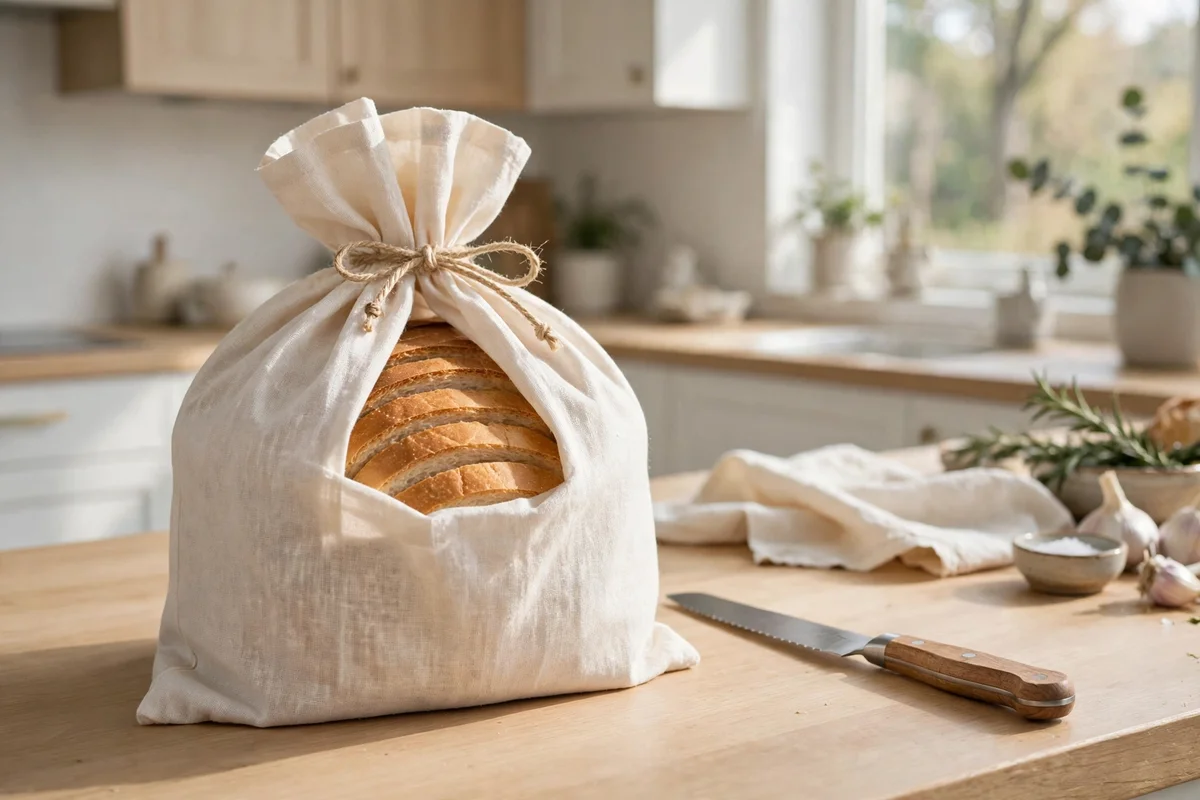
- Count how fast your household eats bread. Before you store anything, count slices per day for your household. A household that eats 2 slices a day needs a very different plan from one that eats 6, and guessing is how loaves go stale. Write the number down: it decides how big your counter portion should be and how much goes straight to the freezer.
- Split the loaf on day 1, before it starts to stale. On the day you buy or bake bread, split it into a counter portion for 1 to 2 days and a freezer portion for the rest. Do not wait until day 3 to freeze what is left, because bread that is already going stale will not improve in the freezer. Splitting on day 1 is the single most important step in this guide.
- Keep the counter portion closed and cool. Put the counter portion in its original bag with the air pressed out, or wrap it in a clean cloth inside a closed bag, and store it in a cool, dark cupboard spot away from heat, sun, and the stove. For crusty bread, a paper bag or a cloth wrap keeps the crust crisper than a sealed plastic bag, while soft sandwich bread does better in a closed bag that keeps moisture in.
- Freeze the rest in slices, not as a whole loaf. Slice the freezer portion before freezing, if it is not already sliced, and pack slices in freezer bags in portions that match one or two days of eating. Put a sheet of parchment or wax paper between slices if they stick together, press the air out of each bag, seal it, and write the date on the bag. Slices freeze faster, thaw faster, and let you take out exactly what you need.
- Toast frozen slices straight from the freezer. For toast, sandwiches that will be toasted, and breakfast bread, use frozen slices straight from the freezer in the toaster, adding a little extra time if needed. You do not need to thaw slices first, and toasting from frozen often gives a better result than thawing and then toasting. For sandwiches that will not be toasted, move slices to the counter for 15 to 30 minutes before making the sandwich.
- Move one freezer bag to the counter at a time. When the counter portion runs out, move only one freezer bag to the counter, and finish it within 1 to 2 days before opening the next bag. Moving the whole freezer supply to the counter at once recreates the original problem, with a large amount of bread going stale together. One bag at a time keeps the counter supply fresh and the freezer supply safe.
- Check the counter portion daily and use the oldest first. Each day, check the counter portion for mold, sour smell, or dryness, and use the oldest slices first. If the weather turns warm and humid, shorten the counter window to 1 day and freeze more on day 1 next time. If bread starts to mold before you finish the counter portion, your counter portion was too large, so make it smaller on the next loaf.
What should you use, and what should you skip?
You need freezer bags, a marker or tape for dates, and parchment or wax paper if your slices stick together. A clean cloth or paper bag helps for crusty bread on the counter, and a cool, dark cupboard spot replaces the bread box without taking counter space. A toaster is the easiest way to use frozen slices, but a counter thaw of 15 to 30 minutes works for untoasted sandwiches.
Skip routine refrigerator storage for bread, since fridge cold usually stales bread faster than counter storage. Skip leaving a whole loaf on the counter for a week, skip freezing a whole unsliced loaf when you only need a few slices at a time, and skip storing bread near heat, in direct sun, or in a damp spot. Skip warm bread in a sealed bag, since trapped warmth makes bread soggy, and skip refreezing bread that has already thawed and sat out for days.
How do the options compare?
Use this table to match bread type and household speed to the right storage move, instead of treating every loaf the same.
| Bread and household | Counter portion | Freezer portion | Avoid |
|---|---|---|---|
| Soft sandwich bread, 2 slices a day | 4 slices, 2 days, closed bag | Rest in slices, 2 bags | Fridge, whole loaf on counter all week |
| Crusty bread, small household | 1 to 2 days in paper bag or cloth | Rest in slices for toasting | Sealed plastic for crusty bread, fridge |
| Homemade loaf, 2 people | Cool completely, then 1 to 2 days | Rest in slices, same day | Bagging while warm, waiting until day 3 to freeze |
| Bagels or rolls, small household | 2 days in a closed bag | Rest individually in a freezer bag | Leaving all rolls on the counter |
| Frozen slices for toast | None needed | Toast straight from freezer | Thawing all slices, then re-freezing |
| Warm, humid kitchen | 1 day on the counter only | Freeze more on day 1 | A large counter portion in summer heat |
What are the 6 mistakes to avoid?
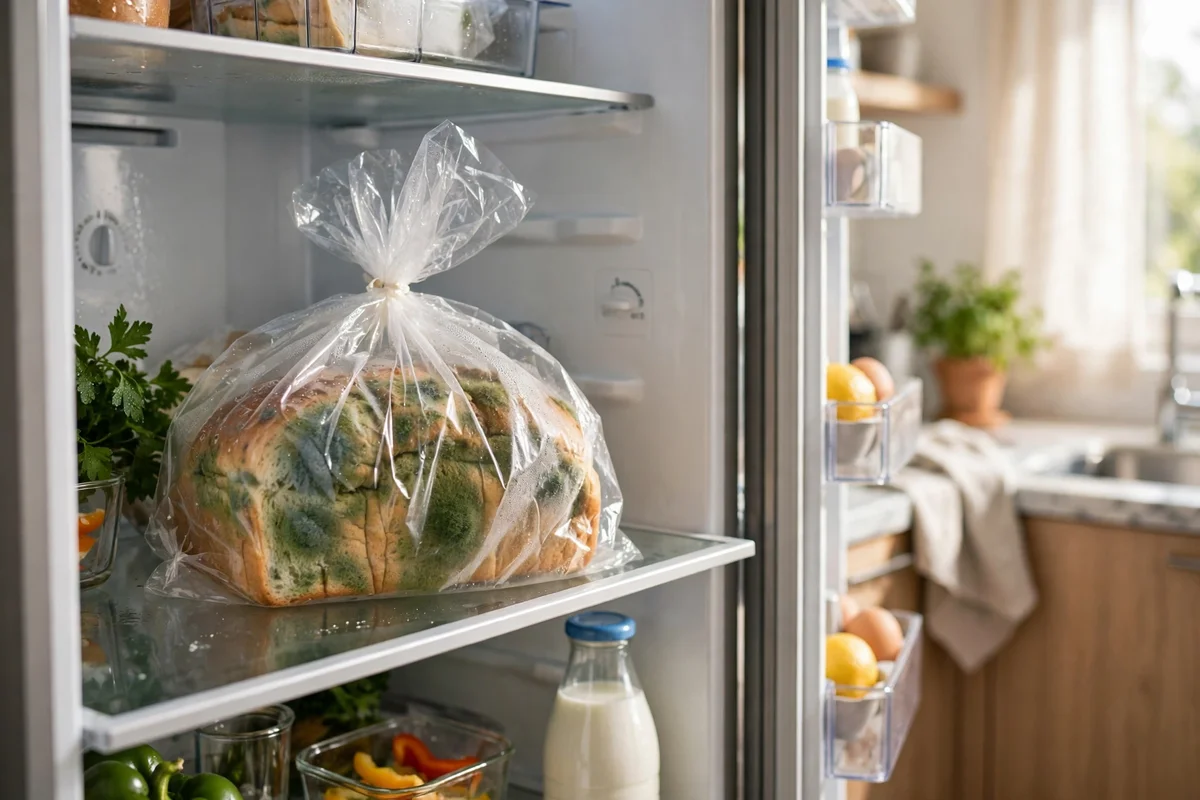
- Waiting until bread is stale to freeze it. Freezing does not reverse staling, so bread frozen on day 4 tastes stale when thawed. Fix: split and freeze on day 1, while the bread is still fresh.
- Storing bread in the refrigerator as a routine. Fridge temperatures speed the starch changes that make bread feel stale, so refrigerated bread often goes dry faster than counter bread. Fix: keep 1 to 2 days on the counter and freeze the rest, using the fridge only in very hot, humid conditions for a day at a time.
- Freezing a whole loaf instead of slices. A whole frozen loaf is hard to slice, forces you to thaw more than you need, and goes stale again once thawed. Fix: slice before freezing and pack in one- to two-day portions.
- Keeping a whole loaf on the counter for a week. Most bread lasts only a few days on the counter, and a small household cannot finish a full loaf in that window. Fix: keep only a 1 to 2 day portion on the counter and freeze the rest.
- Bagging warm homemade bread. Warm bread in a sealed bag traps moisture, turns soggy, and then stales unevenly. Fix: cool homemade bread completely, at least 2 hours, before slicing, bagging, or freezing.
- Moving all frozen bread to the counter at once. Thawing the whole freezer supply recreates the stale-loaf problem in a few days. Fix: move one bag at a time to the counter and finish it within 1 to 2 days.
When should you stop, and when should you throw food away?
Stop adjusting when each loaf is split on day 1, the counter holds only 1 to 2 days of bread, the freezer holds the rest in dated slice portions, and frozen slices toast well straight from the freezer. Throw away bread with mold, a sour smell, or slimy spots, and do not cut mold off bread and eat the rest, since mold can spread through soft bread beyond what you can see.
Safety note: This is general food-storage guidance. Throw away moldy bread rather than cutting the mold off and eating the rest, and throw away bread that smells sour or feels slimy. For detailed baked-goods storage by type, such as cakes, muffins, and cookies, see the baked-goods storage guide on Kitchenlify, since this post covers small-household bread portioning only.
Related on Kitchenlify
- Storage & Organizers
- How to Organize a Small Pantry Without Renovation
- How to Store Flour Long Term in Pantry for Beginners
- How to Store Baked Goods After Baking
- All guides
Frequently asked questions
How do you store bread for a small household without a bread box?
Split the loaf on day 1: keep a 1 to 2 day portion on the counter in a closed bag or wrapped cloth in a cool, dark cupboard, and freeze the rest in slices in dated freezer bags. Toast frozen slices straight from the freezer, and move one freezer bag to the counter at a time.
Should bread go in the refrigerator?
No, not as a routine. Refrigerator cold usually makes bread go stale faster than counter storage, because it speeds the starch changes behind staling. Keep 1 to 2 days on the counter and freeze the rest, using the refrigerator only for a day in very hot, humid conditions.
How long does bread last on the counter?
Most bread lasts about 1 to 2 days on the counter in good condition, longer in cool, dry kitchens and shorter in warm, humid ones. Plan your counter portion around that window, and freeze the rest on day 1 rather than hoping a loaf lasts a week.
Is it better to freeze bread sliced or whole?
Sliced is better for a small household. Frozen slices thaw and toast quickly, and you can take out exactly what you need, while a whole frozen loaf is hard to slice and goes stale again once you thaw more than you need.
Can you toast bread straight from the freezer?
Yes. Frozen slices toast well straight from the freezer, usually with a little extra time. For sandwiches that will not be toasted, move slices to the counter for 15 to 30 minutes before making the sandwich.
How do you store crusty bread without a bread box?
Keep crusty bread for 1 to 2 days in a paper bag or wrapped in a clean cloth in a cool, dark cupboard, which keeps the crust crisper than a sealed plastic bag. Freeze the rest in slices on day 1, and toast frozen slices to bring back crispness.
How long does frozen bread last?
Frozen bread kept well wrapped in freezer bags stays good for several months for toasting and cooking, though quality slowly fades over time. Date each bag, press the air out before sealing, and use the oldest bag first.
Should homemade bread cool before storing?
Yes. Let homemade bread cool completely, at least 2 hours, before slicing, bagging, or freezing. Bagging warm bread traps moisture, makes it soggy, and leads to uneven staling.
What should you do if bread gets moldy?
Throw the bread away. Do not cut mold off soft bread and eat the rest, since mold can spread through the loaf beyond the visible spot. To prevent mold next time, make the counter portion smaller and freeze more of the loaf on day 1.
How do I revive stale bread?
Run the loaf or slice briefly under water, then bake it at 300 degrees Fahrenheit for 5 to 10 minutes until the crust crisps again. The water turns to steam inside and softens the crumb, while the heat re-crisps the crust. Eat it right away, because revived bread stales again fast, and do not revive bread that is moldy.
How do I store sourdough bread?
Keep sourdough cut-side down on a board, covered with a clean cloth, for 2 to 3 days on the counter, because its crust protects it and the fridge dries it out. Freeze the rest in slices on day one, and toast slices straight from frozen. Sourdough keeps longer than sandwich bread, but it still goes stale, so do not leave a whole loaf out for a week.