How to Store Tomatoes Whole and After Cutting

How to store tomatoes whole and after cutting starts with sorting by ripeness and by whether they are cut: whole tomatoes go mealy in the refrigerator, cut tomatoes go soggy in a day, and unripe tomatoes never seem to ripen at all. The problem is usually not the tomato — it is that one storage rule gets applied to every stage, when whole and cut tomatoes actually need opposite treatment. Whole ripe tomatoes belong on the counter, unripe tomatoes need time at room temperature to ripen, and cut tomatoes belong in the refrigerator right away, in a covered container.
How to store tomatoes whole and after cutting — what is the short answer?
Keep unripe tomatoes at room temperature out of direct sun until they ripen, keep ripe whole tomatoes on the counter in a single layer and use them within a few days, and move ripe whole tomatoes to the refrigerator only if you cannot use them in time. Refrigerate cut tomatoes immediately in a covered container, cut side protected, and eat them within 1 to 2 days for best quality. Bring refrigerated whole tomatoes back to room temperature for 30 to 60 minutes before eating, so flavor and texture recover.
Why does the refrigerator ruin whole tomatoes?
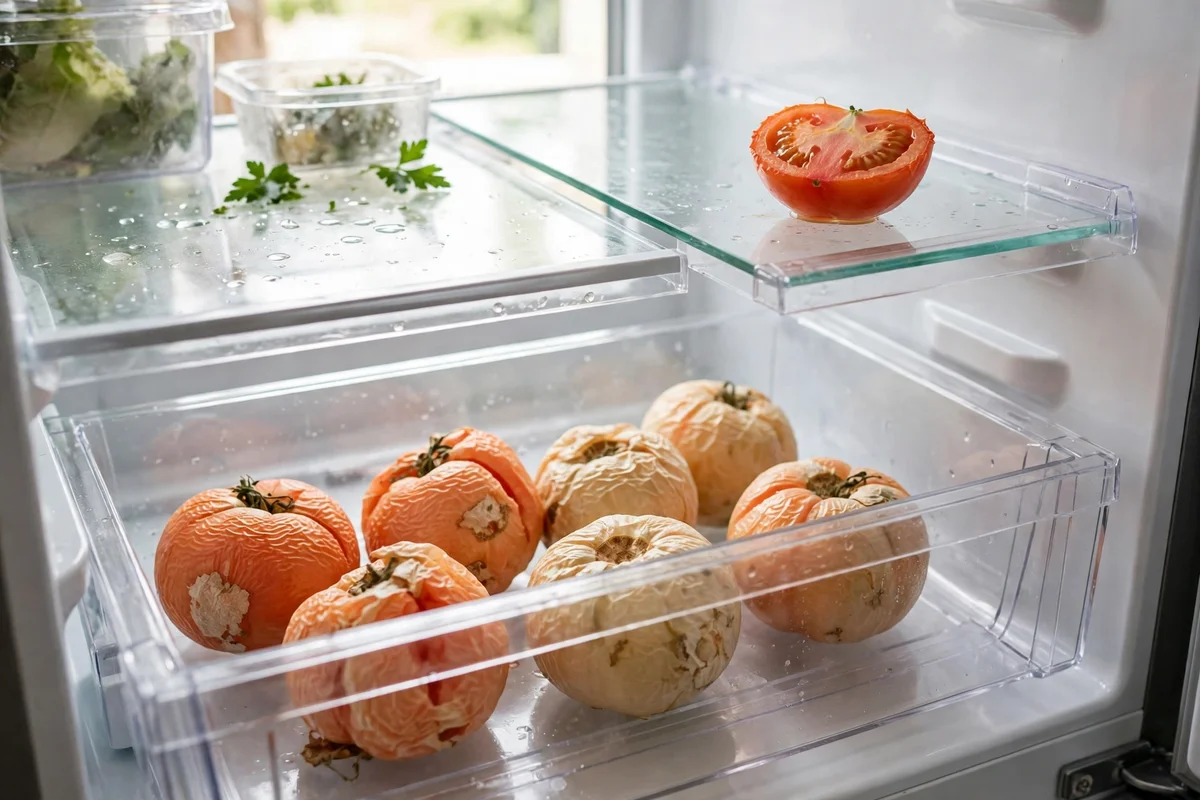
Cold slows ripening and changes texture. An unripe tomato put in the refrigerator may never ripen properly, because cold stops the ripening process before flavor develops. A ripe tomato kept cold for too long can turn mealy and lose flavor, because cold damages the soft flesh and dulls the taste compounds that make a fresh tomato good. That is why the counter, not the fridge, is the default home for a whole tomato.
Cut tomatoes are a different case, because cutting breaks the skin that protects the flesh. Once the flesh is exposed, it loses moisture, picks up fridge odors, and spoils much faster at room temperature. Refrigeration is not a flavor choice for cut tomatoes; it is a safety and quality choice. The goal is to protect the cut surface, keep the tomato cold, and use it quickly, before texture and flavor fade.
Ripeness is the switch that decides the move. A hard, pale tomato needs room temperature and time. A fully red, slightly soft tomato is ready to eat and can stay on the counter for a few days. A very soft, wrinkled tomato that you cannot eat today is better in the refrigerator for a short hold, or cooked into sauce, than left to spoil on the counter. Sorting by ripeness each time you unpack tomatoes prevents most waste.
What is a worked example you can follow?
Worked example: 8 tomatoes from one shopping trip, made up of 3 hard, pale tomatoes, 4 fully red ripe tomatoes, and 1 very soft tomato. Do not put all 8 in the refrigerator, and do not leave all 8 in a pile on the counter. First, put the 3 hard tomatoes in a single layer on a plate or in a shallow bowl at room temperature, out of direct sun, and check them daily. Within 2 to 4 days they should turn red and give slightly when pressed, at which point they join the ripe group.
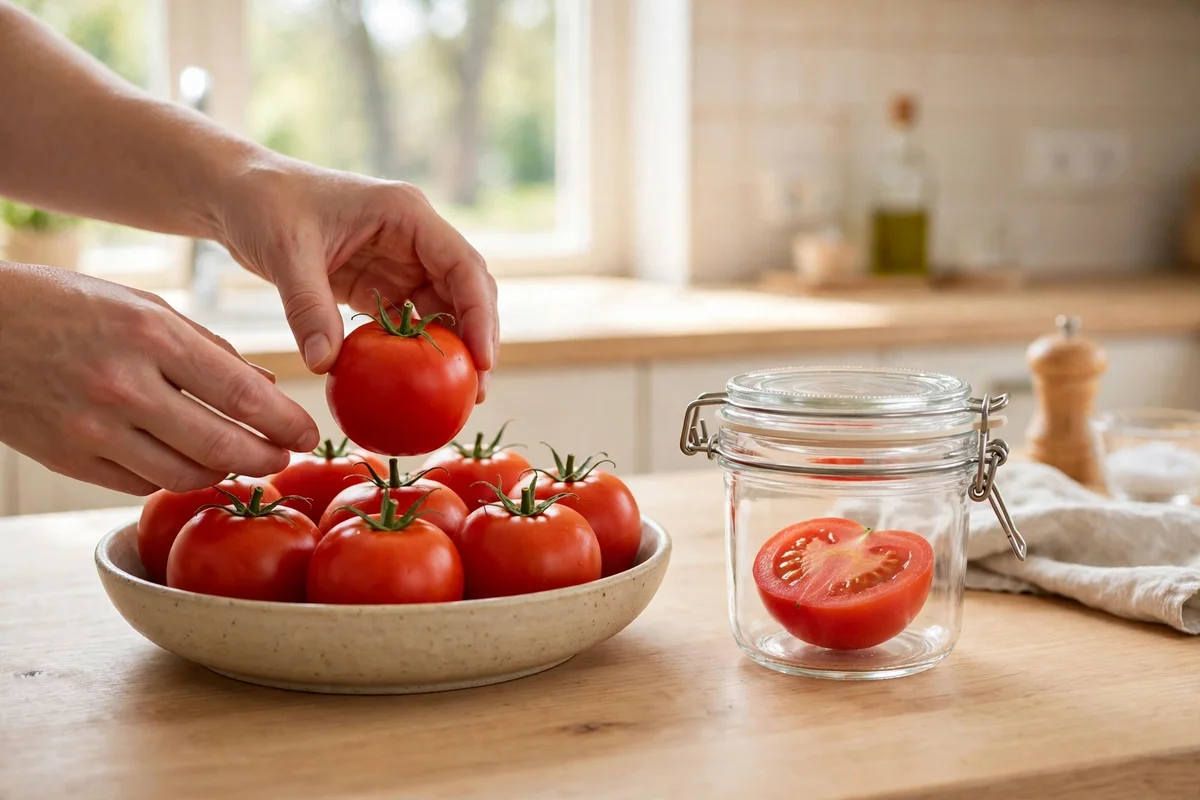
Next, keep the 4 ripe tomatoes on the counter in a single layer, stem side up, not stacked, and plan to eat two on day 1 and two on day 2. If day 2 ends and one ripe tomato is still left, move that one tomato to the refrigerator in a breathable bag or container, and bring it back to room temperature for 30 to 60 minutes before you eat it. The very soft tomato does not wait: use it the same day in cooking, or refrigerate it and cook it the next day, since soft tomatoes are best cooked rather than sliced fresh.
Now cut one ripe tomato for a sandwich and use only half. Do not leave the other half on the counter. Wrap the cut side tightly, or place the half cut side down in a small covered container, and refrigerate it right away. Plan to use that half within 1 to 2 days, and check it before use: if it smells sour, feels slimy, or shows mold, throw it away. The same shopping trip, sorted by ripeness and by cut versus whole, gives you fresh tomatoes for days instead of a fridge drawer of mealy whole tomatoes and one soggy half.
How do you do it, step by step?
- Sort tomatoes by ripeness as soon as you unpack them. Set hard, pale tomatoes in one group, fully red tomatoes that give slightly in a second group, and very soft or wrinkled tomatoes in a third group. This one-minute sort decides everything that follows, because each group gets a different spot. Do not wash tomatoes before storing them, since water left on the skin encourages mold; wash each tomato right before you use it.
- Ripen unripe tomatoes at room temperature, out of sun. Keep unripe tomatoes in a single layer at room temperature, away from direct sunlight, in an open bowl, on a plate, or in a loosely closed paper bag. Check them daily and move each tomato to the ripe group as soon as it turns red and gives slightly. Do not refrigerate unripe tomatoes, because cold can stop ripening and leave you with a hard, flavorless tomato.
- Keep ripe whole tomatoes on the counter in a single layer. Store ripe whole tomatoes at room temperature in a single layer, stem side up, with space between them so air can move and they do not bruise each other. Use them within a few days for best flavor and texture, and keep them out of direct sun and away from heat. Do not stack tomatoes in a deep bowl, since the weight bruises the ones at the bottom.
- Move ripe whole tomatoes to the refrigerator only to hold them. If a ripe tomato will not be eaten within a few days, move it to the refrigerator in a breathable bag or container to slow decay. Plan to use it within a couple of days, and bring it back to room temperature for 30 to 60 minutes before eating so flavor and texture recover as much as possible. Refrigeration is a short hold for ripe tomatoes, not a long-term home.
- Refrigerate cut tomatoes immediately in a covered container. As soon as a tomato is cut, refrigerate any leftover part right away. Place slices or halves in a covered container, or wrap a half tightly with the cut side protected, and keep the container in the refrigerator at or below 40 degrees Fahrenheit. Do not leave cut tomato on the counter while you finish cooking, and do not leave it uncovered in the fridge where it dries out and picks up odors.
- Use cut tomatoes within 1 to 2 days and check before use. Plan to eat cut tomatoes within 1 to 2 days for best quality, even if they still look fine on day 3. Before use, check for sour smell, slimy texture, or mold, and throw the tomato away if any of those signs appear. Cut tomatoes are best used in cooking after the first day, when fresh slicing quality has faded but flavor for sauces and cooked dishes is still good.
- Freeze or cook tomatoes you cannot use in time. If whole tomatoes are getting too soft or you have more than you can eat, cook them into sauce or freeze them for cooking later. Wash and core tomatoes, then freeze them whole or chopped in a freezer container for cooked dishes, since frozen tomatoes lose their fresh slicing texture. Label the container with the date, and use frozen tomatoes for sauces, soups, and stews rather than fresh salads.
What should you use, and what should you skip?
You need a plate, shallow bowl, or tray for counter storage, a loosely closed paper bag for ripening, small covered containers or wrap for cut tomatoes, and a breathable bag or container for any ripe whole tomato you move to the refrigerator. A refrigerator thermometer helps, since cut tomatoes should stay at or below 40 degrees Fahrenheit.
Skip refrigerating unripe tomatoes, skip stacking ripe tomatoes in a deep bowl, and skip leaving cut tomatoes uncovered or on the counter. Skip washing tomatoes before storage, skip storing tomatoes in direct sun, and skip keeping cut tomatoes for a week on the hope that they still look fine, since cut flesh spoils faster than whole skin suggests.
How do the options compare?
Use this ripeness-stage table to decide counter versus refrigerator at a glance, instead of applying one rule to every tomato.
| Tomato stage | Where to keep it | How to store it | Use within |
|---|---|---|---|
| Unripe, hard and pale | Counter, room temperature | Single layer, out of sun, paper bag optional | Until ripe, check daily |
| Ripe whole, firm and red | Counter, room temperature | Single layer, stem side up, not stacked | A few days for best quality |
| Ripe whole, needs holding | Refrigerator, short hold only | Breathable bag or container, warm up before eating | A couple of days |
| Very soft or wrinkled whole | Refrigerator or cook now | Cook into sauce, or fridge for next-day cooking | 1 day, cook promptly |
| Cut half | Refrigerator immediately | Covered container, cut side protected | 1 to 2 days |
| Sliced or diced | Refrigerator immediately | Covered container, single layer if possible | 1 to 2 days |
| Frozen for cooking | Freezer | Washed, cored, in a freezer container, dated | Months, for cooked dishes only |
What are the 6 mistakes to avoid?
- Refrigerating unripe tomatoes. Cold stops unripe tomatoes from ripening properly, leaving hard, flavorless fruit. Fix: keep unripe tomatoes at room temperature out of sun until they turn red and give slightly.
- Keeping ripe whole tomatoes in the refrigerator for days. Long cold storage makes ripe tomatoes mealy and dulls flavor. Fix: keep ripe whole tomatoes on the counter, and use the refrigerator only as a short hold of a couple of days.
- Leaving cut tomatoes on the counter. Cut flesh loses moisture and spoils quickly at room temperature, and uncovered cut tomato dries out in the fridge too. Fix: refrigerate cut tomato immediately in a covered container.
- Stacking tomatoes in a deep bowl. Weight bruises the tomatoes at the bottom, and bruised spots spoil first. Fix: store tomatoes in a single layer with space between them, stem side up.
- Washing tomatoes before storing them. Water left on skins encourages mold, especially in a closed container. Fix: store tomatoes unwashed and dry, and wash each one right before use.
- Keeping cut tomatoes too long because they look fine. Cut tomatoes can spoil without obvious color change, and texture fades fast after cutting. Fix: use cut tomatoes within 1 to 2 days, check for sour smell or sliminess, and cook or discard what you do not use.
When should you stop, and when should you throw food away?
Stop adjusting when unripe tomatoes sit at room temperature, ripe whole tomatoes sit in a single layer on the counter, and cut tomatoes sit covered in the refrigerator with a plan to use them within 1 to 2 days. Throw away tomatoes with mold, black or brown spots through the flesh, severe bruising, or a sour smell, and throw away cut tomatoes that feel slimy or smell off, even if they are within the time window.
Safety note: This is general food-storage guidance. Keep cut tomatoes refrigerated at or below 40 degrees Fahrenheit and use them promptly, and throw away any tomato that smells sour, feels slimy, or shows mold rather than tasting it to decide.
Related on Kitchenlify
- Food Storage
- How to Keep Herbs Fresh Longer in Fridge
- How to Freeze Soup Without Freezer Burn for Beginners
- All guides
Frequently asked questions
How do you store whole tomatoes?
Keep ripe whole tomatoes on the counter at room temperature in a single layer, stem side up, out of direct sun, and use them within a few days. Keep unripe tomatoes at room temperature until they ripen, and move ripe whole tomatoes to the refrigerator only for a short hold.
Should tomatoes go in the refrigerator?
Whole ripe tomatoes can go in the refrigerator for a short hold of a couple of days if you cannot eat them in time, but the counter is better for flavor and texture. Unripe tomatoes should not be refrigerated, and cut tomatoes should always be refrigerated right away.
How do you store tomatoes after cutting?
Refrigerate cut tomatoes immediately in a covered container, with the cut side protected, at or below 40 degrees Fahrenheit. Eat cut tomatoes within 1 to 2 days for best quality, and check for sour smell, sliminess, or mold before use.
How long do cut tomatoes last in the refrigerator?
Cut tomatoes last about 1 to 2 days in the refrigerator for best quality. Slices and halves lose moisture and texture quickly, so plan to use them promptly, and cook them rather than serving them fresh after the first day.
Why do tomatoes go mealy in the refrigerator?
Long cold storage damages the soft flesh of ripe tomatoes and dulls flavor, which is why refrigerated whole tomatoes often taste mealy. Keep ripe whole tomatoes on the counter when possible, and bring refrigerated tomatoes back to room temperature for 30 to 60 minutes before eating.
How do you ripen tomatoes faster?
Keep unripe tomatoes at room temperature out of direct sun, in a single layer, or in a loosely closed paper bag, and check them daily. Do not refrigerate unripe tomatoes, and move each tomato to the ripe group as soon as it turns red and gives slightly.
Should tomatoes be stored stem side up or down?
Store whole tomatoes stem side up in a single layer, so the soft shoulders around the stem do not bruise under the weight of the tomato. Keep space between tomatoes so air can move and they do not press against each other.
Can you freeze tomatoes?
Yes, for cooking. Wash and core tomatoes, then freeze them whole or chopped in a freezer container for sauces, soups, and stews. Frozen tomatoes lose their fresh slicing texture, so use them for cooked dishes, not salads.
When should you throw a tomato away?
Throw away tomatoes with mold, black or brown spots through the flesh, severe bruising, shriveling with a sour smell, or a slimy feel. Throw away cut tomatoes that smell sour or feel slimy, even if they are still within 1 to 2 days.
How do I store cherry or grape tomatoes?
Keep cherry and grape tomatoes on the counter in a shallow container, stem side up, and eat them within a few days, because they ripen fast and split if they are piled deep. Refrigerate them only when they are fully ripe and you cannot eat them in time, and bring them back to room temperature before eating, because cold dulls their flavor.
Can I ripen tomatoes with a banana or apple?
Yes. Put an unripe tomato in a paper bag with a ripe banana or apple for a day or two, and check it daily. The banana or apple gives off ethylene gas, the same gas that ripens avocados, and the bag traps it around the tomato. Do not leave the tomato in the bag once it is ripe, because it will over-ripen fast.