How to Clean a Ceramic Baking Dish
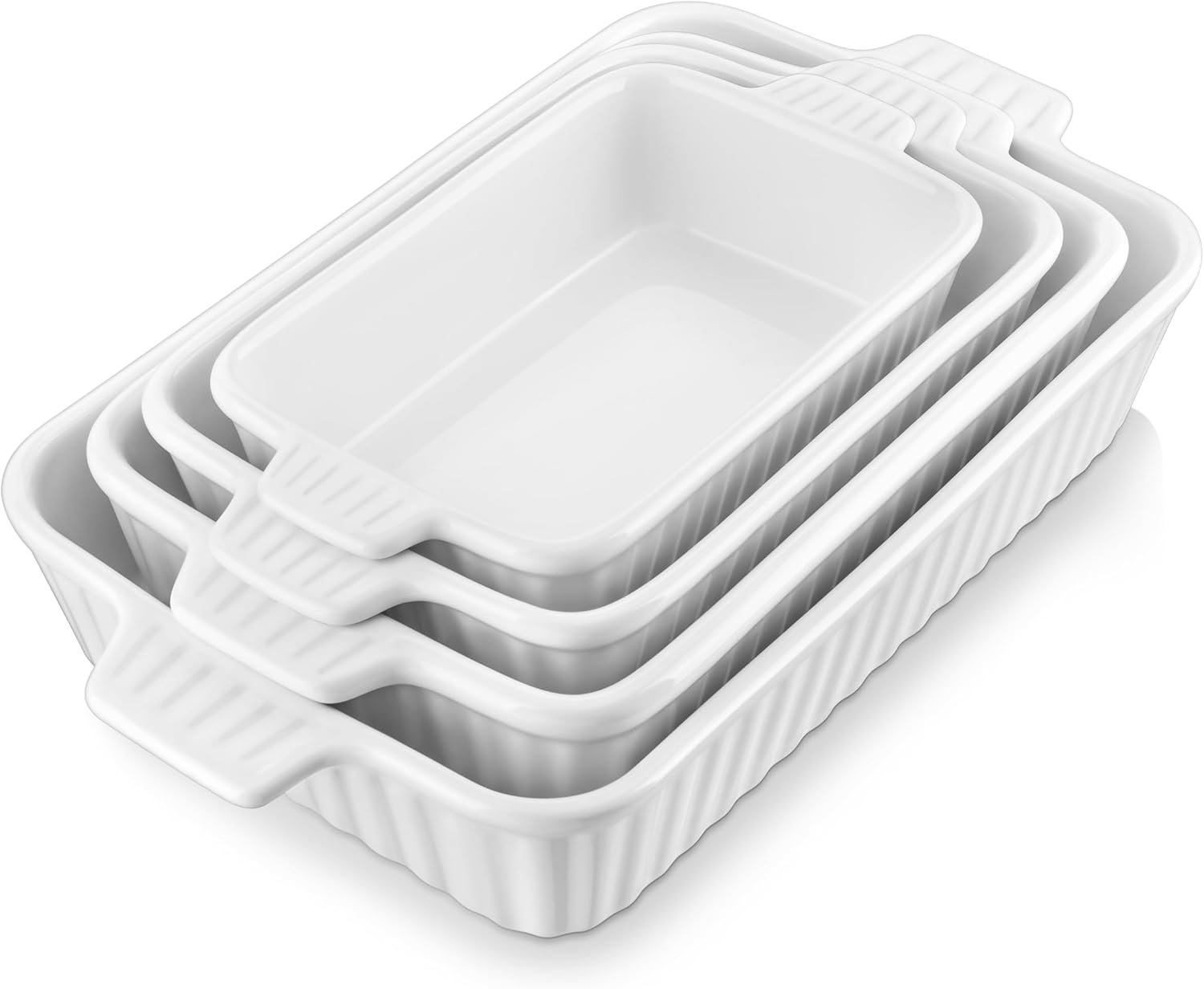
How to clean a ceramic baking dish is simple: soak it in warm soapy water while it is still warm, then wash it with a soft sponge and mild dish soap — never steel wool or abrasive cleaner. Burnt food lifts with a baking soda paste and a longer soak, and most stains fade with the same paste. The whole routine takes about ten minutes, and it keeps the glaze smooth so food releases better next time.
The short answer: how to clean a ceramic baking dish
Soak the dish in warm water with a drop of dish soap for 10–15 minutes, then wash it with a soft sponge and rinse. For burnt food, spread a paste of baking soda and water over the stuck spots, leave it for 30 minutes, and lift it off with the sponge. For stains, the same paste works on most marks. Never use steel wool, scouring powder, bleach, or a metal scraper — they damage the glaze, and a damaged glaze stains faster next time.
Daily cleaning: the 10-minute routine
- Let it cool a little. Put the hot dish on a trivet and let it cool until you can touch it. Do not run cold water into a hot dish — the sudden change can crack it.
- Soak it. Fill the dish with warm water and a drop of mild dish soap and leave it for 10–15 minutes. Food that is still warm lifts off easily; food left to dry overnight needs scrubbing.
- Wash with a soft sponge. Use the soft side of the sponge, not the scouring pad. Work around the corners and under the handles, where food collects.
- Rinse and dry fully. Rinse with warm water and dry with a towel or on a rack. Do not stack it away wet — trapped moisture leaves marks and smells.
Burnt food: the baking soda paste method
When food has baked hard onto the dish, do not scrape it. Spread a paste of three parts baking soda to one part water over the stuck area, thick enough to cover it, and leave it for at least 30 minutes. For really stuck food, leave it overnight. Then lift the softened food off with a soft sponge or a plastic scraper and wash as usual. A splash of white vinegar over the paste will fizz and help lift the last of it — rinse well afterwards so no vinegar smell stays in the glaze.
If the food still will not move, repeat the soak rather than reaching for something abrasive. Two gentle soaks beat one hard scrub, because the scrub is what damages the glaze. A wooden spoon or a silicone spatula can help lift softened edges without scratching.

Prevention helps more than any cleaning trick: grease the dish before cheesy or sugary bakes, and do not bake an empty dish. Our guide on do you need to grease a ceramic baking dish covers greasing in full.
How to remove stains from a ceramic baking dish
Stains on a glazed dish are usually on the surface, not in the ceramic, so most of them come off with the baking soda paste above. The method changes slightly by stain:
- Tomato sauce: baking soda paste for 30 minutes, then wash. Tomato stains fade fastest when treated the same day.
- Baked-on cheese: soak in warm soapy water first to soften it, then the baking soda paste.
- Turmeric and curry: baking soda paste, then leave the dish in sunlight for a few hours — sunlight fades yellow stains.
- Coffee and tea: a paste of baking soda and water, or a short soak in warm water with a spoonful of baking soda.
Prevent stains by greasing the dish before cooking, and by lining it with parchment for the worst offenders — turmeric-heavy curries and tomato sauces baked for a long time. If a stain will not shift at all after two tries, it may be in a damaged glaze rather than on it: fine crazing lines can trap colour. Our guide on how to prevent ceramic baking dish from cracking explains crazing and when a dish should be replaced.
What never to use on a ceramic baking dish
Steel wool, scouring pads, abrasive powders, and metal scrapers all scratch the glaze. A scratched glaze stains faster, holds smells, and can chip at the scratch. Bleach is also a bad idea: it can dull the glaze and leave a smell that lingers into the next bake. Oven cleaner is made for oven walls, not for a dish you eat from — keep it away from bakeware. If a cleaning product does not say it is safe for ceramic glaze, do not use it on the dish.
Cleaning the unglazed bottom, rim, and lids
Many dishes have an unglazed ring on the bottom or the rim. That raw ceramic absorbs water, so wash it the same way but dry it thoroughly — a damp unglazed base left on a shelf can mark the shelf and pick up smells. Do not soak an unglazed stoneware dish for hours; a short wash and a full dry is the right routine.
Lids follow different rules by type. The PP lids on the Artena sets are for fridge storage only — not oven, microwave, or dishwasher safe — so wash them by hand in warm soapy water. Ceramic lids, such as the ones on the LOVECASA and ROSSALLINI dishes, can usually be washed like the dish itself, but check the maker's care instructions first. Our guide to the best ceramic baking dish set with lids explains which lids are storage-only and which can go in the oven.
Removing smells from a dish
A dish that smells of garlic, onion, or curry after washing usually needs a longer soak, not a stronger cleaner. Fill it with warm water and a spoonful of baking soda, leave it for an hour, then wash as usual. Sunlight also helps: a day on a sunny windowsill freshens a dish that holds smells. If the smell stays after two baking soda soaks, the glaze may be crazed — fine cracks that trap odours — and the dish is nearing the end of its life.
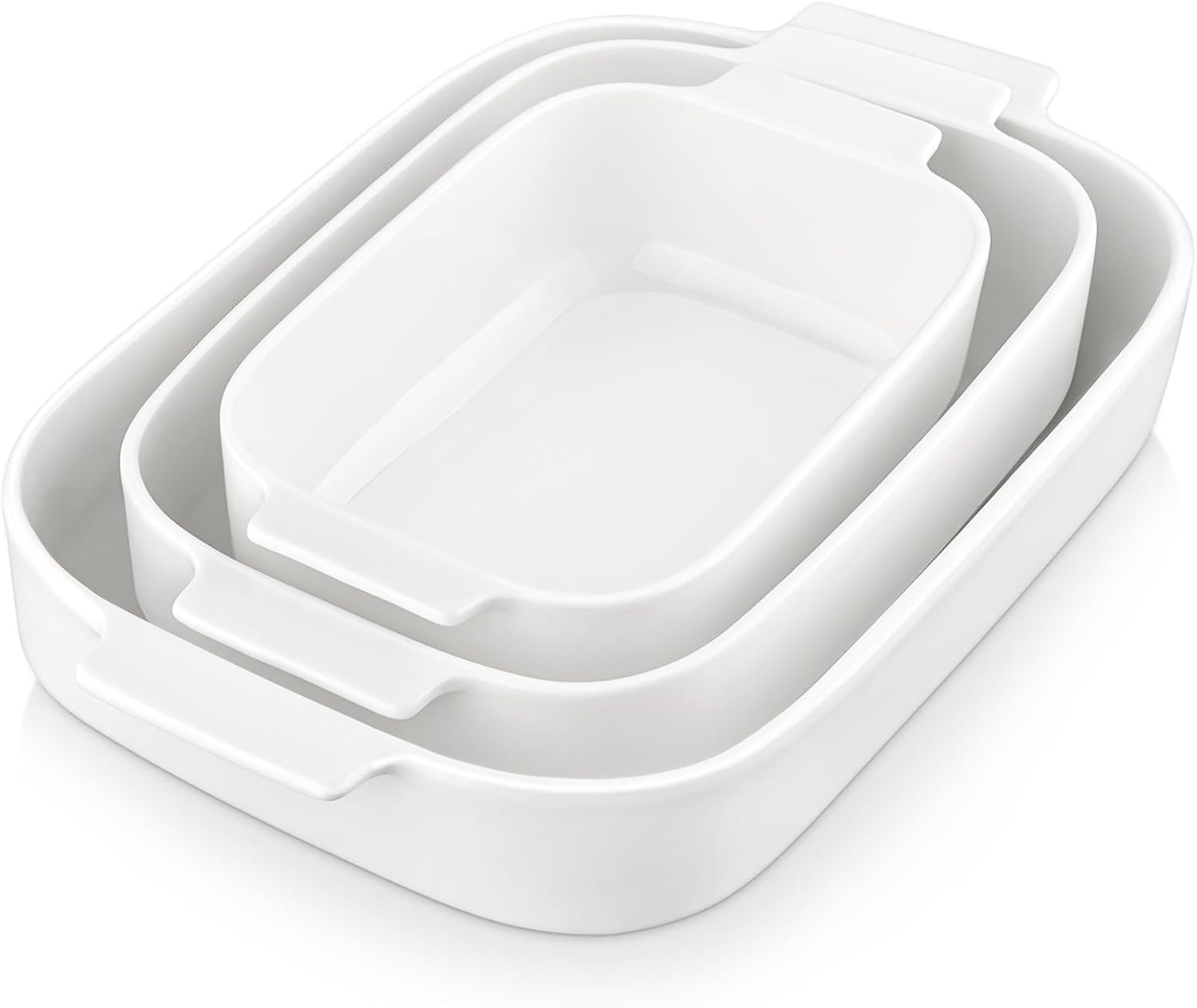
Storing the dish dry, with the lid off, also stops smells building up between uses. Our guide on how to store ceramic baking dishes covers storage in full.
Can you still clean and use a crazed or damaged dish?
A dish with fine crazing lines — a spiderweb of hairline cracks in the glaze — can still be washed and used, but it will stain and hold smells more easily, and it needs gentler handling. Wash it by hand, never in the dishwasher, and dry it fully. A dish with a real crack, a chip at the rim, or a crack you can feel with a fingernail should be retired: it can break in the oven, and a chipped edge can cut. The fingernail test and the full answer are in our guide on how to prevent ceramic baking dish from cracking.
Can you put it in the dishwasher instead?
Most glazed dishes are listed as dishwasher safe, and an occasional dishwasher run will not ruin one. But hand washing keeps the glaze looking new for longer: dishwasher detergent is harsher than hand soap, and rattling against other dishes can chip the rim. If you do use the dishwasher, load the dish upside down with space around it and nothing heavy on top. The full trade-off is in our guide on can ceramic baking dish go in the dishwasher.
Related on Kitchenlify
- Can Ceramic Baking Dish Go in the Dishwasher
- How to Store Ceramic Baking Dishes
- How to Prevent Ceramic Baking Dish from Cracking
- Do You Need to Grease a Ceramic Baking Dish
- How to Clean and Care for Stoneware Dinnerware
- Best Ceramic Baking Dish Set for Beginners Under $50
Frequently asked questions
How soon should I clean a ceramic baking dish after using it?
As soon as it has cooled enough to handle. Soak it in warm soapy water while the food is still soft — food left to dry overnight needs a long soak and much more scrubbing, and scrubbing is what damages the glaze.
Can I put a ceramic baking dish in the dishwasher?
Most glazed dishes are listed as dishwasher safe, but hand washing keeps the glaze in better shape for longer. Dishwasher detergent is harsher than hand soap, and rattling can chip the rim. Load the dish upside down with space around it if you use the dishwasher.
How do I remove burnt food from a ceramic baking dish?
Spread a paste of three parts baking soda to one part water over the burnt area and leave it for at least 30 minutes — overnight for really stuck food. Lift the softened food off with a soft sponge or a plastic scraper, then wash as usual. Never scrape burnt food off with metal.
How do I get tomato sauce stains out of a ceramic baking dish?
Rub a baking soda and water paste over the stain, leave it for 30 minutes, then wash. Tomato stains fade fastest when treated the same day. Sunlight also helps fade stains that are slow to shift.
Can I use baking soda on a ceramic baking dish?
Yes. Baking soda is the safest cleaner for a glazed dish — it lifts burnt food and stains without scratching. Make a paste of three parts baking soda to one part water, leave it on the stain, then rinse well.
Can I use bleach on a ceramic baking dish?
No. Bleach can dull the glaze and leave a smell that lingers into the next bake. Use baking soda paste for stains and warm soapy water for daily cleaning instead.
How do I clean the unglazed bottom of a ceramic dish?
Wash it the same way with warm soapy water and a soft sponge, but dry it thoroughly — unglazed ceramic absorbs water and can mark a shelf or pick up smells if it is put away damp. Do not soak an unglazed dish for hours.
Is it safe to use a dish with crazed glaze?
A dish with fine crazing lines can still be used, but it stains and holds smells more easily, so wash it by hand and dry it fully. A dish with a real crack or a chip you can feel with a fingernail should be retired.