How to Stack Plates Without Chipping
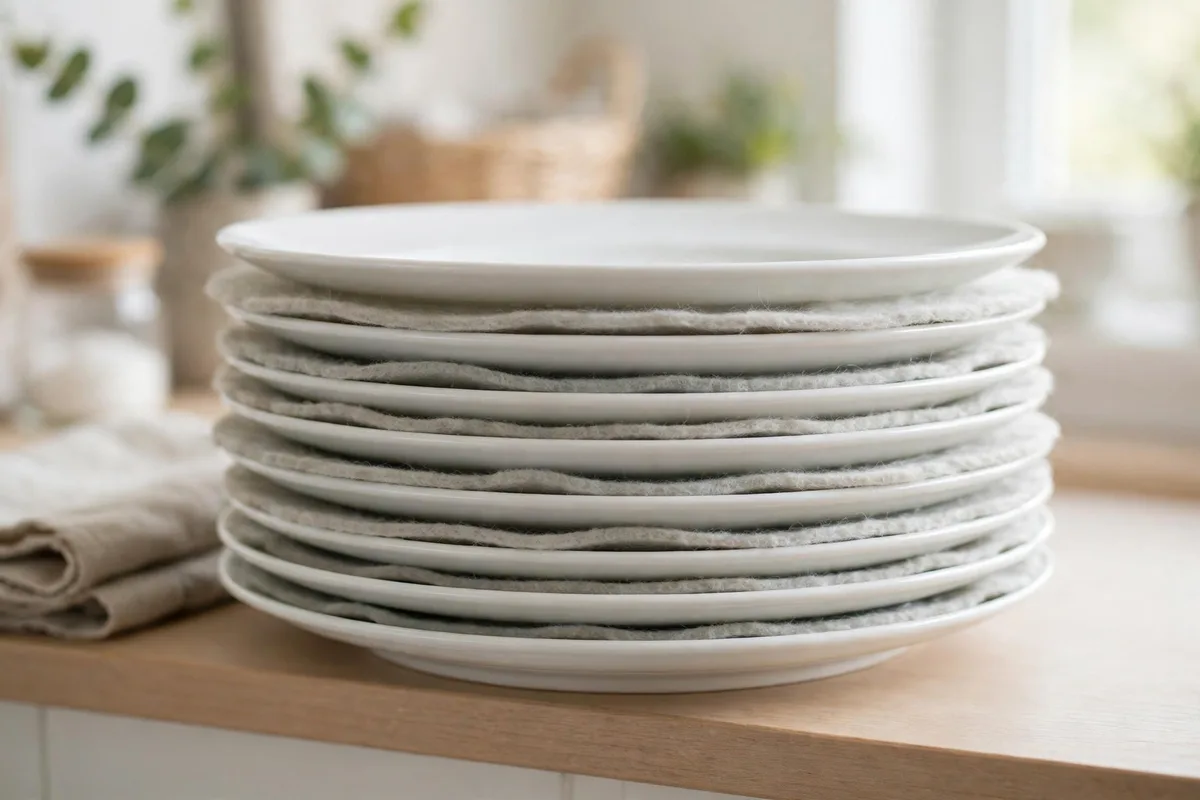
How to stack plates without chipping: sort plates by size, keep each stack to 6 to 8 plates, put a soft divider between every plate, and lift straight up instead of sliding. Plates chip when rims rub and grind against each other, and that happens every time a stack is too tall, mixed in size, or slid across a shelf. This guide shows you how to sort, separate, and lift plates so the set you have now is still the set you have in five years.
how to stack plates without chipping — what is the short answer?
Stack plates of the same size together, keep each stack to about 6 to 8 plates, and put a soft divider — a felt divider, a folded cloth, or a paper towel — between every plate. Put the heaviest plates at the bottom, lift plates straight up instead of sliding them, and store stacks where you can reach them without stretching or climbing. That is the whole method: same size, short stack, divider, straight lift.
How do I do it step by step?
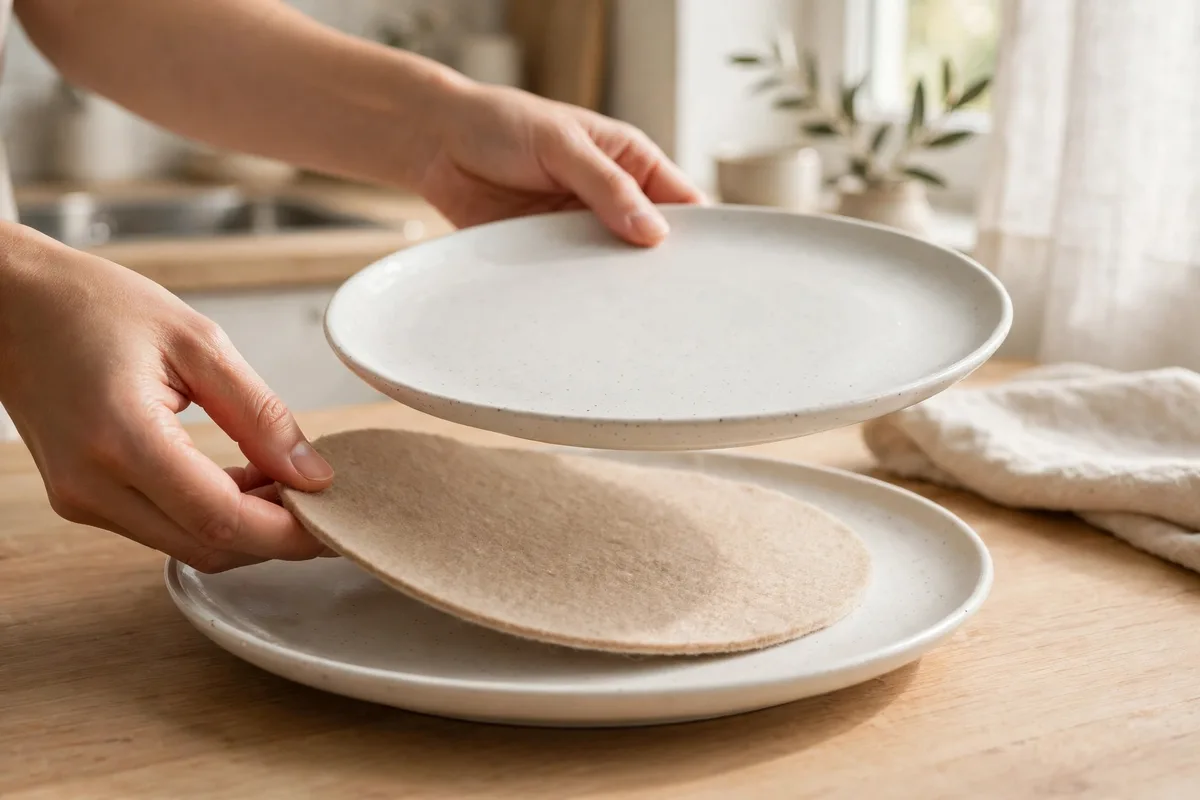
- Sort plates by size and type. Group dinner plates with dinner plates, salad plates with salad plates, and bowls with bowls. A stack of mixed sizes wobbles, and the rim of a smaller plate sits on the face of a larger one, which is where chips start. If two plates do not match, they do not stack together.
- Check every rim before it goes in the stack. Run a finger around each rim and look for chips or rough spots. A chipped plate grinds against the plate below it and spreads the damage, so set chipped plates aside for everyday use or retire them. Stack only smooth, undamaged plates.
- Put a divider between every plate. Lay a felt plate divider, a folded cloth napkin, or a paper towel on each plate before you add the next one. The divider is what stops rims rubbing, so do not skip it to save time. One divider per gap: a stack of 6 plates needs 5 dividers.
- Keep stacks short, about 6 to 8 plates. A tall stack is heavy, hard to lift, and wobbles when you pull a plate from the middle. Six to eight plates is a height most people can lift safely with one hand on the stack. If you own more plates, make two short stacks instead of one tall one.
- Put the heaviest plates at the bottom. Heavy stoneware and dinner plates go at the bottom of the stack, lighter salad plates and saucers on top. A light plate at the bottom cracks under weight it was never made to carry, and a heavy plate on top makes the whole stack tip.
- Lift straight up, never slide. Take a plate off the top by lifting it straight up and clear of the stack, then set it down the same way. Sliding a plate across the one below it drags rim on rim and is the most common cause of chips. If a plate sticks, lift the whole stack slightly and ease it free.
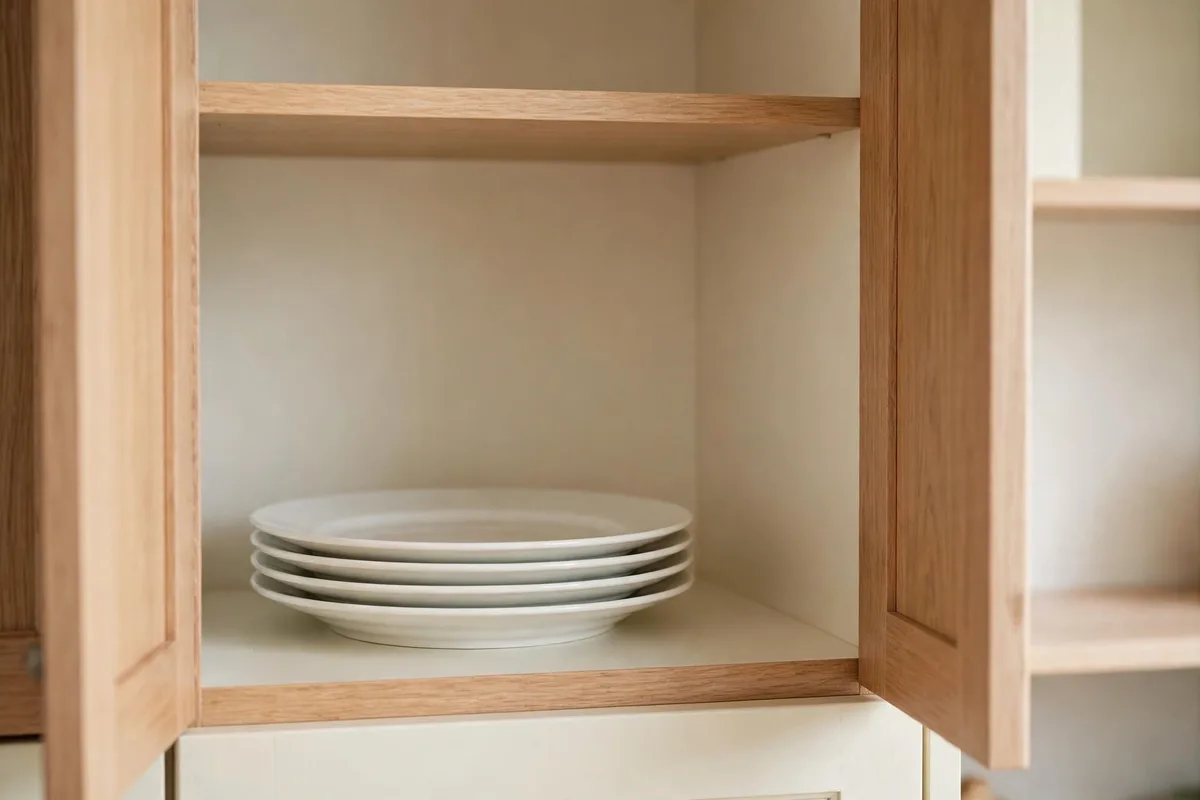
- Store stacks where you can reach them. Keep everyday plates between waist and shoulder height, where you can lift them straight up without stretching or climbing. Plates stored too high get dropped, and plates stored too low get dragged. If a stack lives on a high shelf, move it down and keep rarely used plates up there instead.
What mistakes should I avoid?
- Stacking too high. A stack of 12 or 15 plates is heavy, wobbles, and chips the plates in the middle when it shifts. Fix: split it into two short stacks.
- Mixing sizes in one stack. A small plate on a big plate leaves its rim sitting on the big plate's face. Fix: sort by size first, and stack only matching plates together.
- Sliding plates out of the middle. Pulling a plate sideways drags its rim across the plate below. Fix: always take from the top, lifting straight up.
- Stacking wet plates. Wet plates stick together and then release suddenly, which chips rims. Fix: dry plates fully before they go back in the cabinet.
- Storing plates too high. A stack above shoulder height gets lifted down at an angle, and angles chip rims. Fix: keep everyday plates between waist and shoulder height.
- Keeping a chipped plate in the stack. The rough edge grinds the plate below it every time the stack moves. Fix: retire chipped plates from the stack.
What do I need, and what should I skip?
You need felt plate dividers, folded cloth napkins, or paper towels — one per gap between plates; a stable shelf or cabinet with enough height for a short stack plus a hand above it; dry hands and a clear counter, so you can sort and stack without rushing.
Skip mixed-size stacks, where a small plate sits on a larger plate's face. Skip sliding plates across each other to find the one you want. Skip storing a chipped plate inside a stack of good plates. Skip tall stacks you have to climb or stretch to reach.
How to store plates without chipping — which divider should I choose?
| Divider | Best for | Cost | Care |
|---|---|---|---|
| Felt dividers | Everyday stacks you open daily | Low, reusable | Shake out or wash by hand |
| Cloth napkins | Nice sets and dinner plates | Low if you own them | Wash with laundry |
| Paper towels | A quick fix with no dividers at hand | Low, single use | Throw away after use |
| No divider | Never — rims grind with nothing between them | Free | Chipped plates |
What does the worked example look like?
Worked example: 12 dinner plates and 6 salad plates. You own 12 dinner plates and 6 salad plates. Split the dinner plates into two stacks of 6, not one stack of 12. Each stack of 6 needs 5 dividers, so the two dinner stacks need 10 dividers. The 6 salad plates make one stack of 6, which needs 5 more dividers. That is 15 dividers in total, and every plate now sits on a soft layer with no rim touching another rim. When you need a plate, lift it straight up from the top of the stack that matches the meal, and the stack below stays untouched. The same rules answer how to store plates without chipping anywhere in the kitchen: short stacks, a divider in every gap, and a straight lift every time.
When should I stop?
Stop and re-stack if a stack wobbles, leans, or feels too heavy to lift with one hand — split it into two shorter stacks. Stop using a plate as a stack base if it is already chipped, and do not keep adding plates to a stack that is already at 8. A stack that is hard to lift is a stack that is about to chip something.
What is the quick checklist?
- Sort plates by size before stacking.
- Put a divider between every plate.
- Keep stacks to about 6 to 8 plates.
- Heaviest plates at the bottom.
- Lift straight up, never slide.
- Store everyday plates where you can reach them.
What else helps on Kitchenlify?
- Dinnerware, Serveware & Table
- How to Store Dinnerware in Small Cabinets Without Chipping
- How to Choose a Dinnerware Set Size for a Family of 4 for Beginners
- How to Clean and Care for Stoneware Dinnerware
- How to Remove Coffee Stains From Mugs
- How to Set Table for Beginners
- All guides
Frequently asked questions
How to stack plates — how high can I go?
About 6 to 8 plates per stack is a safe height for most people. Taller stacks get heavy and wobble, and a wobbling stack chips the plates in the middle. If you own more plates, make two short stacks instead of one tall one. About 6 to 8 plates is the safe height in how to stack plates: taller stacks get heavy and wobble.
Do I need a divider between every plate?
Yes. The divider is what stops rims rubbing against each other, and one missing divider is enough to chip the two plates on either side of it. A stack of 6 plates needs 5 dividers, one in each gap.
Paper towel or felt divider — which is better?
Felt dividers are better for everyday stacks because they last for years and stay flat. Paper towels work fine as a quick fix, but they tear and need replacing. Cloth napkins sit between the two: washable, soft, and easy to find in most kitchens.
Can I stack bowls the same way?
Yes, with the same rules: same size together, short stacks, a divider between each bowl, and a straight lift. Bowls nest more than plates do, so check that each bowl sits flat and does not rock before you add the next one.
Can I stack plates of different sizes together?
It is better not to. A smaller plate sits on the face of the larger plate below it instead of rim to rim, and that is where chips start. Sort by size first, even if it means an extra short stack on the shelf.
What if I have no dividers at all?
Use folded paper towels or clean cloth napkins until you buy felt dividers. Even a single layer of paper towel between plates is far better than bare rim on rim, and it costs almost nothing.
Should plates be stored upside down?
No. Store plates right side up in short stacks, so you lift them off the top. Upside-down plates are harder to lift without sliding, and the rim — the part that chips — takes the weight of the stack.
How to stack plates in a cabinet without chipping?
Use the same method at a smaller scale: two short stacks instead of one tall one, dividers between every plate, and the plates you use most at the front. A plate rack or a vertical divider can help if the cabinet is too shallow for stacking. The method for how to stack plates in a cabinet without chipping is the same as on a shelf: two short stacks instead of one tall one, dividers between every plate, and the plates you use most at the front.
What should I do with a chipped plate?
Take it out of the stack so its rough edge cannot grind the plate below it. Use it for everyday meals if the chip is small and the glaze is intact, or retire it. Do not put it back in a stack of good plates.