How to Store Spices So They Stay Fresh Longer
How to store spices so they stay fresh longer starts jar by jar, not with one rule: spices do not go bad in the way fresh food does, but they quietly lose the flavor you bought them for. Heat, light, air, and moisture fade them, and the same storage spot is not right for every form — whole seeds, ground spices, dried herbs, blends, and oil-heavy paprika and chili all age differently. This guide helps you decide, jar by jar, instead of handing you one rule that fits none of them well.
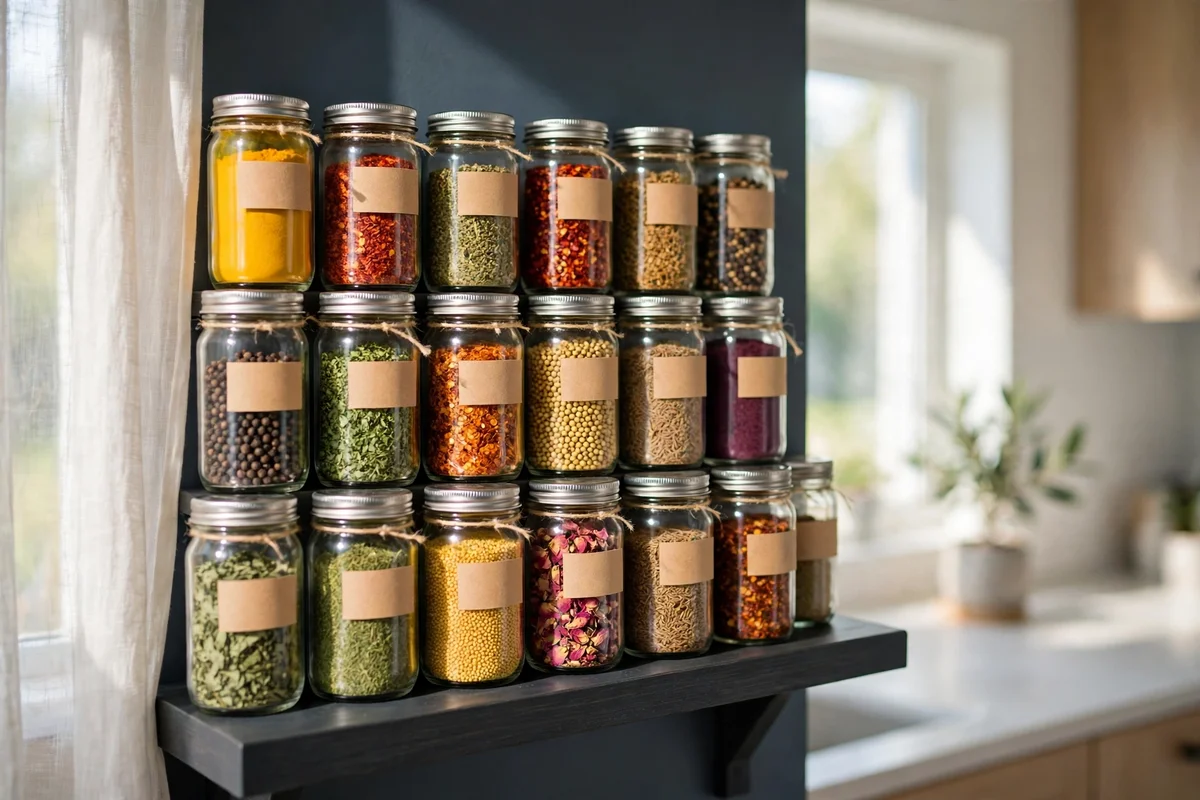
The short answer
Keep spices in airtight containers in a cool, dark place away from heat and steam, and buy them in sizes you will actually finish while they are still flavorful. Whole spices keep their flavor longest because their flavor oils are protected inside the seed, so buy whole when you can and grind only what you need. Ground spices and dried herbs fade faster, so buy the smallest jar that matches how often you cook with them. Most spices belong in a pantry cabinet, not the refrigerator, but a few oil-heavy ones are the exception, and the table below decides that by form. When in doubt, trust the crush-and-smell test over any date on a jar: if a spice smells faint after crushing, its flavor is faint in food too.
Step by step: how to store spices so they stay fresh longer
- Sort your spices by form before you store anything. Lay out your spices and sort them into whole seeds, ground spices, dried herbs, blends, and oil-heavy paprika or chili. This sorting step matters because each form needs a different container, location, and buying size, and a single storage rule will be wrong for at least one group. Whole spices such as peppercorns and cumin seed go in one group, ground spices such as ground cumin and ground cinnamon in another, leafy dried herbs such as oregano and basil in a third, and mixed blends in a fourth. Label any jar whose contents are not obvious, because an unlabeled jar is a jar you will not reach for.
- Move spices away from heat, light, and steam. Choose a cool, dark cabinet or drawer away from the stove, the oven, the dishwasher, and any sunny windowsill. Heat and light break down flavor, and steam from cooking gets into jars opened over a pot and clumps the contents. A cabinet on an inside wall, or a drawer near your prep area, is usually better than a rack above the stove, even if the stove rack looks convenient. If your only spice spot is near heat, move the most-used spices to a cooler drawer and accept a slightly longer walk: flavor kept is worth more than a step saved.
- Choose airtight, opaque or dark-stored containers. Use small, airtight jars or tins with lids that close firmly, and store clear jars inside a dark cabinet or drawer so light cannot reach them. Transfer spices from flimsy bags or torn packaging into a sealed container, and keep the original label information — the spice name and any date — with the new jar. Do not store spices in large half-empty containers, because the extra air inside speeds up flavor loss. A jar that is mostly full, tightly closed, and kept dark protects flavor far better than a large decorative jar that is mostly air.
- Decide the refrigerator question by spice form, not by habit. Most spices stay out of the refrigerator: the cold, damp air and the condensation that forms when a cold jar is opened can add moisture and dull flavor. The exception is oil-heavy spices, such as paprika and chili flakes or chili powder, whose natural oils can turn stale faster at room temperature, especially in a warm kitchen. For those, a sealed container in the refrigerator can help, provided the jar is kept tightly closed and allowed to reach room temperature before opening, so condensation does not form inside. The per-form table below makes this call for each group, so you do not need to guess jar by jar.
- Buy the right size for how often you actually cook with it. Buy whole spices when you use a spice often enough to grind it fresh, buy the smallest jar of ground spices you use only occasionally, and buy a blend only if you cook the dish it flavors regularly. A large jar of a spice you use twice a year will be faded long before it is finished, while a small jar of a spice you use weekly will be finished while it is still strong. Check your real cooking: count how many meals in a normal month use each spice, and let that count, not a sale price, set the jar size. Buying small is not wasteful when the alternative is throwing away a large faded jar.
- Date each jar and use older spices first. Write the purchase or opening date on each jar, and when you buy a new jar of the same spice, put it behind the older one so the older jar is used first. Dating matters because spices fade gradually, and without a date you cannot tell a jar bought last month from one bought two years ago. This habit also stops the quiet buildup of duplicates: when you can see you already own a spice, you do not buy a second jar of it by accident.
- Run a freshness audit twice a year. Twice a year, pick up each jar, check its color, crush a pinch between your fingers, and smell it. Strong color and a strong aroma after crushing mean the spice is still worth keeping. Faded color, a dusty or faint smell, or clumps that will not break apart mean the spice has lost most of its flavor, even if it is still safe to eat. Keep the strong ones, replace the faded ones in a small size, and use up borderline spices in dishes where they are not the main flavor, such as a soup or stew, rather than in a dish that depends on them.
Common mistakes to avoid
- Storing spices above the stove. Fix: move them to a cool cabinet or drawer away from heat and steam, even if the stove spot is closer. Heat is one of the fastest ways to fade ground spices and dried herbs.
- Scooping or shaking spices over a steaming pot. Fix: measure spices into a small dish or your hand away from the pot, then add them. Steam rises into an open jar and clumps the spice inside.
- Keeping spices in clear jars on a sunny counter. Fix: store clear jars inside a dark cabinet or drawer, or use opaque containers. Light fades color and flavor, and a sunny windowsill is one of the worst spots in a kitchen.
- Buying a large jar of a rarely used spice. Fix: buy the smallest jar for occasional spices, and buy whole for spices you use often. A large faded jar is more wasteful than a small fresh one.
- Refrigerating every spice as a general rule. Fix: keep most spices in a cool pantry cabinet, and refrigerate only oil-heavy paprika and chili in a tightly sealed jar. Refrigerating most spices adds moisture risk without a flavor benefit.
- Topping up a new jar into an old jar without dating it. Fix: finish the old jar first, or date the new jar and keep it behind the old one. Mixed old and new spice hides the age of both, and the faded portion dulls the fresh portion.
What you need — and what to skip
You need small airtight jars or tins with firm lids, a pen or labels for dating jars, and a cool, dark cabinet or drawer away from the stove. A small grinder or mortar is useful if you buy whole spices, and a small dish for measuring spices away from steam is worth having. That is the whole kit: no special storage system is needed to keep spices fresh.


Skip large decorative jars that stay mostly empty, clear racks above the stove, and flimsy bags that do not seal properly. Skip buying bulk spices you will not finish while they are fresh, and skip storing spices in the refrigerator as a blanket rule, since most spices do better in a cool pantry cabinet. Skip a spice rack that holds jars in sunlight, even if it looks tidy, because light fades flavor whether the rack looks good or not.
Worked example: a freshness audit of one jar, step by step
Take one jar you are unsure about — ground cumin is a good test case, because it is used often and fades noticeably. First, look at the color: fresh ground cumin is a warm, rich brown, while faded cumin looks pale and dusty. Next, check the date on the jar, and be honest about whether it was bought this year or has survived several moves. Then crush a pinch between your fingers and smell it immediately: fresh cumin smells warm, earthy, and strong enough to notice from a short distance, while faded cumin smells faint, flat, or like nothing much at all. Now make the call. If the color is rich and the crushed smell is strong, keep the jar and keep using it, and note the date so the next audit is easier. If the color is faded and the smell is weak even after crushing, replace it in the smallest jar that matches your cooking, because adding more of a faded spice will not restore the flavor — it will only add dustiness. If the result is in between — color still fair, smell present but not strong — use that jar up soon in a stew or soup where cumin supports other flavors, and buy a fresh small jar for dishes where cumin leads. This three-check audit, color plus crush-and-smell plus date, takes under a minute per jar, and it is more reliable than any single number, because published shelf-life ranges for ground spices differ across sources: some guides give shorter ranges and some give longer ones, so treat any single figure as an estimate, not a settled fact, and let the smell test decide.
Decision table: storage by spice form
| Spice form | Container | Location | Refrigerate? | Freshness check |
|---|---|---|---|---|
| Whole seeds (peppercorns, cumin seed) | Small airtight jar or tin | Cool, dark cabinet or drawer | No | Crush and smell; strong aroma means fresh |
| Ground spices | Small airtight jar, mostly full | Cool, dark cabinet or drawer | No, in most kitchens | Color and crushed smell; faded color means faded flavor |
| Dried herbs (oregano, basil, thyme) | Small airtight jar, kept dry | Cool, dark cabinet or drawer | No | Rub between fingers; strong herbal smell means fresh |
| Blends (curry powder, seasoning mixes) | Airtight jar, dated when opened | Cool, dark cabinet or drawer | No, unless the blend is oil-heavy | Smell after crushing; blends fade as their weakest part fades |
| Oil-heavy paprika and chili | Tightly sealed jar or tin | Cool pantry, or refrigerator in a warm kitchen | Yes, as the exception, in a sealed jar brought to room temperature before opening | Color and smell; dull color or stale, flat smell means replace |
On shelf life, sources disagree: ground-spice ranges vary from guide to guide, and dried-herb ranges vary too. Use ranges as ranges, not as exact expiry dates, and let the crush-and-smell test make the final keep-or-replace call for each jar.
When to stop — and when to replace instead of storing better
Stop reorganizing when every jar is airtight, dated, stored away from heat and light, and reachable without moving five other jars. Better storage cannot restore flavor that is already gone, so do not keep reorganizing faded spices in the hope that a new container will fix them. Replace a spice when its color has faded and its crushed smell is faint, when it clumps and will not break apart, or when it has sat unused through two freshness audits with no meal planned for it. A spice that is still safe but flavorless is not worth shelf space: replace it in a small size, use the old jar up in a supporting role if it has any aroma left, and let the new jar earn its place by being used.
Related on Kitchenlify
- Storage & Organizers
- How to Keep Herbs Fresh Longer in the Fridge
- How to Organize a Pantry With Storage Containers
- How to Choose Food Storage Container Size for Your Shelf
- All guides
Spice shelf life: how long each type lasts
Sources disagree on exact numbers, so use these ranges as a guide and trust the smell test in this guide: if a spice smells weak when crushed, it is past its best, whatever the date says.
| Spice form | Approximate shelf life | Freshness check |
|---|---|---|
| Whole spices | 2 to 4 years | Crush and smell: strong aroma means fresh |
| Ground spices | 6 months to 1 year | Smell: weak or dusty means past its best |
| Dried leafy herbs | 6 months to 1 year | Crush: green color and strong smell means fresh |
| Seeds | 1 to 2 years | Toast a few: strong smell means fresh |
| Paprika and chili powder | 6 months to 1 year | Color: bright red means fresh, brown means old |
Frequently asked questions
Should spices be stored in the refrigerator?
Most spices should not be refrigerated, because cold, damp air and condensation can add moisture. The exception is oil-heavy paprika and chili, which can benefit from a tightly sealed jar in the refrigerator in a warm kitchen, brought to room temperature before opening.
Do whole spices really stay fresh longer than ground spices?
Yes, in general. Flavor oils stay protected inside a whole seed until it is ground, while ground spice exposes far more surface to air. That is why buying whole and grinding as needed gives stronger flavor for longer.
How can I tell if a ground spice has gone stale?
Check its color, then crush a pinch between your fingers and smell it right away. Faded color and a faint smell after crushing mean the flavor has faded, even if the spice is still safe to eat. Published shelf-life ranges differ across sources, so use the smell test as the deciding check.
What size spice jar should I buy?
Match the size to how often you cook with it: whole spices for frequent use, the smallest jar for occasional ground spices, and a blend only if you cook its dish regularly. A small fresh jar beats a large faded jar every time.
Why do my spices clump inside the jar?
Usually moisture, often from steam rising into a jar opened over a cooking pot, or from a jar stored near heat or damp air. Measure spices away from the pot, keep jars tightly closed, and store them in a cool, dry cabinet or drawer.
Can I store clear spice jars on the kitchen counter?
No, not in the open. Light fades color and flavor, and a sunny counter is one of the worst spots. Store clear jars inside a dark cabinet or drawer, or use opaque containers, so light cannot reach the spice.
How often should I run a freshness audit?
Twice a year. Pick up each jar, check its color, crush a pinch between your fingers, and smell it. Strong color and a strong aroma after crushing mean the spice is still worth keeping, while faded color and a faint smell mean it is time to replace it.
What should I do with a spice that still smells a little but is not strong?
Use it up soon in a dish where it is not the main flavor, such as a soup or stew, rather than in a dish that depends on it. Buy a fresh small jar for dishes where that spice leads, because adding more of a faded spice will not restore the flavor.
Should I transfer spices from bags into jars?
Yes, if the bag is flimsy or torn and does not seal properly. Move the spice into a small airtight jar or tin with a firm lid, and keep the original label information, the spice name and any date, with the new jar.
How long do spices last?
As a rough guide, whole spices last 2 to 4 years, ground spices 6 months to 1 year, dried leafy herbs 6 months to 1 year, and seeds 1 to 2 years. Sources disagree on exact numbers, so use these ranges as a guide and trust the smell test in the guide above: if a spice smells weak when crushed, it is past its best, whatever the date says.
How do I control humidity for spices?
Keep spice jars away from the stove, the sink, and the dishwasher, because steam and splashes are what ruin spices. Never shake spice straight from the jar over a steaming pot, because steam goes into the jar and clumps the spice. Use a dry spoon, keep the lids tight, and put a small silica packet in the cabinet if your kitchen is very humid.