Ceramic Baking Dish vs Casserole Dish
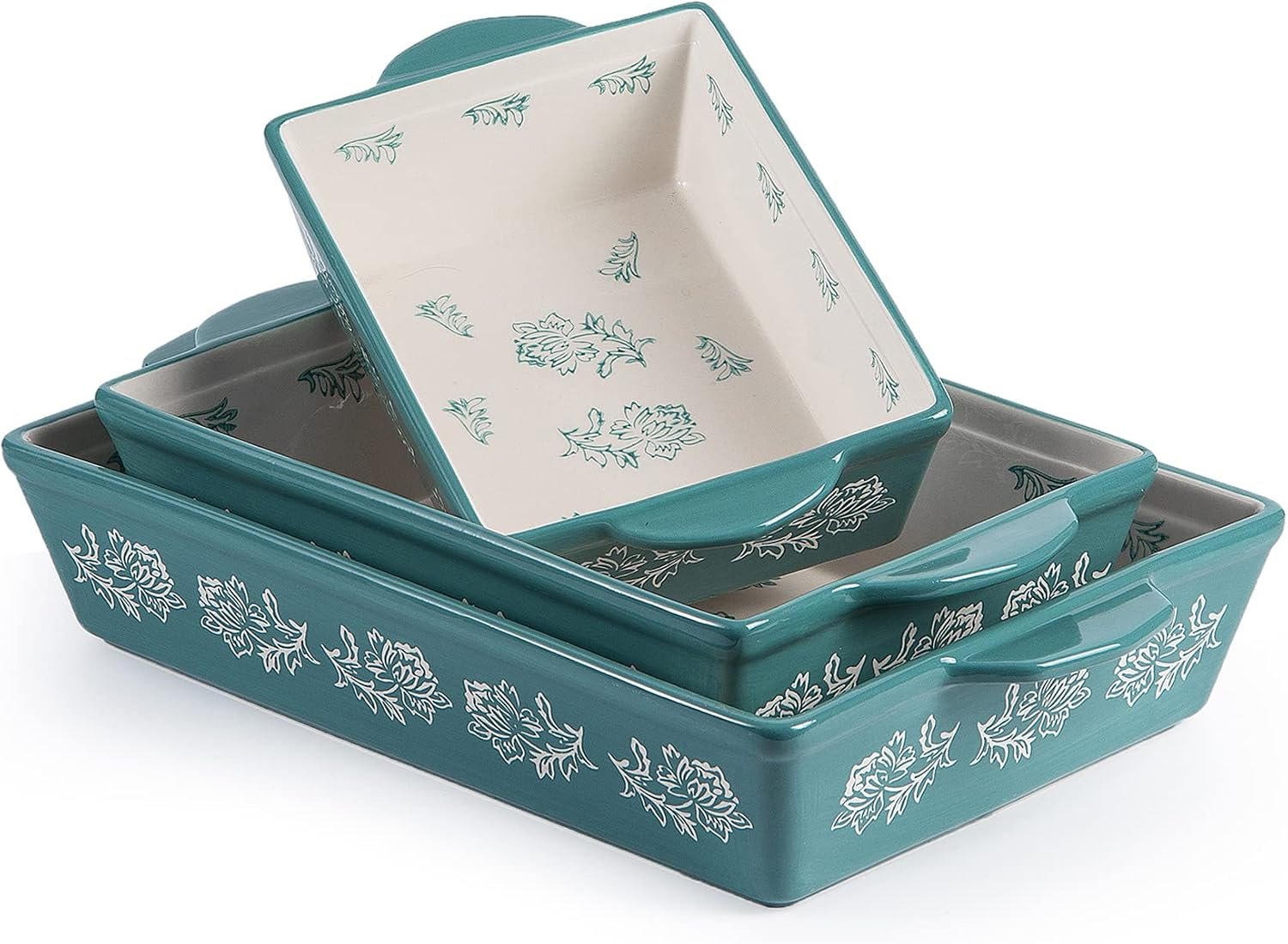
Ceramic baking dish vs casserole dish is mostly a naming question, not a real either-or choice: a casserole dish is a type of baking dish, usually deeper, often sold with a lid, and built around two sturdy handles, while a baking dish is the wider family name for the shallow-to-deep rectangular dishes you bake lasagna, roasts and desserts in. If you already own one deep 9x13 dish with handles, you already own both — the label on the box is doing the confusing, not the dish.
Ceramic Baking Dish vs Casserole Dish: The Short Answer
A casserole dish is a baking dish. That is the whole answer in one sentence. Sellers use the two names for the same kind of product so often that the words have blurred together: most of the dishes in our bakeware guides are sold as both, with “casserole” and “baking dish” in the same listing title. When there is a difference, it is a difference of shape, not of material. A dish sold as a casserole dish tends to be deeper, with taller sides that hold saucy food in, and it often comes with a lid. A dish sold simply as a baking dish tends to be shallower, with lower sides that let heat reach the top of the food so it browns. Both are solid ceramic, both go in the oven, and both come straight to the table.
What Is a Ceramic Baking Dish?
A ceramic baking dish is a solid ceramic or stoneware dish made for the oven. It is usually rectangular, though round and oval dishes exist too, and it comes in a range of sizes from a small dish for one or two people up to a large 9x13 family dish. The glaze seals the clay body, so food does not stick badly, the dish wipes clean, and it holds heat well enough to keep food warm at the table. Typical uses are lasagna, baked pasta, gratins, roasted vegetables, cobblers and cakes. A good example is the DOWAN 9x13 single dish: 4.2 quarts, with double handles and sides 3.1 inches deep, rated oven safe to 500°F. It is sold as a casserole dish and as a baking dish at the same time, which tells you how loose the naming is.

Sets are common too: a set of three or four dishes in graduated sizes covers everything from a small side dish to a family lasagna in one purchase, and the dishes usually nest for storage. If you are starting from scratch, our guide on how to use a ceramic baking dish for beginners walks through first use, greasing and oven temperatures.
What Is a Casserole Dish?
A casserole dish is a deep baking dish made for casseroles — the one-dish meals where meat, vegetables, sauce and a topping cook together slowly. The word “casserole” originally meant both the dish and the food cooked in it, and the dish kept the name. Three features mark a dish out as a casserole dish. First, depth: sides of around 2.5 to 3.5 inches, deep enough that a saucy lasagna or a bubbling pasta bake does not spill over. Second, handles: wide, sturdy handles on both ends, because a full deep dish is heavy and you lift it with oven mitts. Third, a lid on many — though not all — models, which keeps moisture in while the food cooks and keeps it warm on the table. The Lareina dish below is a clear example: a single 4-quart 9x13 stoneware dish with a lid that is described as usable during baking, so you do not need foil to cover the dish.

Ceramic Baking Dish vs Casserole Dish: Side-by-Side Comparison
| Feature | Ceramic baking dish | Casserole dish |
|---|---|---|
| What it is | The whole family of oven dishes | One type of baking dish, the deep kind |
| Depth | Shallow to deep, about 2 to 3.5 inches | Usually deep, about 2.5 to 3.5 inches |
| Lid | Usually sold without one | Often sold with one |
| Handles | Handles on most, small on some | Wide, sturdy handles on both ends |
| Best for | Browning, gratins, roasts, desserts | Saucy bakes, lasagna, baked pasta |
| Shapes | Rectangular, round, oval, ramekins | Mostly rectangular, some round and oval |
| Oven to table | Yes | Yes |
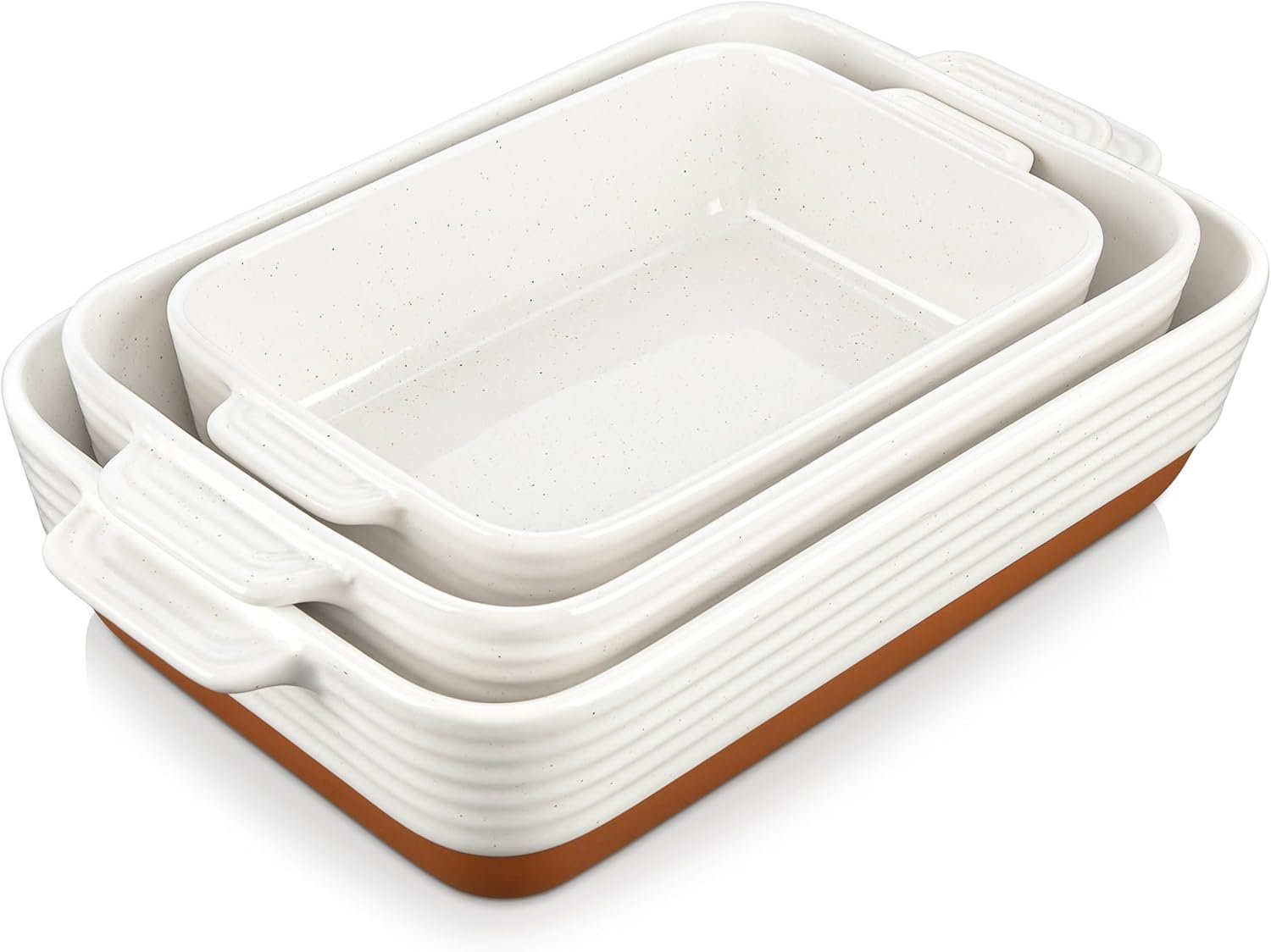
The table looks like a real difference, and for the extremes it is: a shallow 2-inch dish is a baking dish and nobody calls it a casserole dish, while a deep lidded 3.5-inch dish is a casserole dish first. But most dishes sit in the middle, 2.5 to 3 inches deep with handles, and those are sold under both names. The MALACASA TARA set below shows it: three deep rectangular dishes, the largest 14.5 inches and 4 quarts, sold as casserole dishes and as baking dishes, with lasagna and roast chicken in the same list of uses.
Which One Is Better for Lasagna?
For lasagna, buy the casserole dish — or rather, buy the deep dish, whatever the listing calls it. Lasagna needs depth: layers of pasta, sauce and cheese stack up, and a shallow dish overflows before the top layer even goes in. A 9x13 dish about 3 inches deep, holding roughly 4 quarts, is the standard family lasagna size. The DOWAN single dish above and the Lareina lidded dish are both that size. If you want a full comparison of dishes made for this job, see our guide to the best ceramic baking dish set for casseroles, which compares the deep dishes side by side.
Which One Is Better for Roasting and Browning?
For roasting and browning, the shallower baking dish wins. Low sides let hot oven air reach the surface of the food, so roast vegetables crisp at the edges and a gratin topping turns golden instead of steaming under a tall wall. A deep casserole dish still roasts fine — it just browns more slowly, and food piled high in the middle can stay pale while the edges catch. If you roast often, keep one shallower dish for vegetables and gratins and one deep dish for saucy bakes. You do not need a matching set for this; one dish of each depth covers both jobs.
Do Casserole Dishes Come With Lids?
Some do, some do not, and the lid is where you need to read the listing carefully, because lids are not all the same. There are three kinds in the dishes we list. Plastic lids, like the PP lids on the Artena sets, are for refrigerator storage only — not oven, microwave or dishwasher safe. Baking lids, like the Lareina lid, are described as usable during baking to hold in moisture instead of foil, though the lid material and its own oven limit are not stated, so check the listing before you bake with one on. Ceramic lids, like the LOVECASA lid, are oven safe and double as a serving tray. A lid is genuinely useful for storing leftovers in the dish and for keeping food warm, but a dish without a lid is not a worse dish — foil does the same job in the oven. For the full lid comparison, see our guide to the best ceramic baking dish set with lids.
What Size Do You Need? A Quick Servings Guide
Size matters more than the name on the box. As a rough guide: a dish of about 1 to 1.5 quarts suits one or two people; about 2 to 2.5 quarts suits three or four; a 9x13 dish of about 3.5 to 4 quarts suits a family table of roughly six to eight, and a 5-quart dish suits a crowd or a big-batch cook. If you can only buy one dish, buy the 9x13. It is the size most recipes are written for, it fits a standard lasagna, and it is big enough for a family roast. For the full size-by-servings breakdown, see our existing guide on how to choose baking dish size for beginners.
How to Choose Between Them When You Buy
Stop choosing by the name and choose by the measurements. Check the depth first: under 2.5 inches, it is a browning dish; 2.5 inches or deeper, it will hold a saucy bake without spilling. Check the capacity in quarts, because two dishes that look the same size on a screen can hold very different amounts. Check the handles: wide handles you can grip with oven mitts matter far more than they look, because a full ceramic dish is heavy. Check the oven limit in the listing — most of the dishes we list are rated to 450°F or 500°F, while the Artena sets are rated to 400°F, which is fine for most baking but worth knowing before you buy. And check whether a lid is included, and what kind it is, before you pay for one. If a listing calls the dish both a baking dish and a casserole dish, believe it: it is both. For a first purchase, our guide to the best ceramic baking dish set for beginners under $50 compares the sets that cover the most ground for the least money.
Related on Kitchenlify
- How to Use a Ceramic Baking Dish for Beginners
- How to Choose Baking Dish Size for Beginners
- How to Clean a Ceramic Baking Dish
- How to Store Ceramic Baking Dishes
- Best Ceramic Baking Dish Set for Casseroles
- Best Ceramic Baking Dish Set With Lids
- All guides
Frequently asked questions
Is a ceramic baking dish the same as a casserole dish?
Mostly, yes. A casserole dish is a type of baking dish — usually the deeper kind, often with a lid. Sellers use the two names for the same dishes so often that most deep rectangular dishes are sold under both names.
Can I use a baking dish as a casserole dish?
Yes, if it is deep enough. A baking dish about 2.5 inches deep or more holds a saucy casserole or lasagna without spilling. A shallow dish will overflow, so check the depth and the capacity in quarts before you fill it.
Which is better for lasagna, a baking dish or a casserole dish?
A deep dish, whatever it is called. Lasagna needs depth for its layers, so a 9x13 dish about 3 inches deep and roughly 4 quarts is the standard family size. Shallower dishes overflow before the top layer goes in.
Do I need both a baking dish and a casserole dish?
No, not to start. One deep 9x13 dish covers lasagna, casseroles, roasts and desserts. Add a shallower dish later if you roast vegetables or make gratins often and want faster browning.
What size casserole dish do I need for a family of four?
A dish of about 2.5 to 3 quarts is enough for four. If you cook for a crowd or like leftovers, step up to a 9x13 dish of about 4 quarts — it is the size most recipes are written for.
Are casserole dishes deeper than baking dishes?
Usually, yes. Casserole dishes tend to have sides of 2.5 to 3.5 inches to hold saucy food in, while baking dishes range from shallow to deep. But many dishes sit in the middle and are sold under both names.
Can a ceramic casserole dish go in the oven?
Yes, up to the limit in its listing. Most of the dishes we list are rated to 450°F or 500°F, while the Artena sets are rated to 400°F. Always check the listing for your own dish, and never put a ceramic dish on the stovetop.
Does a baking dish need a lid?
No. A lid is useful for storing leftovers and keeping food warm, but foil does the same job in the oven. If you do buy a lidded dish, check what kind of lid it is — plastic lids are for fridge storage only, while ceramic lids can go in the oven.