How to Use a Ceramic Baking Dish for Beginners
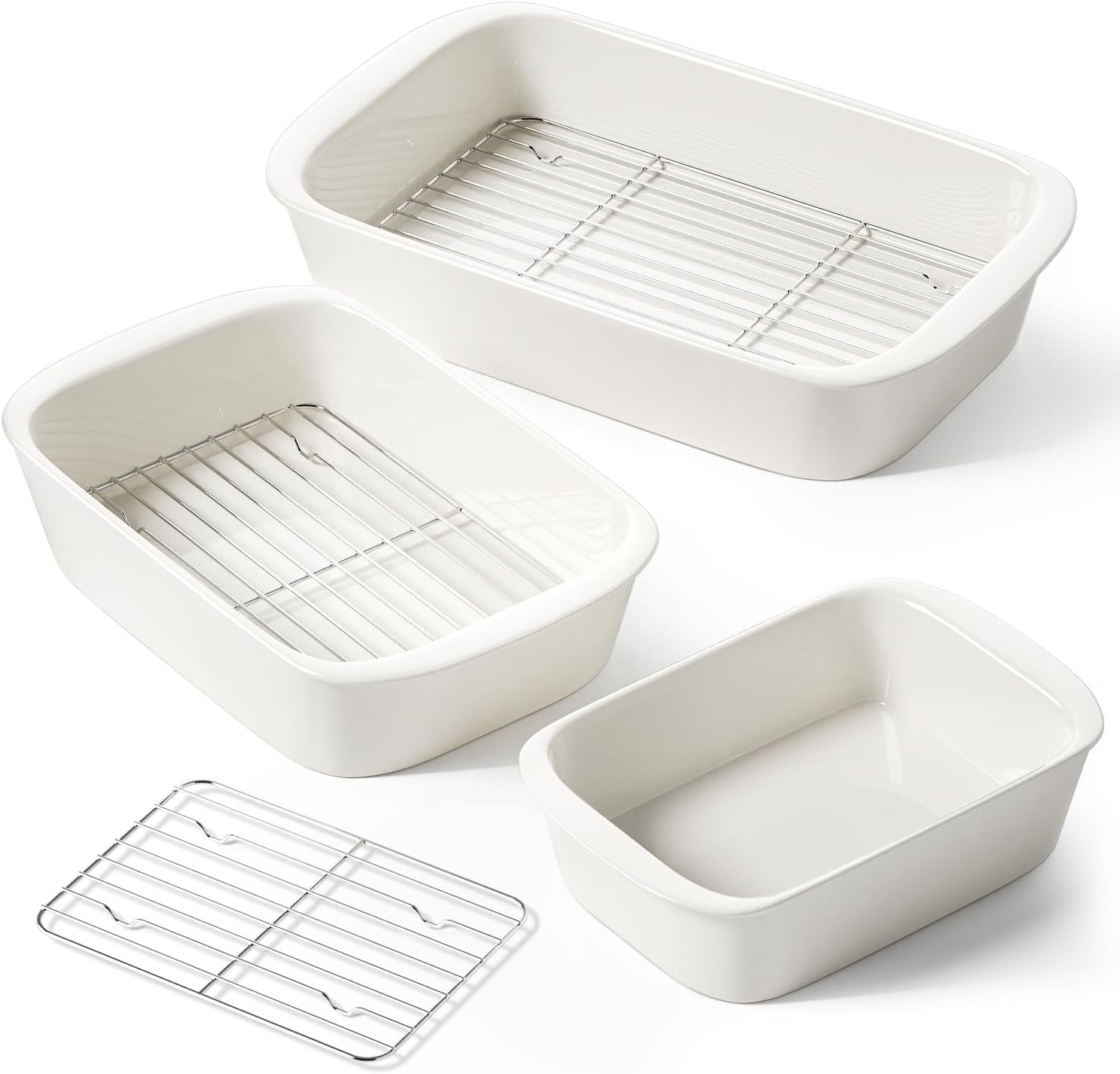
Learning how to use a ceramic baking dish for beginners comes down to a few habits: wash it before first use, grease it lightly, keep the oven within the maker's limit, and never shock it with a sudden temperature change. Do those four things and a ceramic dish will bake evenly, release food cleanly, and go straight from the oven to the table.
The short answer: how to use a ceramic baking dish for beginners
Wash the dish in warm soapy water before you use it for the first time, then dry it fully. Grease it lightly with butter or oil before most recipes, put it in the oven only when it is at room temperature, and bake at the temperature your recipe states — turning the oven down about 25°F for sweet bakes, because ceramic holds heat longer than metal. Use wood, silicone, or plastic utensils, never metal, so you do not scratch the glaze. That is the whole routine: wash, grease, bake, and let it cool on a trivet, not on a cold counter.
What is a ceramic baking dish used for
A ceramic baking dish is an oven-safe dish for baking and serving food in the same piece. It is the dish people reach for for lasagna, baked pasta, casseroles, gratins, roast chicken and vegetables, bread and butter pudding, cobblers, and crisps. Because ceramic heats gently and holds heat well, it suits slow, even bakes and dishes that need to stay warm at the table. It also works as a serving dish: most glazed dishes go straight from the oven to the table, and leftovers can go into the fridge in the same dish with a lid or cover on.
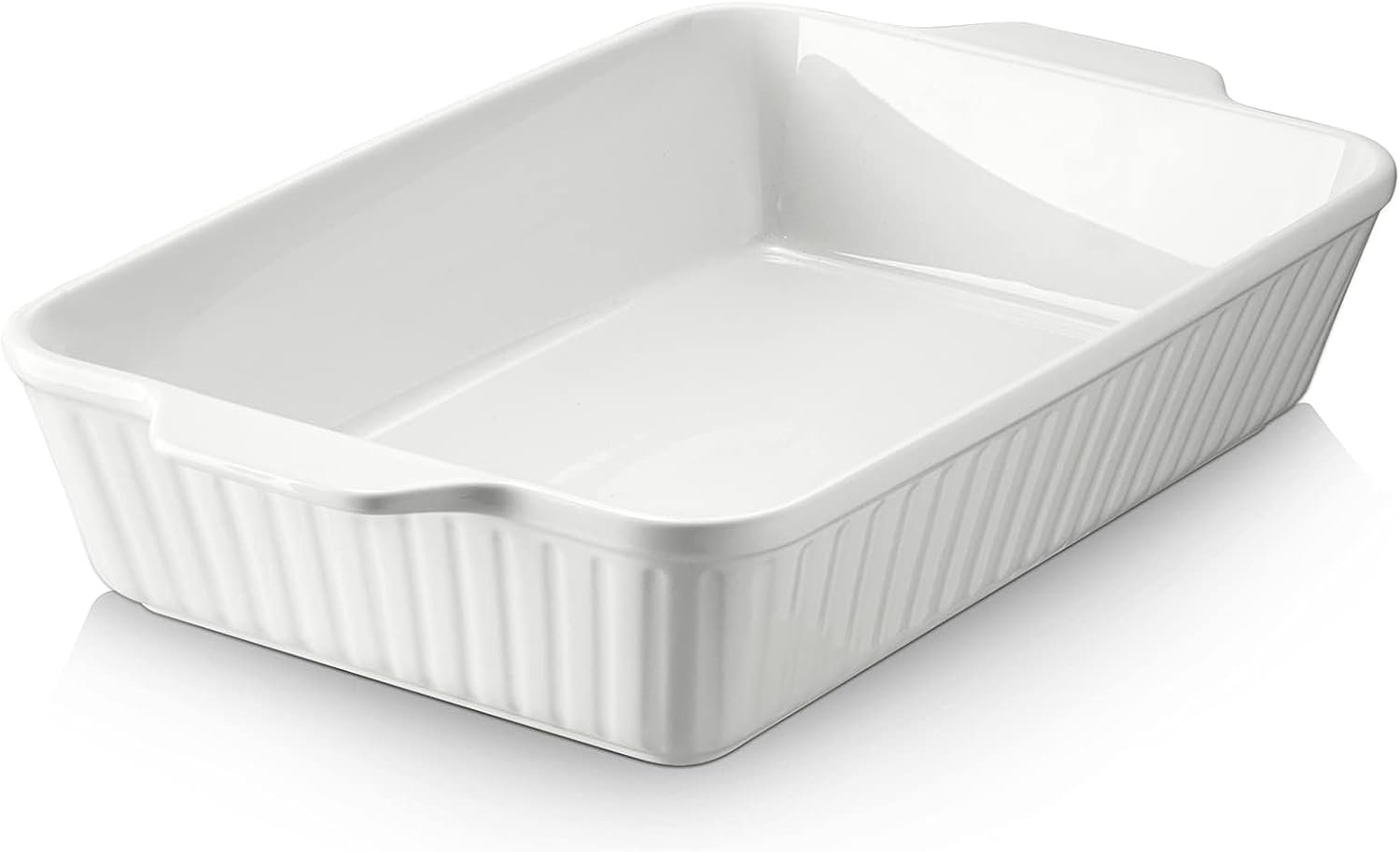
Shapes matter. A rectangular 9x13 dish is the standard family size for lasagna and casseroles. A deep dish suits layered bakes that need room to bubble without spilling over. A shallow dish suits gratins and roasts, where more surface browns. Small dishes and ramekins suit single servings and side dishes. If you are choosing sizes, our guide on how to choose baking dish size for beginners matches dish sizes to servings.
First use: wash it, and skip the seasoning
Before the first bake, wash the dish in warm water with a drop of mild dish soap, rinse it, and dry it fully. That removes dust and any residue from packing. A glazed ceramic baking dish does not need seasoning — seasoning is for unglazed stoneware and cast iron, not for a glazed dish. Heating oil onto a glazed surface will only leave a sticky film. Our guide on do you need to season ceramic bakeware explains the difference in full.
Check the listing or the base of the dish for its oven limit before the first use, and keep it in mind every time you bake. Limits in the dishes we list vary: the Artena sets are oven safe to 400°F, most of the dishes we list are rated 450–500°F, and the Staub set is rated to 572°F. Never assume every dish takes the same heat.
Oven temperature: turn it down a little for sweet bakes
Ceramic absorbs heat slowly and releases it slowly. That is why food bakes evenly in it — and why it stays hot long after it leaves the oven. For sweet bakes such as cakes, brownies, and fruit crisps, turn the oven down about 25°F from what the recipe states for a metal pan, and check for doneness a few minutes early. For savoury casseroles and roasts, the recipe temperature is usually fine as stated.
Two rules protect the dish. Never put a cold dish into a preheated oven — let it come to room temperature first, or put it in a cold oven and let it heat up with the oven. And never preheat an empty dish: an empty dish in a hot oven has nothing to absorb the heat, and the glaze takes the full shock. Our guide on how to prevent ceramic baking dish from cracking covers every temperature rule in one place.
Which dish for which recipe
| Recipe | Dish to reach for | Why |
|---|---|---|
| Family lasagna or baked pasta | Deep rectangular 9x13 dish | Layers fit, edges contain bubbling sauce |
| Casserole for 4–6 people | 3–4 quart rectangular dish | Room to serve from the dish at the table |
| Gratin or roast vegetables | Shallow, wide dish | More surface browns and crisps |
| Dessert for two | Small dish or ramekins | Bakes faster, portions are built in |
| Bread or cake | Deep dish, greased and floured | Even rise, clean release |
If you only buy one dish first, make it a deep 9x13. It covers lasagna, casseroles, roasts, and most desserts, and it is the size most recipes are written for. Our guide to the best ceramic baking dish set for beginners under $50 lists sets that include that size.
Which utensils to use — and which to avoid
Use wood, silicone, or plastic utensils in a ceramic dish. The glaze is hard, but a metal spoon or knife dragged across it will leave marks and, over time, fine scratches where stains settle. Serve with a silicone spatula or a wooden spoon, and cut portions with a plastic server rather than a knife in the dish. If a metal utensil has already left grey marks, they are usually surface marks, not damage — a paste of baking soda and water rubbed gently with a soft cloth often lifts them.
Greasing: a light coat before most recipes
Grease the dish lightly with butter, oil, or ghee before most recipes, even though glazed ceramic is low-stick. A thin coat is enough — too much oil pools and fries the edges. Wet casseroles and saucy dishes are the exception: the liquid does the job, and you can skip greasing. Do not use aerosol cooking spray on a ceramic dish; it leaves a build-up on the glaze that is hard to remove. Our guide on do you need to grease a ceramic baking dish covers what to use, when to skip it, and parchment as an alternative.
Safety limits: broiler, stovetop, freezer, and microwave
A ceramic baking dish is an oven dish, not an all-purpose pan. The short version: most dishes cannot go under the broiler — only dishes the maker labels broiler-safe, such as the Staub set (572°F), the ROSSALLINI dish, and the ONEMORE set. No ceramic dish goes on the stovetop unless it is explicitly labelled stovetop-safe, and ceramic does not work on induction at all because it has no magnetic base. Most glazed dishes can go in the microwave and the dishwasher — check the label first — and only dishes labelled freezer-safe should go in the freezer. The full answers are in our guides on can ceramic baking dish go under the broiler, can you put a ceramic baking dish on the stovetop, can ceramic baking dish go in the freezer, and can ceramic baking dish go in the microwave.
Cleaning and storing after the bake
Let the dish cool on a trivet, then soak it in warm soapy water before food dries on. Wash with a soft sponge, dry it fully, and store it with something soft between stacked dishes — a towel, a paper towel, or a plate protector. Do not stack heavy dishes on top of it, and do not store it wet. The full routines are in our guides on how to clean a ceramic baking dish and how to store ceramic baking dishes.
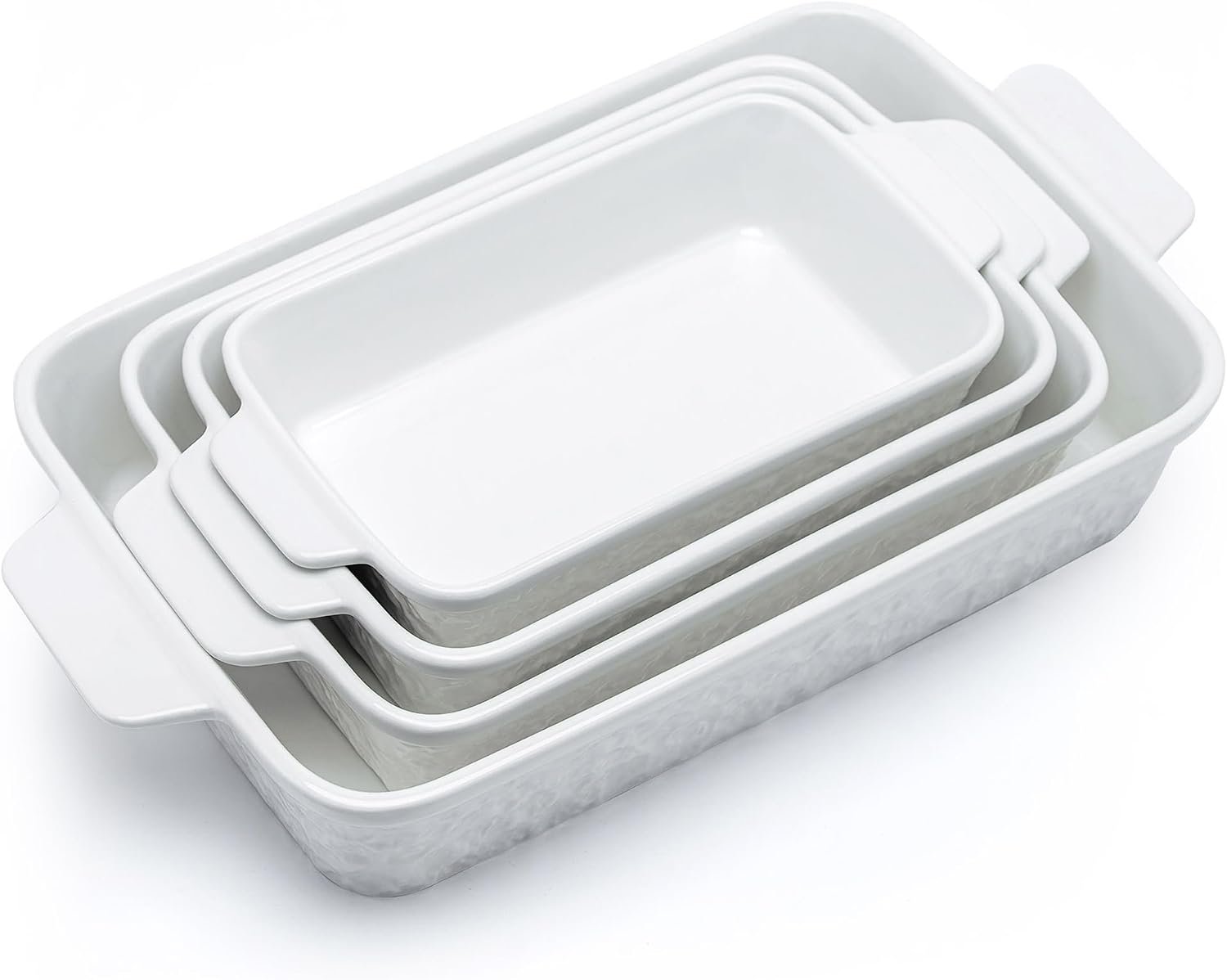
One last beginner tip: buy the dish for the food you actually cook. If you make lasagna every month, a deep 9x13 is the right first buy. If you cook for two, a small set will get used far more than a large one sitting in the back of the cupboard. If you want a set that covers several sizes at once, our guide to the best ceramic baking dish set compares the sets we list.
Related on Kitchenlify
- How to Clean a Ceramic Baking Dish
- How to Store Ceramic Baking Dishes
- Do You Need to Grease a Ceramic Baking Dish
- How to Choose Baking Dish Size for Beginners
- Ceramic vs Stainless Steel Baking Dish for Beginners
- Best Ceramic Baking Dish Set for Beginners Under $50
Frequently asked questions
Do I need to wash a ceramic baking dish before first use?
Yes. Wash it in warm water with a drop of mild dish soap, rinse it, and dry it fully before the first bake. That removes dust and packing residue. A glazed dish does not need seasoning — seasoning is only for unglazed stoneware.
What temperature should I bake in a ceramic baking dish?
Use the temperature your recipe states, but turn the oven down about 25°F for sweet bakes such as cakes and brownies, because ceramic holds heat longer than metal. Always stay within the maker's oven limit — the Artena sets are rated to 400°F, most dishes we list are rated 450–500°F, and the Staub set is rated to 572°F.
Can I put a ceramic baking dish in a preheated oven?
Yes, if the dish is at room temperature. Never put a cold dish — straight from the fridge or freezer — into a preheated oven, and never preheat an empty dish. Sudden temperature changes are the main cause of cracking.
What utensils can I use in a ceramic baking dish?
Wood, silicone, or plastic. Metal utensils can mark and scratch the glaze, and scratches collect stains over time. Serve with a silicone spatula or a wooden spoon, and do not cut portions with a knife inside the dish.
Can a ceramic baking dish go on the stovetop?
No, unless the dish is explicitly labelled stovetop-safe. A ceramic dish on a burner can crack from direct, uneven heat. Ceramic also does not work on induction, because it has no magnetic base.
How do I stop food sticking to a ceramic baking dish?
Grease the dish lightly with butter, oil, or ghee before most recipes. Glazed ceramic is low-stick, not nonstick, so cheese, sugar, and egg will still grab a dry dish. Do not use aerosol cooking spray — it leaves a build-up on the glaze.
What size ceramic baking dish should a beginner buy first?
A deep 9x13 dish. It is the size most lasagna and casserole recipes are written for, and it covers roasts and desserts too. If you cook for one or two people, a smaller dish or a set with several sizes is the better first buy.
Can I use a ceramic baking dish to serve food at the table?
Yes. Most glazed dishes are made to go from the oven to the table, and they hold heat well, so food stays warm while you eat. Put the hot dish on a trivet, never straight onto a cold stone or glass surface.